



Multimodal beauty devices reshaping at-home skin care trends, says Nuon Medical
LED therapy and EMS microcurrents are gaining momentum in home beauty tools.

Key takeaways
- LED therapy, EMS microcurrents, and thermal control are increasingly combined in at-home devices to deliver elevated skin and scalp treatment experiences.
- Devices integrating red light therapy and essential oil misting reflect a focus on scalp microbiome health and salon-inspired treatments at home.
- Ergonomic designs, diagnostics, portable formats, and user-friendly features are becoming critical for integrating beauty tech into daily routines.
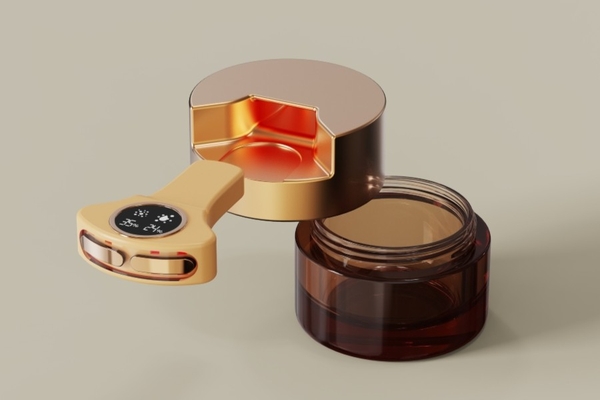
As beauty consumers increasingly seek professional-grade treatments at home, multifunctional beauty devices are evolving into integrated systems that combine diagnostics, therapy, and sensory experience. Nuon Medical’s latest portfolio reflects this shift, highlighting the growing use of multimodal technologies such as LED light therapy, Electrical Muscle Stimulation (EMS), vibration, thermal control, and hydration systems in compact, consumer-friendly formats.
The latest collection from the beauty tech device manufacturer highlights how home beauty treatments are becoming more personalized. Devices such as its Rejuvenation Roller Tip combine red and blue LED therapy with vibration to support skin clarity and product absorption. At the same time, its Compact Skin Analyzer introduces real-time hydration monitoring through light-based diagnostics.
Scalp care is emerging as a key innovation space, with devices integrating red light therapy, essential oil mist delivery, vibration, and EMS stimulation to replicate salon-inspired treatments at home.
Recovery-focused technologies are also gaining traction. Nuon’s Skin Soothing Device combines red and infrared LED therapy with cooling and warming modes designed to calm irritation and support skin revitalization.
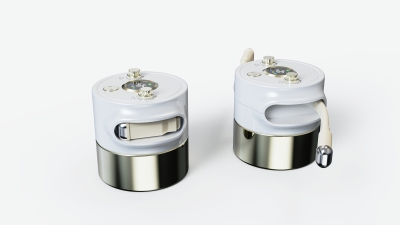 Features like roller tips, detachable applicators, and Type-C charging emphasize ergonomics.Across the company’s portfolio, ergonomic details such as fingertip-friendly applicators, Type-C charging, and portable formats underscore the growing importance of convenience, usability, and high-performance functionality in next-generation beauty devices.
Personal Care Insights speaks with Nuon Medical’s founder and CEO Alain Dijkstra, about the company’s technological advancements in the at-home beauty market.
Why is LED therapy gaining momentum in at-home beauty tools now?
Dijkstra: Red and blue LEDs are gaining momentum in at-home beauty tools mainly because the technology has become more compact, safer, and more affordable without losing clinical relevance. Red light is associated with skin recovery and collagen support, while blue light targets acne-related bacteria and inflammation.
Improvements in LED chip efficiency and battery-powered designs allow brands to integrate stable, multi-wavelength outputs into handheld formats that previously required clinic-scale devices. At the same time, consumers are more educated about light-based skin care, which has increased demand for “clinic-inspired” home routines.
How does combining LED, EMS microcurrents, vibration, and thermal control enhance skin or scalp outcomes compared with single-function devices?
Dijkstra: Combining LED, EMS microcurrents, vibration, and thermal control creates a multi-layered stimulation effect rather than a single-path treatment. LED works at a cellular signaling level, EMS activates facial or scalp muscles and improves tone perception, vibration enhances circulation and product penetration, while heat and cooling modulate blood flow and barrier comfort. Together, these modalities address different biological layers — skin cells, muscle tone, and microcirculation — so results are often perceived faster and more comprehensive than single-function devices that only target one mechanism.
Are users more likely to engage with devices that offer diagnostics, treatment, and sensory experience in one?
Dijkstra: Users are generally more likely to engage with devices that combine diagnostics, treatment, and sensory experience because they transform skin care from a passive routine into an interactive ritual. When a device offers feedback (moisture level, sebum level, etc.) alongside visible technologies like LED, users tend to use it more consistently, which is a major driver of real results. Consistency often matters more than intensity, so multifunction systems indirectly improve outcomes by improving adherence, personalization, and perceived efficacy.
Your Mist-Infusing Scalp Comb uses red light plus microcurrents and essential oils. How does this reflect the trend toward professional-grade scalp treatments at home?
Dijkstra: The Mist-Infusing Scalp Comb using red light, microcurrents, and essential oils reflects a broader shift toward treating scalp health as an extension of skin care rather than just hair care. Consumers are increasingly aware of the scalp microbiome, inflammation, and follicle health as key factors in hair density and quality.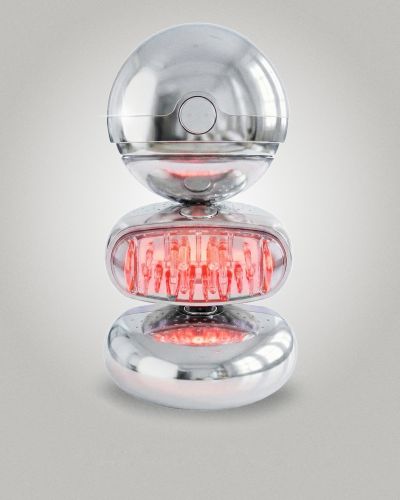 Red and blue LEDs are featured across multiple Nuon Medical devices. Pictured is the Rotating Comb.
By combining stimulation (microcurrents), photobiomodulation (red LED), and topical delivery (mist or oils), these devices replicate simplified versions of professional trichology treatments in a home setting, making “spa-level” scalp care more routine and accessible.
What role do recovery-focused modalities play in everyday skin care routines?
Dijkstra: Recovery-focused modalities like cooling, warming, and calming LED cycles are becoming central in everyday skin care because modern routines often include active ingredients (retinoids, acids, exfoliants) that can stress the skin barrier. Cooling helps reduce inflammation and redness, while gentle heat can improve circulation and product absorption. When integrated into tools like skin soothing devices, these functions position recovery not as an afterthought, but as an active step in maintaining long-term skin resilience and comfort.
How critical is user-friendly design in driving adoption of next-gen beauty tech?
Dijkstra: User-friendly design is critical in driving adoption of next-generation beauty tech because even advanced technology fails if it feels complicated or inconvenient. Features like ergonomic roller tips, detachable heads, and Type-C charging reduce friction in daily use and maintenance, which directly increases usage frequency. In practice, devices that feel intuitive and portable are far more likely to become part of a consistent routine, and consistency is what ultimately converts technology into visible results.
Beyond LED and EMS, what emerging modalities or technologies do you see becoming standard in high-intensity, at-home beauty devices?
Dijkstra: Beyond LED and EMS, several emerging modalities are likely to become standard in high-intensity at-home devices, including near-infrared light for deeper tissue penetration, radiofrequency miniaturization for collagen tightening, and low-level laser combinations for more targeted phototherapy effects.
We’re also seeing early integration of biofeedback systems — skin hydration or temperature sensing — adaptive intensity algorithms, and even AI-driven routine personalization. Over time, the category is moving toward devices that not only treat but also continuously adjust based on skin or scalp condition in real time.