


Promotional banner from Mibelle Group Biochemistry featuring PhytoSpherix™ Hair plant-based glycogen, green background, and smiling blonde woman
Home
Webinars
What’s Trending in C...

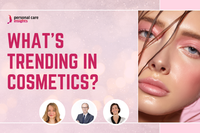
What’s Trending in Cosmetics: How neurocosmetics and personalization shape beauty’s future

07 May 2026 | Personal Care Insights
Video Background

The cosmetics industry is undergoing a transformation, driven by advancements in science and technology. At the forefront of this shift are neurocosmetics — a growing field that is poised to reshape the personalized beauty market.

In this webinar, Personal Care Insights will explore how the science behind neurocosmetics is driving innovation and fueling the personalized beauty trend. We’ll be joined by Eloïse Gerardin, CEO of Brain Impact Neuroscience, and Dr. Claudia Aguirre, a leading expert in neurocosmetics, for an exclusive conversation.

Hello and welcome to today's webinar, What's Trending in Cosmetics, How Neurocosmetics and Personalization Shape Beauty's Future, hosted by Personal Care Insights.

I'm your host, Sabina Waldeck, and I'm the editor of Personal Care Insights, a world-leading B2B news website published by CNS Media.

We are joined today by a panel of expert speakers.

First up, we have Laura Studenta, a marketing analyst for CNS Media.

Laura is an expert in market research and data analysis on beauty, nutrition, food, and beverage trends.

Laura will give a presentation on the latest trends in the personal care industry based on exclusive data from Manova Market Insights.

A Q&A session with our panel of experts will follow her presentation.

For that, we are joined by Eloise Gridin, the CEO and Brain Impact Neuroscience.

Eloise worked from 2014 as a clinician in neurology and intensive care in a hospital setting.

Fascinated by brain recovery mechanisms, she transitioned to research and pursued a master's in neuroscience.

In 2019, she began a PhD studying post-stroke motor recovery using advanced neuroimaging.

Since April 2024, she has been a data science manager at Brain Impact Neuroscience, leading research at the intersection of neuroscience, sensory innovation, and data science.

Since early 2026, she has served as CEO of Brain Impact Neuroscience.

We are also joined by Doctor Claudia Aguerra, the world's first neuroscientist to work exclusively in the beauty industry.

Her 2015 TED Talk shed light on the interconnection between the emotional state and the physical state, a perspective that has not only transformed the approach to skincare, but also emphasized the importance of a holistic understanding of beauty, where mental and emotional health play pivotal roles.

She has advised leading global brands across the beauty, hospitality, and wellness world, from L'Oreal and Unilever to Headspace.

Claudia speaks on subjects ranging from neuroscience of beauty to cutting-edge developments in longevity and artificial intelligence.

Before we get started, I'd like to remind our listeners that they can submit questions to our speakers through the Q&A engagement tool, and any questions that we don't have time to respond to during today's sessions can be answered via email following the presentation.

And with that, let's begin today's webinar with Laura's presentation.

Thank you for the warm introduction.

I'm delighted to be here today to discuss a topic that's gaining a real momentum in the beauty industry, and this is the rise of neurocosmetics and personalization.

And as always, today's insights are powered by data from our knowledge partners in our market insights.

So let's begin.

And first we would like to talk about personal care trends for 2026, and these are identified every year by Enova Market Insights.

And this year one the stands out above all others, and that is the personalization and which we will also talk about in depth today.

And we see from these trends that consumers are seeking longevity.

They're also seeking research and transparency when choosing personal care.

So this just means that today's shoppers are educated and quite skeptical of broad marketing claims.

They expect more credibility and are quite selective, so that is definitely something to take into account too.

But let's jump in and talk about today's topic and also the trend of 2026, which is personalization, and this means that consumers are more and more seeking products that are tailored to them, and innovation is moving away from the traditional one size fits all model, and it's become more personal.

So 20% of consumers globally say they have shifted towards more personalized beauty and personal care products as part of their routine.

And this trend is also deeply connected to self-expression, because 22% of consumers said that they struggle to find products that truly match their unique style or identity.

And this shows that there's still a gap in the market for products like that.

But another trend that goes very close hand in hand to personalization is also the use of AI for personal care, and data shows that 30% of consumers globally use digital or AI tools to personalize their personal care routine.

And I can give a simple example of how it could show in real life.

So for example, instead of buying a standard moisturizer of the shell, a consumer may might upload their selfie and complete an online skin analysis using AI and this is where they also can fill in questions about specific skin needs, dryness, or sensitivity of skin, and then receive a customized formula created for their exact needs.

And this maps out the next phase of personalization, and this could potentially be powered by AI systems that combine both diagnostics and analytics.

We're already currently seeing this on the market because Clinique has launched an AI skincare diagnostic tool, and there's also AI developed ingredients.

For example, AI designed peptides are beginning to appear in new product development.

Therefore, there are different paths that this trend can take, and it's very exciting to see how it will develop.

OK, but now we will talk about one of the most exciting and emerging trends that's really picking up the pace, and that's neurocosmetics.

And to explain, neurocosmetics are built around the understanding that skin is not just a physical barrier, it's also a sensory organ closely connected to the nervous system, and this relationship is often described as the skin and mind axis, and this means that beauty routines are expanding beyond appearance to include mood, comfort, and stress support.

And I think it's also important to highlight that mental health has become a major concern for consumers in the last years.

In fact, 1 in 2 consumers globally say that they are concerned about stress and anxiety in their daily lives.

At the same time, more and more consumers are starting to see that there is some connection between their personal care routines and their emotional -being.

So some part of consumers are already adjusting their personal car, but of course it could be bigger.

And we also see that there are products who are appearing on the market which promotes just that, for example, this Babaria Neuro Beauty night cream, which was launched in Spain, it features a neurocosmetic active ingredient designed to act on skin's nerve endings and support dopamine-related positive effects.

So products like that are appearing and they highlight just that this is going to raise positivity, dopamine, and give the skin mind access support.

OK, and as I already said before, there is an increase of these products appearing, so that means that neurocosmetic launches are growing quickly.

Between 2021 and 2025, global personal care launches featuring neurocosmetic clients had a 72% growth, so it's quite a surge, and this shows that neurocosmetics are moving from niche innovation into a more impactful category.

And one of the brands who did bring neurocosmetics into more mainstream interest was Dermalogica, and it released a neuroscience-powered sculpting oil with skin mind access claims.

And as we also talked before, these AI tools, Dermalogica also offered an interactive experience on how to actually use the serum.

So this is just an example of a trend in action, but it shows that it's becoming more mainstream to products that are available quite often in different countries on the shelf.

And lastly, I wanted to talk about what could be the next step for neurocosmetics, and it can be all about the next generation actives or ingredients for neuroscience meets skincare.

So basically, neurocosmetics uses actives designed to interact with skin-mind connections, and key examples of these ingredients can include neuropeptides, neurotransmitter inspired compounds, and adaptogenic plant extracts.

And these ingredients may as help to support stress response, sensitivity reduction, skin comfort, and of course also emotional -being.

And here you can see 3 examples of how these ingredients play into action in products.

So first, quite often, already we see them appearing more and more, are neuropeptides, like in this Perricone MD moisturizer, and these are protein-like messenger molecules that help transmit signals between skin cells and the nervous systems, and this helps to support skin's firmness, comfort, and stress response.

But we also see two other examples that maybe have more niche and also innovative ingredients.

So it's Timut pepper and alpine skull cap, both linked to the skin mine connection.

And Timut ingredient, in particular, has been developed specifically for this purpose, so for the mind skin access benefits, and you can also even see how brands are already highlighting word neuro on packaging, and this shows that this is a new and distinct skincare category, so it's already being differentiated and shown to consumers, yeah, this is a neurocosmetic product.

So, to conclude, personalization and neurocosmetics definitely represent two powerful shifts in beauty.

One focuses on tailoring solutions to the individual, while the other expands beauty into emotional and sensory -being.

So it's very curious and interesting to see how the trends and innovation will move more forward in that direction.

Thank you, that's all for me.

Thank you, Laura, for that insightful presentation.

Once again, this is Sabina from Personal Care Insights.

We'll now dive into a Q&A session with our experts.

Some great questions have already been submitted, so let's get started.

Our first question is, neurocosmetics is a relatively new concept for many in the beauty industry.

How would you define it and why is it gaining momentum now?

And Claudia, I'll let you kick us off with this first question.

Great.

It's great to be here.

And, you know, I would argue actually that neurocosmetics is not a new concept in the way that it is being marketed right now.

So, in the way that a lot of these trends are happening and that a lot of the claims are that you have a sense of -being when you have a good scent, for example.

And we know from ancient times that a good odorant, you know, like lavender is calming or lemon peel is energizing.

So, aromatherapy has been around for a long time.

And that's why I would argue that neurocosmetics is not a new concept.

It's a new word, possibly.

And I think it needs a good definition, especially, and I think we'll get into this later when it comes to the regulatory aspect.

Because as we know, cosmetics can't affect structure and function.

But that said, I think it goes back to ancient times.

I think it's a category that has a lot of potential and that there's definitely a peripheral nervous system that we can, we sort of can target in this aspect.

And that's, I think, where the word neurocosmetics could be differentiated for something like psychocosmetics.

And then Eloise, I'll let you also answer the question.

Yes, I totally agree with you, Claudia, but I just want to clarify my expertise, so.

I'm, expert, I have an expertise in, lies in the central nervous, system which analyses the circuit brain pattern in the, central nervous system.

So, not about, too much, the composition of neurocosmetics which is more related to, peripheral nervous, system.

And this neurocosmetic is very interesting because they are designed to interact with the cutaneous nervous system.

And specifically skin mediators, which is known in neuroscience, neurology, I would say, like the thermal receptors, mechano receptors, etc.

And I think the, the effect remains mainly skin-based and it's very important that even if, if they may indirectly involve the, the nervous system is in.

Direct.

So I think in the future it could be interesting to, to link the, the, the, the skin, the, the metric, the data about these skin receptors to the central nervous system related to emotion and I think it's very important because for example, recently, in 2023.

Suggested that around 1 in 3 consumers would feel comfortable with the brain to track their emotions.

So I think this topic, so about the neurocosmetics and maybe in the future to think about neuro-emotions, feel it's a strong opportunity for cosmetic, cosmetics innovations.

Yeah, definitely.

And then sort of how neurocosmetics and personalization will play together.

Our next question is, personalized beauty has traditionally focused on factors like skin type, environment, or even genetics, and how does the brain skin connection expand what true personal personalization can mean in the future.

And Eloise, I'll let you start us off at that point.

I think the, the, the brain skin connection expands personalization beyond the factors as suggested.

You're, you're right.

So it helps us to understand how a product affects the skin, but also how it is integrated by consumers, so it's more related to my expertise and Yes, a adapted product can support a a feeling of -being, and this allows us to the personalization is important to include both skin biology but also the sensory emotional responses.

And today it is important to note that it's possible to Measure directly this type of neural data.

Basically, it was we do that with brain impact neuroscience with robust tools like functional MRI or EEG for example.

So I would say that in short, the true personalization is not only what does the skin needs.

It is also how this person experience the product and I think the, the, the key is to have a holistic approach of the consumers.

And as I said, it's very interesting maybe in the future to take into account about neurocosmetics, of course, but also the personalization for sure of the, of the product and also the, the, the brain related emotions.

Yeah, and Claudia, I'll also give you a chance to respond.

The question again, just so you remember, is how does the skin-brain connection expand, what true personalization can mean?

Yeah, and I think Msabin mentioned that, I think, you know, if we go a little farther into the future, we will be combining technologies where somebody has some sort of wearable sensor and immediately, you know, the mood changes of the person, maybe they have a sense of stress, and then that could immediately , sort of activate, you know, a deodorant, for example, or a, or an essential oil, to be, you know, targeting that mood, and I think it's just going to get faster.

We're already seeing this in like the fragrance category.

So in fragrance, there's already, you know, like.

How can you as your own personal being, like, what do you like?

And how can you customize a sense just to your own, like, you know, your, your own mood at that time even?

So it could be temporal, like at this moment, I feel this, and this is what I need my cosmetics to do for me.

I think we're gonna, we're already kind of playing in that zone with fragrance.

And I think, again, like I mentioned, aromatherapy goes back so many thousands of years.

But I think, you know, as technology evolves in the skincare categories like neuropeptides, even neuromodulators within the skin that we're understanding now with the brain skin connection, how the peripheral HPA axis works, you know, so we have the cortisol that's released within the skin and, and there's already ingredients that kind of target that peripheral cortisol.

So is there a way to kind of connect and bridge the two, the central nervous system with the, the skin's own nervous system and provide kind of like this more holistic and systemic improvement of, of general -being?

Yeah, and then I'm speaking about like mood enhancing and things like that.

Also, what you said about the, the fragrance industry, I think is very interesting how it's much more about sort of having this concept of like multiple different perfumes to create your own scent.

But then, yeah, with that and also neurocosmetics in general, our next question also has to do with mood enhancing.

It says consumers are increasingly drawn to products that promise mood enhancing benefits, and how do, and also in the future can neurocosmetics and personalized beauty play together in this space?

And yeah, Claudia, I'll send it back to you.

Yeah, I think it just continues this conversation.

So we've talked about like sense, but I think this is also where texture comes in.

And really innovative formulas that either have like a transformative formula, and I think chemists have done really with this where you have an initial sensation and then it transforms into a different sensation that's very, surprising for the brain and brain likes that.

It's this unexpectedness of it, and so dopamine gets released.

And it kind of brings that attachment to the ritual of the skincare, that's, that's being applied.

So, I think all of that together is, it's already kind of in play, but I think it's going to be more sophisticated, again, with more sophisticated.

Ingredients, whether they're the neurotransmitters themselves, neuromodulators within the skin that can, you know, I've always kind of thought about, the endorphins of skin.

So we have some ingredients that target that, but the sun also does that.

And so, You have sunshine that is necessary for vitamin D production, but it also actually releases beta endorphins of the skin.

And in the central nervous system, it makes you feel good.

And it makes you feel so good that you can become addicted to the sun.

So, in tanning, for example, so I think, We'll, we'll also play with this.

It's like, how much is too much?

What's that good kind of boundary of like, we need mood enhancement because we're feeling a certain way, but also, to not become so dependent on it that we, you know, obviously go to a really far off route with that.

Interesting though.

Yeah, and then Eloise, I'll have the same question, the mood enhancing, how can it play into neurocosmetics and personalized together.

So I think beauty now is not only about visible skin results and I agree with Claudia that it is also connected to your lifestyle habits with some rituals.

I think it's very important for the new consumers in the cosmetics industry.

And since COVID crisis, we saw that the consumers are even more focused on the feeling good.

And not only looking good.

So I think it's very important at this point, but I would say as a scientific that the mood enhancing, enhancing claims must be handled carefully.

I think it's really important.

They need to be supported by a strong scientific validation, and not about only marketing, language, you know, I think.

And again, I saw that in different Congress, but, an interesting study say that 85% of consumers are, are willing to pay more for products whose benefits are scientifically proven.

I think the, the new consumer is ready to understand the scientific validation.

And especially, related about the claims, of the cosmetic products.

And, that's, what we did with, for example, Lucas Mayor cosmetics with the Picmel's, cream.

So we recently, , provided a scientific publication in, in a neuroscience journal, about the pleasant artopph effect.

Of an innovative emulsifier, so based on quinoa.

And at the end, we were able to add the scientific proof in the cosmetic industry and it was really received.

So it was very interesting to, to see that in different congress and communications.

So I think the opportunity now for the cosmetic industry is to combine, as I said, the functional efficacy of the products, so maybe related to the skin receptors for the neurocosmetics, but also at the same level, the sensory pleasure of the, so the perception of consumers, I would say, with a scientific validation.

Yeah, and then with going off of that, our next question is for companies that are trying to tap into this space, this neurocosmetic personalization, two huge buzzwords, where do you see the most immediate opportunities, of how brands can sort of start to weave their way into, into it?

And then with this, do you think there's a specific category, for example, as we mentioned earlier, fragrances or skincare with sensory.

That are most ready for neurocosmetic innovation.

And, Eloise, I'll, I'll throw it back to you.

Yet our opportunity is to, as I said, to bring scientific validation but maybe earlier into the R&D process.

Because consumers expect a proof behind the product claims.

A second opportunity maybe is to better connect maybe in some industries, the consumer insight with the R&D teams, because this means linking what consumers feel, perceive, and prefer with a concrete formulation.

And at the end to have a better development of the, the product and to be able to innovate maybe.

And I think the last point, because it is in in my expertise, but maybe is to use data and AI because To make a personalization, I think is the key, because you can have a more measurable and scalable data.

So I think it's the, is the future and this can help companies to move more to evidence-based and consumer-centered model.

Yeah, and then Claudia, same to you, where do you see the most immediate opportunities in neurocosmetic innovation?

Definitely I think in, in the skincare and also in dermatology, because, you know, the more that we understand about how pain is transmitted, I think that's such a huge, huge area just in general health.

I know it's outside of the cosmetic industry, but , you know, something that could be applied topically, that could really alleviate pain and it's not an analgesic, it's not a traditional, just it numbs you, but it actually works with the nerve receptors, , that are transmitting pain and, you know, obviously, I think it's gonna be bottom up and top down.

So, for people to understand pain, again as an example is how to manage it, given that it lives in the brain, given that pain is a construct of the brain, so what are some sort of mind-body techniques to kind of reduce the, the level of pain that you're feeling and also applying something is there's always a You know, a psychological component to just putting something that you think is going to work.

And I think that's a big part of how all of this works at the end of the day.

And so I think those are areas that are very ready for innovations in this to, to really target like more specifically the pathways of things like itch, pain.

Inflammation, obviously, a lot of that sits in the dermatology space and in the cosmetic space to a lower level, you know, again, this, this concept of -being is so fuzzy.

So how do we actually , you know, get that into a concrete term, like when people mean they want to feel better, what exactly do they, are they looking for?

And I think there's so many categories within this, you know, again, there's like working on the, the neuropeptide and the neurotransmitter side, but there's also neuromodulators, there's adaptogenic, compounds that fall into this category in a way.

And again, I think the most important thing at this point, because I've been You know, I've, I've formulated with neuropeptides back in like 2009.

So, not a huge concept.

Back then, we weren't even talking about neurocosmetics, we were just saying that it's for sensitivity.

But this is something that was a neuropeptide in skincare in a broad category.

So, it's been around for quite some time, and I think we need the right kind of, we've got the language, we just need the right regulation around it too, because, obviously, I, I tried to do a similar talk in South Africa, and they said they are not allowed to use the word neurocosmetics.

So, We're still, you know, globally, we're still pretty far off from like, really defining what this means.

And I think, to move the needle forward, you know, I've spoken to a lot of different parts of the industry to say we, the definition, if you really want one, is tease it apart from the psychocosmetic.

World and remove the trendiness of it and, and focus on, you know, what this actually means in, in R&D, let's say, and again, the validation of scientific testing around that, and then bringing the holistic aspect to it, because there's only so much that a cream can do.

Touch is a huge part of the skin's nervous system.

And so touch component is a big part of it.

And we've published around the brain skin connection and touch and C tactile receptors and all of that.

So there's a lot of data there.

I think the industry just needs to kind of start combining things from the different areas.

Yeah, and speaking about, instead of it being this sort of more trendy thing, it actually leads perfectly into our next question, which is, as more brands are starting to explore neurocosmetics and personalization, how can companies stand out and build trust, rather than just being perceived as following buzzword trends.

So, Claudia, I'll throw it back to you to continue to expand.

Yeah, I think that's so important because there's so many brands that have been used, have been using this term, and even, you know, the magazines are all over.

I've been interviewed for many magazines around the world around this specific topic of neurocosmetics.

And, you know, I think it's, it comes down to that communication of, of the fact that this is, if you're gonna talk about lavender and call it a neurocosmetic, OK, but It's not something that's so different than all the creams have done for a long time.

So I think, transparency and, and kind of, again, bridging that back to the concept of what is the brain and, and being open as a brand.

And luckily, these brand founders that I've spoken to personally have been really open to understanding better.

I think that's really key.

If you're a smaller brand, and you're not part of a huge conglomerate, then go to an expert that actually understands the concept and educate yourself so that your brand can reflect that and say, oh, I, I learned that it's, it's actually, this is what a neurocosmetics can, can do.

And I think that's probably the key thing for, for founders of, of smaller companies.

And then, of course, for the bigger ones that have been around, I've been doing research on this, just getting.

Everyone on the right communication path, so that it, it leads to that trust, as you said, because I think that is the most important thing.

Yeah, and Eloise, I'll also let you respond.

So for me, in my opinion, again, I agree with you, Claudia, but the key is scientific rigor, so to have clear protocols, robust methodologies, validated results.

So for sure the trust also comes from transparency, I think is the key word here, transfer better about the.

This question to explain what was measured, how it was measured, and what the project can realistically claim.

And I think it is possible to do that also for the perception of consumers and not just for the efficacy of the, of the products.

And when it is possible, I think maybe to publish some results.

To, yes, to be transparent, to, to share scientific evidence, to communicate about that because, actually, currently we, we, we are in an era of open data.

So the transparency is really the key word and I think it's, it is important for, to understand that also for big companies.

And then leading us into our last question, we have, how do you see neurocosmetics and personalized beauty evolving together over the next few years?

And what do you think companies should focus on now to stay competitive in the future?

And, Eloise, I'll let you close us out with this one.

So, I think over the next few years, the major challenges for cosmetics industries is to evolve through a more multi-modal and data-driven approaches.

We know that most companies have a lot of data, many data sources internally like questionnaires, consumer feedback, sensory tests, but also chemical composition.

Toxicity of the, of the, the product and yes, ingredient information.

And I think the opportunity is to connect all this data together instead to analyze them separately.

By, by combining all this data, you will be, the company were able to have a clear overview of 360 degrees of the overview of the consumers.

So I think it's really linked to a holistic approach to do that, and this will help them to better understand.

Not only what the product does, but especially why it works for Wm and how it is experienced.

And then, Claudia, same question to you, how do you see neurocosmetics and personalized beauty evolving together over the next few years?

And what do you think companies should focus on now to stay competitive in the future?

Yeah, I think, I think data is, is an important aspect, I think also to be an agile, competitor.

You kind of, sometimes it kind of weighs it down a bit.

And I think you need collaboration, to, to kind of lead the space and collaboration outside of the space.

So, for example, we know that skin health is dependent on many different things, and emotional health is part of it.

And there's also gut health.

So, doing, you know, whether it's a collaborative study or just a, a general marketing collaboration with something that also tackles, let's say, the gut microbiome, with the skin microbiome, you know, and, and, and whether it's in supporting that science or, or getting.

Two companies together to really, you know, move the needle forward in terms of like getting that person to have the best skin health that they can have on top of like the emotional and mental stress component of it.

I think that's really gonna be how beauty gets personalized or skincare gets personalized because You are a whole person, not a piece of skin, or what you ate, or, you know, or what you did today, like you have, you come with a history of yourself and also your generational health.

So, I think, It, it's important to start to connect these industries together, and I think in a way that they kind of could.

You know, oral health is so important for brain health.

And so, it's a mash of, OK, what toothpaste are you using and what are you eating, you know, what skincare Using and what are you doing for your, you know, stress reduction and I think when companies start to talk like this, they, they, it clicks for people, the consumer to, to know that they unders they're trying to understand me as a whole person and I think that's where companies can really, accelerate in this space.

Yeah, thanks.

And unfortunately, that is all we have time for today.

I would like to thank you both so much for joining us and sharing your insights for all of our viewers around the world.

And thank you all for joining us as.

You can stay, stay up to date with all the biggest industry developments by subscribing to Personal Care Insights free newsletter service, and this webinar will also be available on demand on our website.

And thank you all and goodbye for now.

Speakers
Speaker Image

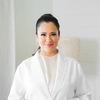
Dr. Claudia Aguirre

Founder - Dr. Claudia

Speaker Image

Eloïse Gerardin

CEO - Brain Impact Neuroscience
Speaker Image

Dr. Claudia Aguirre

Founder - Dr. Claudia

Speaker Image

Eloïse Gerardin

CEO - Brain Impact Neuroscience
More webinars

Image