



IFF’s Inositol moves from skin to scalp with clinical hair-growth data

Key takeaways
- IFF’s sugar beet-derived inositol, Genencare OSMS MI, significantly improved hair growth, thickness, density, and scalp coverage in a 120-day, placebo-controlled study of 66 volunteers.
- Daily use of a 3% leave-on serum delivered 4.1 times more hair growth, 4.7 times greater thickness, and 3.8 times greater density than placebo, plus a 31% better anagen-to-telogen ratio.
- IFF cautions that the results come from a leave-on serum and shouldn’t be extrapolated to shampoos, other concentrations, or ingestible products without further testing.

As the hair care market fills with promises to slow or reverse hair loss, International Flavors & Fragrances (IFF) is placing its bets on hair care claims backed by scientific evidence. The company recently unveiled clinical data showing that Inositol, a long-standing skin care active derived from upcycled sugar beets, can significantly improve hair growth, thickness, and density when applied daily as a scalp serum.
According to IFF’s study, Inositol has shown a 31% improvement in the anagen-to-telogen ratio. When compared to a placebo, hair had 4.1 times more hair growth, 4.7 times greater thickness, and 3.8 times greater density.
IFF’s Inositol, Genencare OSMS MI, is best known for its skin-energizing benefits and has delivered “statistically significant” improvements in hair growth and density in the 120-day, placebo-controlled clinical study. The sugar-beet-derived ingredient caters to growing scalp care demands as the “skinification” of hair care is giving established skin care actives a second life on the scalp.
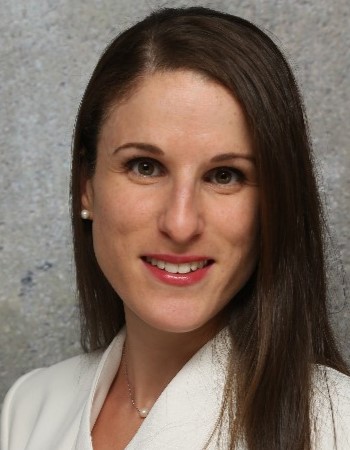 Mélanie Dick, global segment leader, personal care, at IFF.Mélanie Dick, global segment leader, personal care, at IFF, tells Personal Care Insights that Inositol can support hair vitality by acting on the hair follicle and its surrounding blood vessels, and by activating follicles. In the clinical study of 66 volunteers with hair loss, a daily serum containing 3% of the ingredient significantly improved hair growth rate, thickness, density, and scalp coverage.
What does the research reveal about Inositol’s potential for hair vitality?
Dick: Inositol has an established history of research in skin biology. Public scientific literature also suggests that it can influence several biological processes relevant to hair growth, including hair-follicle structure and function, the microvascular environment surrounding the follicle, and follicle activation. Together, these effects may help create a favorable environment for healthy hair growth.
Our clinical evidence builds on this scientific rationale by showing that the biological activity observed at the follicle level can translate into visible improvements in overall hair vitality. This expands the potential of Inositol beyond its established skin care applications and into scalp and hair care.
Genencare OSMS MI is positioned as a cosmetic ingredient for topical personal care applications. Our hair vitality research has evaluated topical use, including our clinical study with a leave-on scalp serum.
What studies support the findings, and have you demonstrated improvements in hair density in people or primarily changes in cellular markers?
Dick: There are a few layers to the evidence. Public scientific literature has investigated Inositol’s effects on areas such as cellular metabolism, endothelial network formation, and hair follicle morphology, structure, and function.
We then conducted ex vivo research on isolated human hair follicles, where stronger expression of key cellular markers involved in the active growth phase and long-term growth phase has been observed.
The most important question was whether these biological effects could translate into visible benefits for hair. We therefore conducted a four-month, placebo-controlled clinical study involving 66 volunteers experiencing hair loss and reduced hair density. After 120 days of daily use of a serum containing 3% Genencare OSMS MI, we observed statistically significant improvements in hair growth rate, thickness, density, and scalp coverage.
We also observed a more balanced hair cycle, with a higher proportion of hair in the growth phase relative to the resting phase.
What role could Inositol play in a whole-body beauty routine, and what evidence would be needed to show that topical and ingestible approaches complement each other?
Dick: Inositol is already relevant to a broader beauty routine because its potential is not limited to hair. In skin care, research has explored benefits associated with skin elasticity and strengthening the skin barrier, including support for the tight-junction structures that help maintain barrier integrity. Our research builds on this established skin care foundation by exploring the role of Inositol in scalp and hair vitality.
Our current evidence for Genencare OSMS MI in skin and hair care relates specifically to topical cosmetic applications, so we would not claim that topical and ingestible approaches are complementary based on the available data.
What formulation considerations should brands keep in mind when using the ingredient in shampoos versus scalp serums?
Dick: Genencare OSMS MI is quite versatile from a formulator’s perspective. It is water-soluble, can be incorporated through either hot or cold processing, and the recommended use range is 0.5 to 3%.
The formulation approach will depend on the intended product format and positioning. Leave-on scalp products offer prolonged contact with the scalp and hair follicles. In contrast, rinse-off formats such as shampoos can offer a complementary scalp-care solution within a broader hair-vitality routine.
Our clinical evidence for hair-vitality benefits comes specifically from a leave-on scalp serum containing 3% Genencare OSMS MI, applied daily. As such, the clinical results observed with the leave-on serum should not be directly extrapolated to a rinse-off formulation without appropriate finished-product substantiation.
Which hair care claims can brands substantiate with the current evidence?
Dick: At the ingredient level, our evidence supports a hair-vitality story around hair growth, thickness, density, scalp coverage, follicle activation, and hair-cycle balance. We also use the consumer-facing territory of supporting healthier-looking, fuller-looking hair. IFF’s Genencare OSMS MI, an upcycled Inositol from sugar beet, showed significant improvements in hair growth and density in a 120-day clinical study.
At the same time, claim substantiation is formulation- and market-specific. Our clinical study was conducted with a daily leave-on serum containing 3% Genencare OSMS MI, so a brand developing a different format or concentration needs to evaluate the claims appropriate to its finished formulation.
How does the ingredient’s upcycled sugar beet origin influence its appeal to brands?
Dick: It allows us to bring efficacy and sourcing together in the same ingredient story. Genencare OSMS MI is a highly purified natural Inositol derived from an upcycled sugar-beet processing side stream, so brands do not have to choose between a science-backed efficacy story and an ingredient with a strong naturality and circularity narrative.
It is also 100% natural according to ISO 16128, readily biodegradable, and approved by COSMOS and NATRUE. That can make it particularly relevant to brands looking to combine performance, natural sourcing, and responsible formulation.