



L’Oréal talks private sector responsibility as study spotlights skin health gaps


Key takeaways
- An industry-funded study across 158 countries reveals significant inequalities in dermatological care access, with most countries below the required workforce benchmark.
- Dermatologists remain concentrated in urban and high-income regions, creating “dermatological deserts” that limit access to care worldwide.
- L’Oréal Dermatological Beauty highlights public-private partnerships as a pathway to support training, awareness, and improved skin health access.
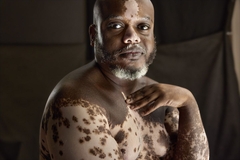
The International League of Dermatological Societies (ILDS) and L’Oréal Dermatological Beauty have released a study exposing wide inequity in dermatological care access across global regions.
Through its partnership with ILDS and its efforts to shine a light on structural inequalities in dermatological access, the dermacosmetics heavy-hitter emphasizes its role in offering a people-centric approach to corporate responsibility.
Spanning 158 countries and 97% of the world’s population, the L’Oréal-funded study found expansive discrepancies between high-income and low-income countries’ access to dermatological care. It also highlights “dermatological deserts” as 79% of dermatologists are concentrated in urban areas, even in higher-income countries.
“As the world leader in dermocosmetics, we have both the power and the responsibility to act,” says Myriam Cohen-Welgryn, president at L’Oréal Dermatological Beauty.
“L’Oréal Dermatological Beauty is committed to increasing access to skin health in the world and supporting the dermatologists and healthcare workers driving change around the world – because access to skin health should be a right, not a privilege.”
Personal Care Insights speaks to Dr. Guenolee De Lambert, global medical projects director at L’Oréal Dermatological Beauty, about the significance of these findings for the dermocosmetics industry as brands increasingly position themselves around skin health rather than beauty alone.
She tells us L’Oréal aims to close equity gaps through public-private partnerships and underscores the company’s responsibility to find solutions to personal care-adjacent inequities.
L’Oréal Dermatological Beauty highlights the role of the private sector in bolstering global skin health access.
“Addressing these gaps requires public-private partnerships — recognizing that cosmetics and dermocosmetics companies cannot act alone, but must work within the ecosystem, listen to experts, and collaborate on real solutions,” says De Lambert.Significance for skin care
Published in the Journal of the American Medical Association (JAMA) Dermatology, the Global Access to Skin Health Observatory Study examined the distribution of dermatologists across populations and barriers of access in dermatological care, training, and specialist services.
“Skin health is increasingly being recognized as a public health topic beyond the beauty industry, yet the study shows that only one in six countries has enough dermatologists to meet population needs, and 74% of countries do not report skin health as a government priority,” says De Lambert.
“This creates a critical tension: skin health requires resources and attention that go far beyond a purely cosmetic topic,” she adds.
Although wealthier nations are nearly nine times more likely to have adequate dermatology workforce levels than lower-income countries, the study also identifies inequalities in access based on income, irrespective of the overall country’s wealth.
The study found that, globally, there are 2.66 dermatologists per 100,000 people, compared with the 5.63 per 100,000 that it estimates are needed. The number places more than 80% of countries below the benchmark of adequate care.
In low-income countries, 0.37 per 100,000 people were found to have access to dermatological care, contrasted with 5.05 in high-income countries. No countries in Africa or Southeast Asia currently reach the benchmark.
“To address the gaps identified by the study, cosmetics and dermocosmetics companies must avoid acting alone and instead focus on listening closely to medical experts and health care organizations,” says De Lambert.
“By working hand-in-hand with bodies like ILDS, industry partners can support the real-world needs of health care professionals — such as training frontline workers and expanding regional education.”
Corporate responsibility against disparity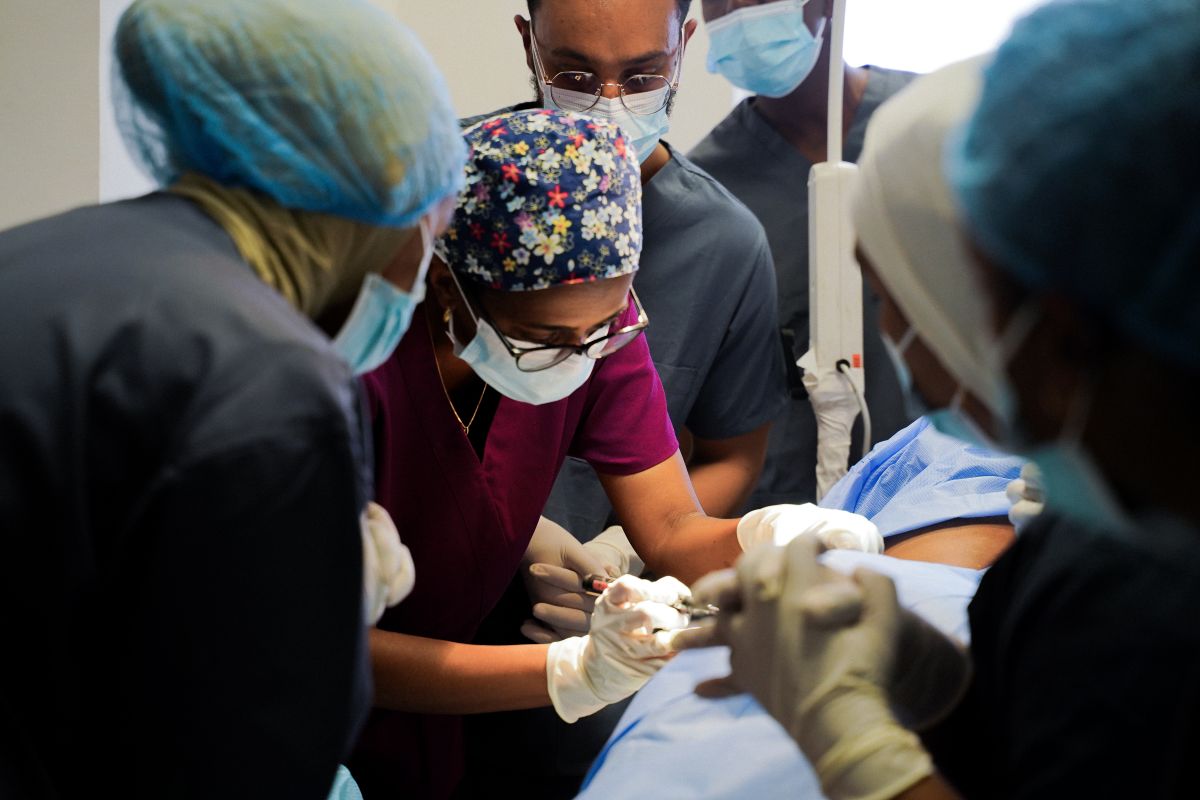
Public-private partnerships can improve access to dermatological care, says De Lambert.
According to De Lambert, for L’Oréal Dermatological Beauty, corporate responsibility means engaging in public-private partnerships by communicating with experts, identifying the gaps, and workshopping solutions to support organizations instead of acting alone.
“That is why we created our L’Oréal Act For Dermatology program in consultation with the ILDS, the WHO Foundation, and patient advocacy organization GlobalSkin.”
“For the Global Access to Skin Health Observatory, the goal is to establish a global benchmark and scorecard. Over time, we will be able to track and compare data across years to see if access is improving,” she says.
De Lambert tells us that the root cause of these inequalities is that skin health has historically not been prioritized. Beyond systemic factors, she says that the biggest shift that needs to happen is recognizing that skin health is “much more than skin-deep.” She emphasizes the link between mental health and skin disease and states that skin disease stands as the fourth leading cause of global disability.
Dr. Esther Freeman, the Study’s principal investigator, vice chair of the International Foundation for Dermatology, and associate professor of Dermatology at Harvard Medical School, says: “Where you live should not determine your access to skin health — but today, it does. Our job is to identify these gaps and work together as a global community to address them.”
“This is the first time we are turning anecdotes into data we can act on. The Global Access to Skin Health Observatory gives us, for the first time, a truly data-driven view of what access to care looks like for the billions of people living with skin disease around the world.”
De Lambert tells us the biggest challenge to overcome within this disparity is ensuring the general public and decision-makers understand the importance of skin health and the urgency of care.
“When one in four people suffers from skin disease, this is a real crisis, especially when combined with a lack of proper care,” De Lambert concludes. “Within L’Oréal Act For Dermatology, one of our core action pillars is to raise awareness on the importance of skin health within the sphere of global health.”