



Azitra filaggrin ingredient shows anti-wrinkle potential

Key takeaways
- Azitra’s ATR-COSF delivered recombinant filaggrin into deeper skin layers after repeated applications.
- The hydrogel formulation improved ex vivo skin elasticity in a dose-dependent manner.
- Azitra plans further testing before progressing to human studies on visible wrinkle reduction.

Azitra, a clinical-stage biopharmaceutical company, has revealed that its anti-aging ingredient, currently in development, shows “promising” applications in treating laxity in defatted skin. The research also demonstrated that repeated application increased ingredient distribution.
The findings come from two separate experimental ex vivo human skin tissue studies of its ATR-COSF program. The findings outline potential applications for the Staphylococcus epidermidis (S. epidermidis) derived ingredient in precision dermatology, and cosmetic proteins and peptides.
ATR-COSF uses a supernatant — the clear liquid that lies above a denser solid sediment — based formulation containing an active recombinant human domain of the protein, filaggrin (rHDfilaggrin).
Ex vivo data demonstrates controlled distribution of the rHDfilaggrin into the stratum granulosum — a thin epidermis layer below the outermost layer — in increased amounts surpassing prior single-dose experiments in human skin. Single-dose ex vivo experiments established improvements in elasticity and reduced the appearance of new fine lines and wrinkles in the skin.
“Our team at Azitra continues to be highly motivated by the prospects of our ATR-COSF program and its potential to have a substantial effect on improving the appearance of fine lines and wrinkles,” says Francisco Salva, CEO of Azitra.
“Our plan is to continue to optimize our formulations and test on additional ex vivo human wrinkle models as we head toward starting our human study, which is being designed to translate our cutting-edge science into observable, visible wrinkle reduction benefits for consumers.”
Salva stresses that filaggrin is a protein that is critical to the upkeep of skin elasticity and pliability and healthy appearance.
Methodology and findings
The ATR-COSF program utilizes the supernatant from a strain of S. epidermidis, a bacterium that naturally resides on human skin. The bacterium is engineered to secrete a functional Repeat applications increased recombinant filaggrin delivery into the skin. unit of the human filaggrin protein.
In the first study, ATR-COSF supernatant was found to provide a positive penetration and distribution profile for rHDfilaggrin in a multiple-dose, ex vivo model. The research utilized fresh, healthy human skin explants and demonstrated a significant increase in rHDfilaggrin delivered through the stratum corneum — the outermost layer of the epidermis — and into the stratum granulosum layers, compared to a single-dose previous work.
Additionally, improved concentration in the stratum corneum and stratum granulosum layers was seen with the formulated product in comparison to concentrated supernatant alone.
Optimized dermal penetration
According to Azitra, the first ex vivo model offers a biologically relevant system for evaluating skin penetration while preserving the skin’s architecture. The healthy human skin explants were first stimulated with TH2 cytokines — a group of signaling proteins produced by T helper 2 cells — to reduce the levels of endogenous filaggrin in the samples.
The study used a 2% lyophilized supernatant in a hydrogel formulation. RHDfilaggrin penetration in the middle to lower stratum corneum was detected following a single application of the 2% formulation.
Increased amounts of rHDfilaggrin were observed with additional applications. Safety testing conducted in accordance with standardized guidelines demonstrated that the 2% supernatant formulation is non-irritating and non-corrosive to the skin and eyes.
Furthermore, TH2 cytokine stimulation markedly reduced the presence of keratohyalin granules, resulting in decreased endogenous filaggrin. This reduction facilitates the differentiation and detection of rHDfilaggrin following application.
Dose-dependent elasticity improvements
The second ex vivo model utilized defatted human skin explants to assess the effect of the lyophilized (freeze-dried) rHDfilaggrin supernatant in a hydrogel formulation on skin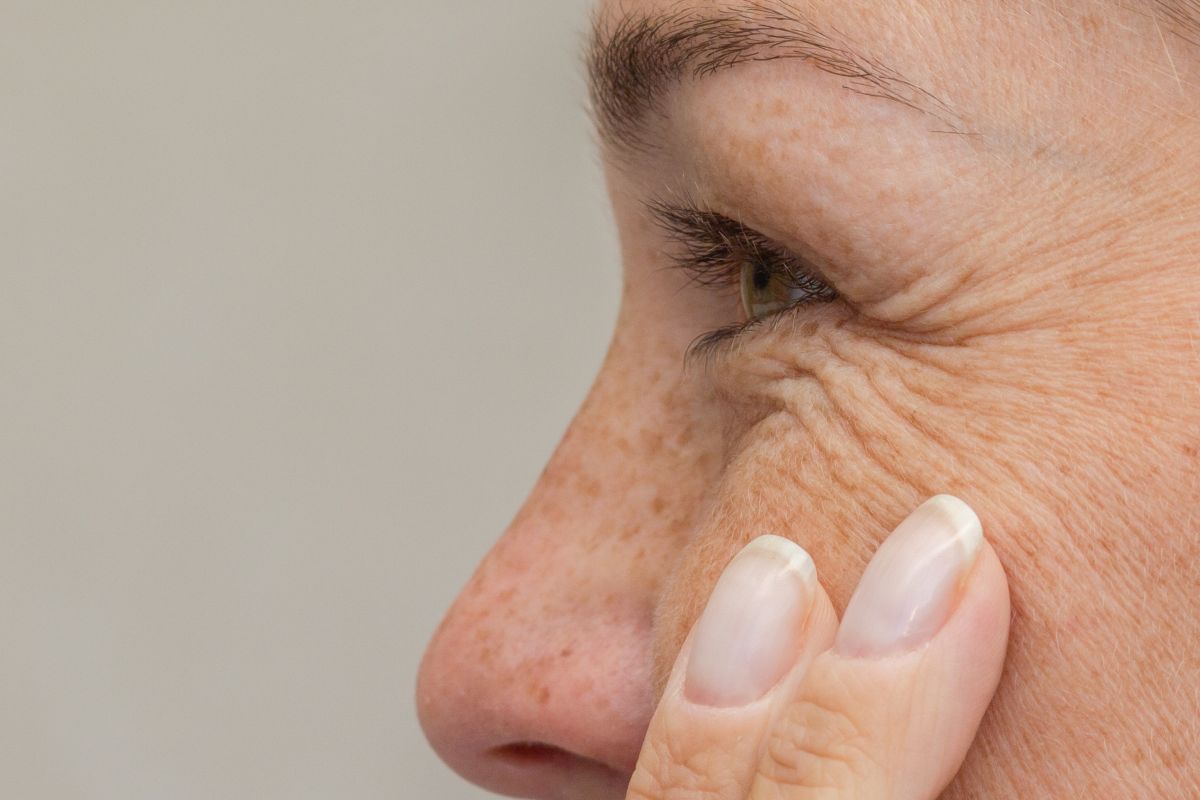 The ingredient supported firmer and more resilient skin. elasticity. Concentrations of the supernatant in the hydrogel were varied from 0% to 7.5% (weight/weight or w/w). Elasticity was measured at 20 hours post-application. Skin samples were incubated at 30ºC.
The hydrogel containing the lyophilized supernatant was active in increasing the elasticity of ex vivo human skin sections in a dose-dependent manner. Minimal and maximum effects in elasticity enhancement were observed in hydrogels containing 0.09% w/w (1.6-fold) and 7.5% w/w (4.4-fold) of active ingredient, respectively.
Hydrogels containing 0.28% w/w of active ingredient restored ex vivo abdominoplasty skin elasticity to values historically observed in healthy skin. The active-treated sample showed approximately two times the elasticity compared to the placebo-treated skin sample, highlighting the formulation’s potential as a novel cosmetic ingredient for improving skin firmness and resilience.