




California regulates TPhP in nail products over toxicity links


Key takeaways
- California will regulate nail products containing TPhP above 250 ppm.
- Manufacturers must notify the DTSC by November 30, 2026.
- TPhP exposure may pose serious health risks to health through skin contact or inhalation — salon workers and their children are especially at risk.

California, US, Department of Toxic Substances Control (DTSC), has flagged the nail polish ingredient, triphenyl phosphate (TPhP), as a Priority Product due to associated health risks. Manufacturers, foreign and domestic, using the ingredient in the state must now formally account for it and either justify its use, substitute it, or remove the product from the market.
Taking effect on October 1, 2026, the DTSC will require all nail products containing TPhP at concentrations above 250 ppm must be notified to them. California’s regulatory decision signals it is pushing the nail care industry toward reformulation without the chemical.
In nail product formulations, TPhP is often added as a plasticizer to enhance the pliability and sturdiness of coatings and treatments. However, TPhP exposure has been associated with health concerns such as liver, endocrine, developmental, neuro-, and reproductive toxicity. The DTSC warns that dermal contact is the primary route of exposure, while inhalation may also pose a risk in salon settings.
TPhP has been prohibited in cosmetic products in the European Union under Annex II of the Omnibus II Regulation since April 28, 2026.
Navigating compliance
The Priority Product marking indicates that the product contains chemicals that are recognized as posing a potential risk to the well-being of humans or the environment.
The finalized regulation requires domestic and foreign manufacturers to submit a Priority Product Notification (PPN) — a DTSC mandated compliance submission that formally registers the product as containing a “Chemical of Concern” — by November 30, 2026.
Following a notification to DTSC, nail companies using TPhP have several options:
- Companies may carry out an Alternatives Analysis accompanied by a report to the DTSC to ascertain safer substitutes.
- They may reformulate the product to eliminate TPhP.
- They may substitute TPhP with a safer alternative.
- As a final alternative, they may remove the product from the California market.
In the case that a manufacturer does not comply within the given time frame, the DTSC will list the company on a Failure to Comply List. After this listing and the notice issued with it, the responsibility to stop the distribution and sale of the affected product in California may move to importers, retailers, or assemblers.
Bans on Nails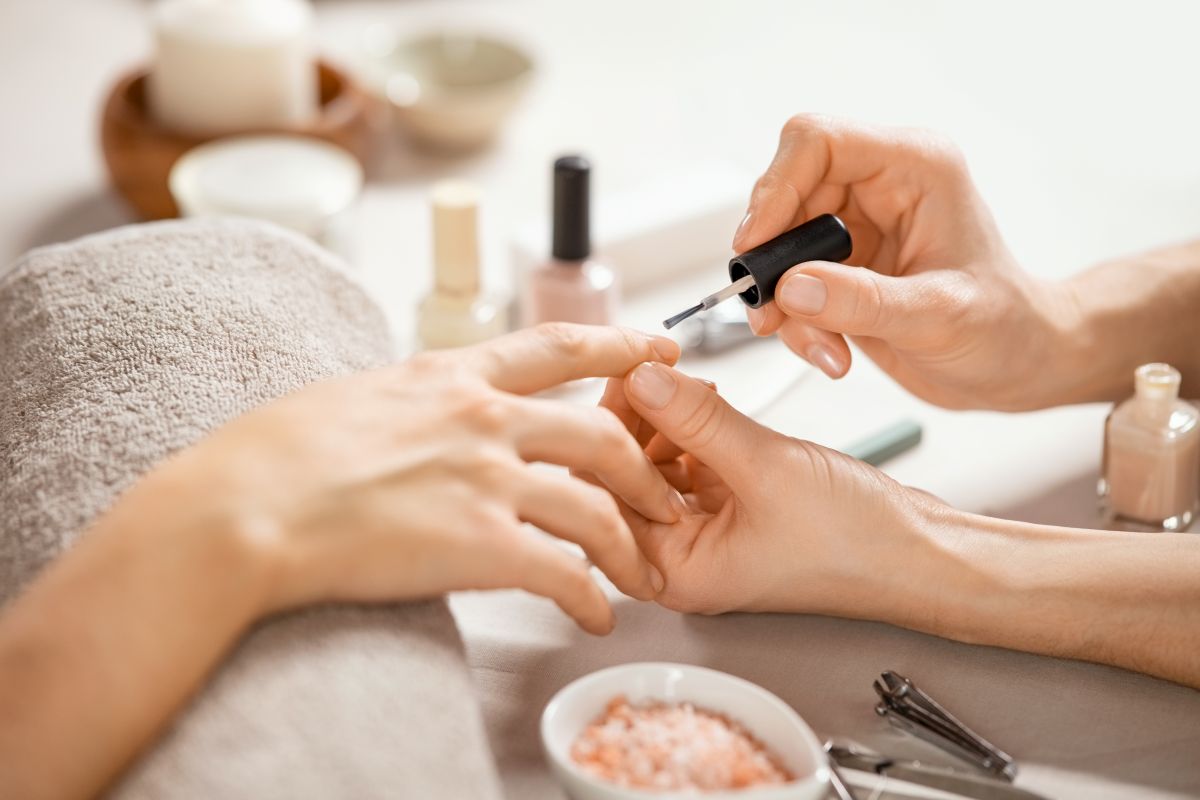
California is tightening rules on TPhP in nail products.
Another nail product ingredient that has been seeing bans across global markets is trimethylbenzoyl diphenylphosphine oxide (TPO), classified by the European Chemical Agency (ECHA) as a CMR 1B (potentially carcinogenic, mutagenic, or reprotoxic).
Last year, the Moroccan Agency for Medicines and Health Products (AMMPS) announced its ban of TPO in nail products, days before the EU’s ban on the same substance took effect. AMMPS’s ban includes imports, manufacturing, distribution, marketing, and use of all products containing the chemical.
Following Morocco’s ban, the Dubai Municipality, UAE, equipped its Central Laboratory with new testing methods to detect TPO in nail polish.