




LeNose challenges “bloated” luxury category with Gen Z home fragrance launch


Key takeaways
- LeNose launches accessible luxury fragrance with US$10 hand soaps designed to bring premium scents and formulations to Gen Z consumers.
- The brand targets shifting luxury expectations as younger consumers seek quality, design, and self-expression without traditional prestige price points.
- Home fragrance is emerging as an affordable indulgence, with LeNose tapping into treatonomics trends through sensory products that provide everyday moments of luxury.
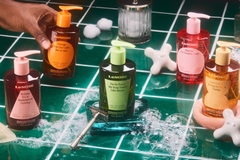
A former Bubble Skincare team has launched LeNose, a Gen-Z-focused home fragrance brand. Backed by Aesop’s early investors, the brand is positioned as “democratizing luxury for the ‘forever-renting generation’” through its US$10 price point.
LeNose was developed as a reaction to the increasing unattainability of luxury in an era of inflation and weaker disposable incomes. As Gen Z comes of age and settles into their homes, financial challenges can put day-to-day luxuries out of reach.
Through its debut Soap de Parfum collection, LeNose aims to mitigate this disparity by offering fragrance-forward home scents, developed by perfumers who work with luxury fragrance houses.
The brand is launching with five fragrances, including one titled “I’m So Fancy, My Soap Smells Like Money,” which is said to smell like dollar bills.
Personal Care Insights speaks to the LeNose co-founders about its choice to appeal to younger consumers with accessible luxury. They tell us how the luxury landscape is evolving as budgets tighten and consumer preconceptions of exclusivity shift.
The co-founders recently closed an oversubscribed pre-revenue round with strategic backing from Aesop’s early investor Era, as well as Fifth Growth Fund and OpenSky Ventures.
“LeNose is about democratizing luxury fragrance, and we launched the brand with hand soap because high-end soaps have become a status symbol for those who can afford to wash money down the drain,” says Zee Carlstrom, chief marketing officer and co-founder at LeNose.
“Our goal was to create a soap that was easily worth US$100, and in working with our world-class perfumers, we realized just how bloated traditional luxury markups are. In the end, we found we could create our line of US$100 Hand Soaps de Parfum and still maintain healthy margins at a US$10 price point,” adds Caroline Valentini, CEO and co-founder at LeNose.
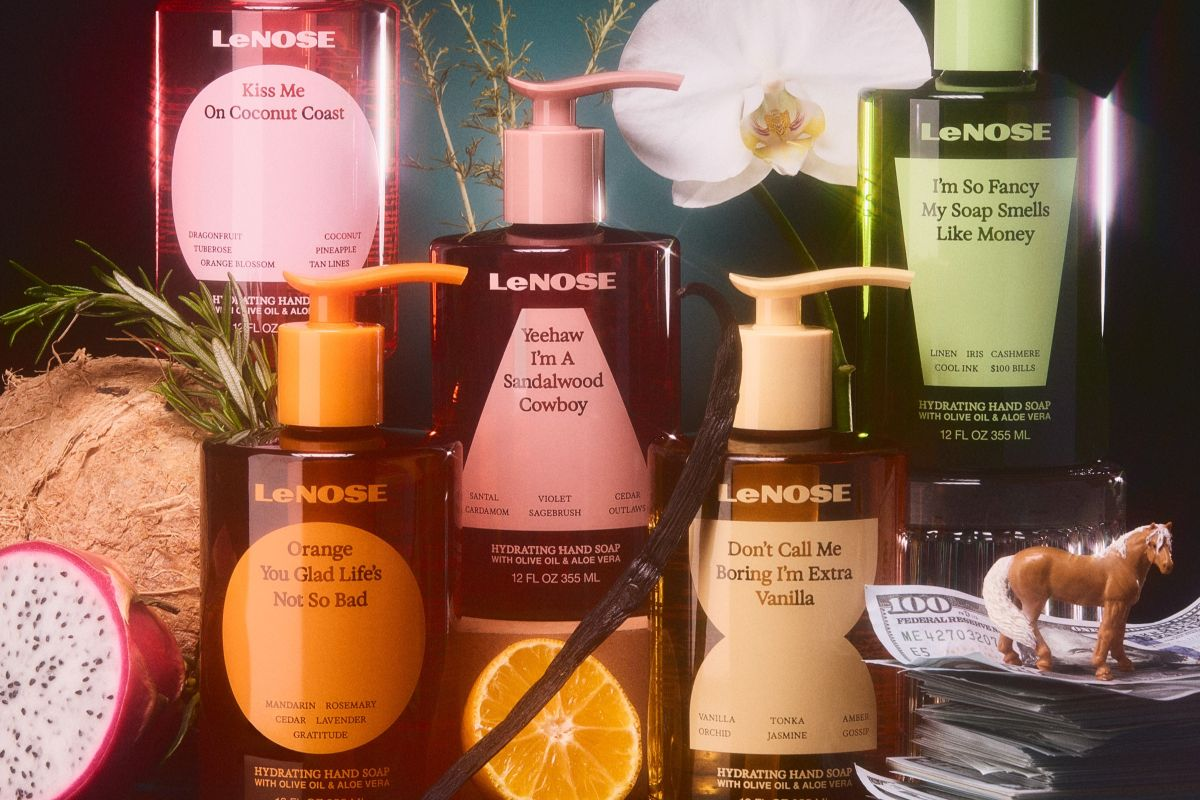
LeNose reimagines hand soap as an everyday luxury experience.
Scents of home for “forever-renters”
Valentini tells us that Gen Z and “zillenials” — the micro-generation between millennials and Gen Z — have been priced out of a lot of traditional luxury.
“Yet they still care deeply about quality, design, ingredients, ethical business practices, and a brand that feels like an expression of their taste,” she says.
LeNose is aiming to fill this gap by delivering the scents, formulation, and design Gen Z desires at a price that is aligned with their economic reality.
The company founders explain that beyond olfactive expertise, it also offers vegan, cruelty-free, endocrine-conscious formulations designed to be cleaner than the most luxurious soaps on the market.
“Brands often confuse luxury with stoic exclusivity, but luxury isn’t about price point or seriousness, it’s about intentionality and quality — experiences that are designed instead of default,” says chief brand officer and co-founder at LeNose, Lindsay St. Clair.
“We saw a massive opportunity to transform the utilitarian mass soap market by incorporating what luxury does well (complex fragrances, elevated formulations, and playful world-building) into a uniquely LeNose point of view: colorful, cheeky, rebellious, and designed to bring a burst of joy to a category that’s notoriously utilitarian.”
As luxuriousness and price tag become less intertwined in consumers’ eyes, the emergence of brands that offer a sense of luxury without the exclusivity of affluence may stand to demystify the luxury category.
Shaping the zeitgeist
The brand's US$10 hand soaps challenge traditional perceptions of luxury pricing.Carlstrom tells us more about the brand’s tongue-in-cheek, money-scented soap within the context of reshaping the perception of luxury toward accessibility. The brand’s playful tones echo Gen Z’s modus operandi at large, aiming to offer a refreshed perspective while keeping its thumb on the pulse of the generation’s culture.
“Since our core offering is US$100 soap for only US$10, ‘I’m So Fancy, My Soap Smells Like Money’ is a perfect representation of LeNose as a brand,” says Carlstrom. “This completely unique money-scented fragrance demonstrates our commitment to bringing real change to a lackluster category.”
“The scent pokes fun at the exclusivity and self-seriousness of luxury while delivering the olfactive sophistication of perfume, proving you can have world-class fragrance and exceptional ingredients without the luxury industry’s trademark snootiness and inaccessible prices.”
The “young” generation, some of whom are turning 30, is still being treated like they’re children, says Carlstrom.
“They’re sophisticated, savvy consumers who’ve spent years developing their taste online, and the brands they love genuinely reflect their tastes and give them a way to express themselves.”
“The future of these categories will be driven by more sophisticated consumers who will increasingly decide to move away from overpriced prestige brands. These generations have greater access to information, references, and niche expertise than ever, so their expectations around quality are only getting loftier,” she says.
Fragrances treatanomics
The home fragrance collection reflects changing consumer expectations around accessible luxury.While fragrances are often thought of as a treat and so can be subject to changes in demand as economic realities shift, pairing scents with a necessity product like soap can bolster its market position.
“We’ve designed LeNose to transcend our current cultural moment,” says Valentini.
“We believe luxury-quality products will continue to become more accessible to more people because we’ve proven it’s possible to deliver exceptional fragrance, endocrine-conscious formulation, and elevated design without the traditional luxury markup, and we will stay at the forefront of that movement.”
As budgets tighten, consumers are known to turn to small treats to compensate for the inaccessibility of larger buys. The lipstick effect, also known as treatonomics, is an economic indicator describing how consumers cut back on major purchases while increasing spending on small indulgences during periods of economic uncertainty. When prices rise, shoppers spend more money on goods that make them feel good, especially cosmetics.
“Over the past years, we have seen a clear evolution of the traditional lipstick effect into a fragrance effect: people choosing scents as their go-to emotional lift. Fragrance delivers the strongest return on mood for a manageable spend,” a Coty spokesperson previously told Personal Care Insights.
With its launch, LeNose is situated as an affordable luxury brand that helps consumers feel better and more at home through crafted scents and ethical positioning. The co-founders are challenging the elitism of traditional luxury products by offering enhanced sensoriality while maintaining affordability.
“Hand soap is our starting point because luxury brands have turned it into a woefully snooty status symbol, but as we expand into additional home fragrance categories, our mission and lens will remain consistent: democratize luxury, so everyone can have nicer things,” says Valentini.
“As the economy evolves, we are built to evolve alongside it, but one thing is for certain: customers will never stop wanting the best for less,” she concludes.