




DNA to dermatology: How epigenetic testing could revolutionize skin care

Key takeaways
- Mitra Bio has developed a non-invasive test using DNA methylation profiling, offering more accurate assessments of skin health than traditional cosmetic methods.
- By analyzing molecular changes at the cellular level, epigenetic tests open the door to skin care solutions tailored to individual biology.
- This enables brands to develop products that go beyond visible cosmetic effects and address underlying skin aging processes.

US-based biotech start-up Mitra Bio is bringing the future of personalized skin care to life with an epigenetic test that reveals the skin’s true biological age. Until this development was made available, biological age could only be measured through blood or saliva.
The company provides an accurate, proven way for consumers to test whether their skin care products actually work, shifting skin care toward measurable, personalized results instead of marketing promises. At-home testing is slated to be available for US consumers in late 2026.
The company’s technology is now backed by a peer-reviewed study published in Nature and the British Journal of Dermatology. Mitra Bio will be the first to demonstrate that biological age can be measured accurately and non-invasively directly from human skin via DNA methylation profiling, a common epigenetic mark. It is also the largest methylation sequencing dataset of human epidermis to date.
Mitra Bio’s non-invasive alternative to traditional skin biopsies reduces their need and opens the door to earlier detection of skin issues, better monitoring, and an improved patient experience.
Mitra Bio’s novel approach applies a tape strip on the skin — a painless method that collects enough data to analyze aging biomarkers and molecular changes beneath the surface. That sample is compared against an expanding proprietary database of skin epigenetic information.
The start-up was launched by two female scientists who saw the gap between cosmetic claims and actual biology: Dr. Shakiba Kaveh, a former L’Oréal researcher in Paris with extensive experience in cosmetic science, and Dr. Cristiana Banila, a molecular biologist specializing in DNA methylation and early disease detection.
Personal Care Insights speaks with Kaveh about the future of skin care advancements using epigenetic testing and how this could impact the wider industry.
Why is skin-based epigenetic aging fundamentally different from blood or saliva testing, and why does that distinction matter for skin care?
Kaveh: Epigenetic changes are both tissue-specific and body-location-specific. Unlike genetic markers, which do not change and can be extracted from any tissue — blood, saliva, or hair — epigenetic biomarkers must be extracted from skin tissue because factors such as sun exposure and skin diseases influence them.
For example, melanoma lesions and eczema patches produce distinct epigenetic biomarker profiles. This has enabled Mitra Bio to develop specific epigenetic-based biomarkers for biological skin aging, inflammation, UV exposure, and even melanoma detection.
How do you see this technology reshaping anti-aging efficacy across the personal care industry?
Kaveh: Mitra Bio’s epigenetic skin platform has already changed how the skin care industry measures a product’s efficacy. In fact, it’s currently used by many trusted industry partners. Mitra Bio’s platform is now used in over 30 clinical trials spanning various uses, including lasers, biologics, skin care, and even lifestyle changes, to measure biological aging, inflammation, and UV damage.
Mitra Bio will also launch a consumer skin test in the near future. This means consumers will be able to test the efficacy of their products by submitting their samples before and after product use, holding the industry accountable for its marketing claims. We want to bring better skin health by personalizing interventions.
Could epigenetic skin age become a new gold standard for claims validation?
Kaveh: I believe so. Epigenetic skin age is already emerging as a powerful complement to traditional clinical endpoints, and in some contexts, a more biologically meaningful one.
Traditional endpoints, such as wrinkle depth, hydration, and elasticity, quantify visible or mechanical changes at the skin’s surface. Epigenetic skin testing measures something fundamentally different: molecular changes in epidermal cells that reflect biological aging and response to intervention. By analyzing DNA methylation patterns rather than appearance alone, skin-specific epigenetic clocks provide an objective, reproducible readout of biological impact that conventional cosmetic measures cannot capture.
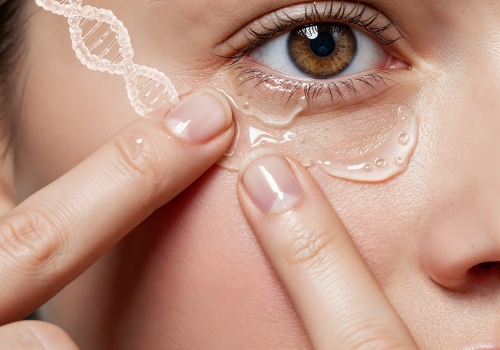 Mitra Bio’s non-invasive alternative to traditional skin biopsies reduces their need and opens the door to earlier detection of skin issues.Mitra Bio pioneered noninvasive skin epigenetic testing using tape-stripped epidermal samples and developed skin-specific epigenetic clocks trained on the world’s largest sequencing database of human skin. Ourclock (MitraCluster) was published in Nature Partner Journal Aging and demonstrated superior accuracy, repeatability, and longitudinal stability compared with existing epigenetic clocks.
Importantly, these clocks were designed for real-world use. They use noninvasive sampling, perform reliably at low sequencing depth, and can detect biological responses to interventions, including rejuvenation signals, rather than cosmetic changes.
As a result, epigenetic skin age is not replacing traditional endpoints overnight. Still, it is becoming a new gold standard for claims validation when the goal is to prove true biological impact, not just visible improvement.
How might access to skin-specific biological age data influence formulation strategies — could we see products designed to target specific epigenetic pathways?
Kaveh: Access to skin-specific biological age data will fundamentally change how products are designed and evaluated.
Instead of formulating for broad, surface-level ‘anti-aging’ claims, brands can begin targeting specific epigenetic pathways associated with skin aging and stress responses. Skin-specific epigenetic clocks enable us to see which biological pathways shift in response to an ingredient or formulation, not just whether skin looks smoother or more hydrated.
This also opens the door to deeper biological insight. When epigenetic data is paired with multi-omics approaches, it enables a more precise understanding of how interventions affect skin biology at the molecular level. Over time, this will support the development of more targeted products designed around measurable biological impact rather than generalized age-defying benefits.
Could epigenetic readouts change how ingredients are screened, optimized, or even combined in formulations?
Kaveh: Yes, we will see novel molecules being developed to target these pathways via screening. In addition, we will see better replicability of in vitro or ex vivo data on actual human experiments.
Currently, pre-clinical testing for skin care efficacy relies on outdated biomarkers, such as collagen production, but pre-clinical data is rarely used in actual human clinical trials. If we can understand biological pathways from extensive human skin studies on UV damage, inflammation, and aging, we can reverse-engineer them and target them in pre-clinical testing.
How does epigenetic testing push personalization from cosmetic customization into true biological precision?
Kaveh: Most personalization today is built on surface-level inputs that describe appearance rather than biology. While useful, those tools cannot explain why skin is aging or how it responds at the cellular level.
Epigenetic testing provides that missing layer. By measuring molecular changes in epidermal cells, it can reveal biological signals — such as the rate of skin aging, underlying inflammation, or accumulated UV damage — long before these processes become visible. This allows skin care to shift from reactive cosmetic adjustment to a preventative, biology-driven approach, enabling personalization based on what the skin is actually doing rather than how it looks.
Do you see a future where skin care products are developed, tested, and even prescribed based on an individual’s skin epigenetic profile — and what would need to change across regulation, clinical testing, and brand transparency to make that possible?
Kaveh: Yes, absolutely. Mitra Bio envisions a future where a consumer ships us a noninvasive skin sample, the epigenetic profile of that skin is analyzed, and skin care is then formulated specifically to match those biological signals.
From there, epigenetic testing becomes a way to track change over time. By retesting at regular intervals, such as every three months, it becomes possible to measure how the skin is responding biologically and adjust formulations as needs evolve. This creates a dynamic, feedback-driven approach to skin care, where products are not only personalized at the start but continuously refined based on measurable biological outcomes.
To enable this model at scale, the industry would need to align around biomarkers as valid endpoints, evolve clinical testing beyond surface-level measures, and increase transparency around how products are designed to influence skin biology and how success is defined. We will also need faster and cheaper sequencing technologies to enable mass testing.