




Kensing debuts palm-free biosurfactants to satisfy sustainability demand


Key takeaways
- Kensing presents palm-free, upcycled biosurfactants to meet sustainability demands in the personal and home care industries.
- The new biosurfactants offer environmental benefits, including reduced CO2 emissions and water footprint.
- Kensing’s collaboration with AmphiStar introduces high-performance, upcycled surfactants for eco-friendly formulations.

Kensing has released its first fully upcycled, low-carbon, and palm-free biosurfactants in North America. The debut caters to the growing pressure in the personal and home care industries to reduce environmental footprints without compromising affordability or consumer experience.
Surfactants are central to the green transition proliferating throughout the industry. However, the chemicals and bio-based ingredients manufacturer says that conventional petrochemical-based and bio-based surfactants often fall short of ambitious environmental targets when assessed across their full life cycle.
Beauty brands are at a turning point in the industry. Tightening regulations, vulnerable value chains, and Net Zero commitments are forcing the shift to sustainable cosmetics — but the solutions need to maintain efficacy. Kensing says success depends on drastically cutting emissions, halting deforestation, restoring biodiversity, and increasing supply chain resiliency. It states that incremental improvements no longer suffice.
“Breakthrough innovations such as converting waste into high-purity biosurfactants provide a clear path to achieving these targets while decoupling growth from land-use change,” says Denis Bendejacq, SVP of Global Research & Innovation at Kensing.
“Food waste and organic side streams are indeed highly effective feedstocks to meet demand at scale while preserving nature. Proprietary yeast strain engineering is combined with advanced waste treatment and purification know-how to create this new standard of fully upcycled, palm-free biosurfactants.”
To satisfy the clean beauty demand, Kensing has designed Regenyl and Revolis. The solutions follow its strategic partnership with AmphiStar Biosurfactants. Kensing will showcase Regenyl at NYSCC Suppliers’ Day in New York City, US, May 19–20. The solution’s commercial availability is subject to regulatory approval.
Clean care
Kensing’s upcycled glycolipids support mild cleansing and stable emulsions suitable for personal and home care applications. The company says they offer a “significantly” lower environmental footprint.
Regenyl is Kensing’s first upcycled glycolipid platform in North America. It is a class of surface-active biosurfactants produced via microbial fermentation from side streams of the edible oils industry, as well as agri-food waste.
The mild, 100% upcycled, and biodegradable surfactants can be used as emulsifying, solubilizing, and foaming agents in cosmetic formulations — both leave-on and rinse-off — delivering pleasant sensory textures and skin feel. The solutions are also palm-free. Upcycled biosurfactants reduce environmental impact.
Palm-free solutions are becoming increasingly popular in the personal care industry with rising awareness of the environmental impact its sourcing can create.
Personal Care Insights previously covered how cultivating natural cosmetic ingredients, such as palm, often demands huge amounts of land and water, and drives deforestation. “Natural cosmetics can have significant negative environmental impacts, despite their eco-friendly image. A prominent case that has lost its natural, sustainable image is palm oil — widely used in soaps, lotions, and makeup,” Thomas Collier, CEO at Levur, told us.
Palm oil cultivation has caused significant deforestation globally. Approximately 300 football fields of forest are cleared every hour to make way for palm oil plantations. This releases vast amounts of carbon emissions and destroys habitats.
Also in line with eco-friendly beauty practices, Kensing has debuted Revolis for home care and industrial cleaning. The ingredient grades enable the development of environmentally responsible formulations with effective degreasing, soil removal, and surface cleaning across multiple formats.
Upcycled to outperform
Regenyl and its home care counterpart, Revolis, were evaluated through a comprehensive cradle-to-gate life cycle assessment. The results show reductions across all major environmental impact categories.
Compared with biosurfactants of similar chemistry produced from virgin (non-upcycled) feedstocks, upcycled biosurfactants deliver over a four times reduction in CO2 emissions and an 18 times reduction in water footprint. They also offer a 15 times reduction in biodiversity impact and a seven times reduction in land use.
When compared with industry workhorse surfactants produced fully or partly from petro-based feedstocks, Kensing says the environmental benefits are even greater.
“Our new portfolio of upcycled, low-carbon biosurfactants empowers formulators and brand owners to create differentiated products supported by credible, life-cycle-backed sustainability claims aligned with clean beauty expectations,” says Eshani Burdwick, SVP of Surfactants and Esters at Kensing.
The specialty chemicals company’s findings demonstrate that circular feedstock selection and fermentation-based production can deliver meaningful sustainability gains at commercial scale without compromising functional quality.
Tackling formulation challenges
Kensing explains that current biosurfactant offerings are limited in molecular diversity, constraining formulation flexibility and the performance attributes that drive consumer experience and satisfaction.
To address this gap, Kensing has introduced AmphiStar’s AmphiNova molecular design platform. The collaborative platform combines tailored microbial fermentation with pilot customer feedback. It is said to enable the targeted design of upcycled, high-performance biosurfactant molecules with superior foaming and cleaning properties, capable of competing with today’s less sustainable surfactant incumbents.
The platform contains over 80 versatile biosurfactants sourced from biological waste byproducts and side streams, providing an alternative to synthetic surfactants and those that rely on virgin crops. 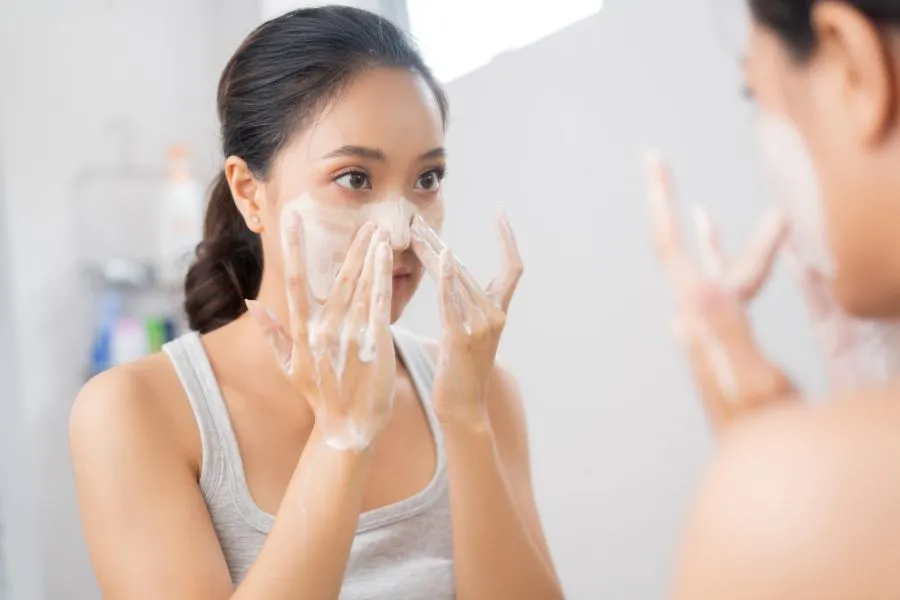 Kensing’s new solutions support eco-friendly formulations.
The Belgian biosurfactants manufacturer states that AmphiNova, which acts as a molecule catalog, is available for collaboration across various personal care applications with partners developing novel surfactants and focusing on sustainability.
AmphiStar previously told Personal Care Insights that it was “taking upcycled biosurfactants from promising to practical for beauty and personal care,” after its exclusive distribution partnership with Caldic.
The collaboration with Caldic planned to expand access to the biotech company’s upcycled biosurfactants across Europe. The move aimed to support formulators’ demand for sustainable, upcycled ingredients ahead of the EU’s proposed European Green Deal and Biotech Act.
Biosurfactant boom
Biosurfactants have shot into the personal care spotlight in the past few years. Evonik previously called biosurfactants “one of the most promising technologies” in the personal care industry.
Joseph Shieh, global marketing director of Cosmetic Solutions at Evonik, told us: “As consumers increasingly prioritize sustainable lifestyles, the personal care industry has a real opportunity to create more appealing, natural products using glycolipid-based biosurfactants.”
Earlier this month, we spoke to Sasol Chemicals, one of the world’s largest manufacturers of surfactants, at In-cosmetics Global 2026 about its new ingredient, Paraol 10 RSPO-MB, a biobased, biodegradable alternative to silicones. We also discussed multifunctional emollients and biosurfactants.