




UK deforestation rules could expose beauty supply chain blind spots, experts warn


Key takeaways
- The UK’s proposed deforestation rules would require beauty companies to report how and where raw materials and their derivatives are sourced.
- Beauty supply chains are highly complex, and visibility gaps remain, complicating traceability.
- Industry groups say alignment with the EUDR and point-of-entry checks could ease burdens, but legal loopholes could leave unsustainable sourcing unaddressed.
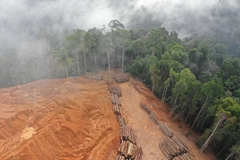
The UK government’s crackdown against deforestation is meant to clean up supply chains, but beauty industry voices warn that the sector’s complex web of naturally-sourced ingredients, processors, and suppliers could make compliance difficult.
The Great Britain Deforestation Regulation (GBDR) was announced last week and is scheduled for enactment by 2027. Still pending consultation, it would require businesses in the UK with an annual turnover exceeding £1 million (US$1.3 million) to undertake due diligence regarding their commodities sourced from forests. Thereby, it will prohibit any products with ingredients linked to deforestation from being sold in the UK.
For the cosmetics industry, commodities such as palm oil, cocoa, soy, wood or paper, coffee, and rubber are likely to receive the greatest compliance pressure.
Personal Care Insights sits down with the British Beauty Council, the Cosmetic, Toiletry and Perfumery Association (CTPA), and the World Wildlife Fund (WWF) about how the upcoming rules may disrupt how beauty is sourced.
“Compliance will require businesses to provide data proving raw ingredients were harvested legally according to local country laws,” says Victoria Brownlie, chief of Policy & Sustainability, at the British Beauty Council.
However, because the laws would cover derivatives of ingredients, and not just the raw ingredients themselves, companies will need to trace raw materials in processed cosmetic ingredients.
“In the beauty industry, a single moisturizer can contain ingredients sourced from dozens of different brokers, chemical processors, and smallholder farms globally,” Brownlie explains.
“The reality is that a significant gap in supplier visibility remains, particularly for SMEs. While many larger, multinational beauty corporations have spent years mapping their supply chains in anticipation of international changes, SMEs, which make up the majority of the industry in the UK, face a steep learning curve.”
.webp) Palm oil derivatives are widely used in beauty products, but can be difficult to trace through complex supply chains.Cosmetic businesses assessing traceability measures are now facing questions over how far back in the value chain their due diligence reporting must start. With a formal consultation launching later in 2026 and secondary legislation landing in 2027, Brownlie warns that “the clock is ticking” for brands to transition to precise, traceable supply networks.
Palm oil derivatives are widely used in beauty products, but can be difficult to trace through complex supply chains.Cosmetic businesses assessing traceability measures are now facing questions over how far back in the value chain their due diligence reporting must start. With a formal consultation launching later in 2026 and secondary legislation landing in 2027, Brownlie warns that “the clock is ticking” for brands to transition to precise, traceable supply networks.
Cuffed in complex chains?
The British Beauty Council maintains that “the greatest compliance pressure will undeniably fall on products with palm oil and its thousands of complex chemical derivatives.”
Palm oil is a “foundational element” in the beauty industry, acting as the base for emulsifiers, surfactants, emollients, and texturizers found in product categories ranging from shampoos and lipsticks to anti-aging creams.
“However, other product categories utilizing cocoa, such as cocoa butter in body lotions and lip balms, soy used in skin-conditioning agents and Vitamin E derivatives, and wood or paper vital for primary and secondary packaging, will face heavy scrutiny,” says Brownlie.
Furthermore, she explains that products using coffee, such as exfoliating scrubs and caffeinated eye creams, and rubber, which is used in cosmetic tools, applicators, and product seals, are also captured under the scope.
“Because the rules cover derived ingredients, businesses will be expected to track raw ingredients through their chemical conversion into a cosmetic ingredient, therefore requiring highly sophisticated data tracking,” she says.
CTPA adds that how the derivatives caveat will be implemented will largely dictate how the beauty industry can prepare for the GBDR.
“Cosmetic ingredient supply chains are complex, so implementation will be critical to ensuring the requirements remain simple, proportionate, and effective,” Nico Shaw Núñez, director of Regulation and Sustainability at CTPA, tells Personal Care Insights.
Núñez explains that derivatives of palm and palm kernel oil illustrate the difficulty of managing highly intricate supply chains, as they often span multiple jurisdictions and production steps.
.webp) Forest-risk commodities such as palm oil, cocoa, soy, coffee, rubber, and paper may face greater scrutiny under the UK’s proposed rules.“It must be clear which ingredients are in scope...so companies can identify exactly where the regulation applies,” he says. “This may be particularly challenging where commodities come from multiple sources or involve smallholder farmers.”
Forest-risk commodities such as palm oil, cocoa, soy, coffee, rubber, and paper may face greater scrutiny under the UK’s proposed rules.“It must be clear which ingredients are in scope...so companies can identify exactly where the regulation applies,” he says. “This may be particularly challenging where commodities come from multiple sources or involve smallholder farmers.”
Downstream obligations, upstream burdens
CTPA says that the UK government held public consultations on introducing due diligence requirements for forest-risk commodities in 2020 and again in 2022. These deforestation regulations were expected in 2024, but they did not progress before the July 2024 General Election.
Back then, the law would have required reporting at multiple points across the supply chain, covering the raw materials and the products containing them. CTPA explains that if the upcoming GBDR follows this same model, it would create significant administrative pressure.
Ingredient suppliers would likely face repeated data requests from downstream companies required to submit annual due diligence reports.
“The cosmetics and personal care industry believes that compliance should be checked at the point of import, so relevant commodities entering the UK are verified as deforestation-free,” says Núñez.
“Having been checked at the point of entering the UK, any products manufactured using those commodities should therefore not need separate technical documentation to demonstrate compliance.”
The UK has not yet finalized exactly how far due diligence checks will extend through the cosmetics supply chain. However, the government says the GBDR should operate consistently alongside the EU’s version of the law, the EU Deforestation Regulation (EUDR), so that businesses may hold broadly the same information required for an EU due diligence statement.
Under the EUDR, companies first placing relevant goods on the market must ensure they are covered by a due diligence statement, while downstream businesses face reduced requirements.
.webp) WWF warns that legal compliance alone may not guarantee sustainable sourcing.Núñez says any UK government oversight targeting harmful agricultural markets should align closely with EU frameworks to help reduce administrative burdens.
WWF warns that legal compliance alone may not guarantee sustainable sourcing.Núñez says any UK government oversight targeting harmful agricultural markets should align closely with EU frameworks to help reduce administrative burdens.
Loophole compliance
The UK will initially focus on curbing illegal deforestation by checking compliance with local laws, but the government has explicitly stated that the long-term direction is a completely zero-deforestation standard.
“Focusing on illegal deforestation will address a sizable legal issue in supply chains and is an important first step; however, it will not be enough on its own,” David Walsh, head of Public Affairs, Conservation, Advocacy, and Policy at WWF UK, tells Personal Care Insights.
He explains that there is a risk the UK could still be importing products linked to forest losses that are technically legal under national laws, but highly damaging to climate diversity and local indigenous communities.
“It is important to distinguish legality from sustainability: a commodity may be legally harvested without being produced sustainably,” Núñez echoes.
The WWF says strong enforcement is essential to foster the goal of the directive, and that the organization needs clear guidance from the government on how the regulations will be implemented.
“Businesses will need time to analyze their supply chains, then prepare and develop the proper record-keeping. The government will also need to ensure it has the proper mechanisms and tools in place to effectively enforce the measure,” Walsh explains.
“How geolocation claims or supplier data are verified will be critical to prevent companies from technically complying on paper while relying on incomplete or weak certification from suppliers.”
He notes that curbing deforestation in global supply chains goes beyond enforcement: the government must actively support companies in compliance, especially in producer countries.
“Otherwise, the costs and risks of compliance could be pushed onto farmers, increasing the risk of exclusion from UK and EU markets.”
Similarly, Núñez concludes that, “while UK and EU rules are a positive step toward tackling deforestation, international cooperation should look to ensure that ingredients manufactured and used in third countries are also subject to appropriate scrutiny.”