

Unilever invests US$270M in US personal care and well-being innovation center

Key takeaways
- Unilever is investing $270M in a new global innovation center in Connecticut, US.
- The center will focus on AI-powered R&D to enhance product development and scaling.
- The initiative strengthens Unilever’s US personal care, beauty, and well-being strategy.
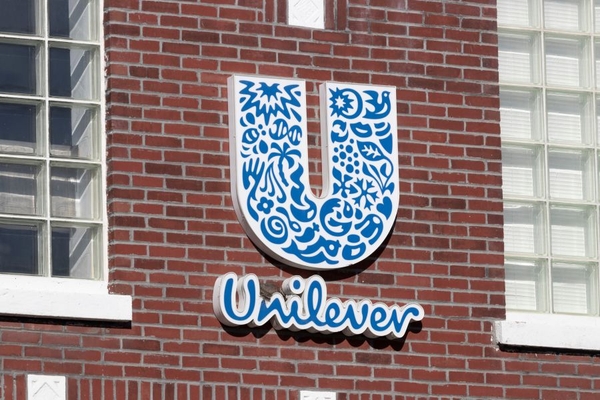
Unilever has unveiled its plans to invest US$270 million in a global innovation center in New Haven, Connecticut, US, for its personal care, beauty, and well-being businesses, set to open by spring 2029.
The move furthers the consumer goods company’s US$15 billion investment in the US market over the last ten years. The center will focus on improving Unilever’s R&D capabilities to enhance scaling and product development by using AI.
The innovation center is also said to drive Unilever brands’ desirability and growth across US markets and globally. The move further roots Unilever’s recent strategy to become a focused, pure play personal care, beauty, and well-being company.
“Our global innovation center is where we’ll innovate at the intersection of science, technology, and culture — for the US and for the world. We will build on our deep heritage of innovation to develop the next generation of brands and products that people love,” says Herrish Patel, president at Unilever USA and CEO of Personal Care North America.
“As part of Unilever’s global network of innovation hubs, the center will connect closely with our other leading locations worldwide, sharing technology, insights, and breakthrough ideas to accelerate innovation at scale.”
AI drives research and product development at Unilever’s hub.
Differentiated capabilities and assets
The center is a digital-first space and focuses on AI capabilities to provide insights and innovation to power Unilever’s goals to deliver “superior science, aesthetics, and sensorials.”
Unilever underscores the state of Connecticut’s status as a rapidly growing biosciences innovation cluster as a significant benefit of its choice of location. It emphasizes the region’s advancements in science through local universities and companies.
The company connects its existing expertise in skin biology, microbiome, and skin-brain axis, stating that the center will enable it to produce products with superior performance in “texture, fragrance, and bioactives with emotional, behavioral, and wellness responses.”
To advance scaling capabilities, the center is powered by AI and emerging quantum technologies. It is backed by the State of Connecticut and private investment and aims to improve future materials discoveries.
The innovation center is set to bring formulation, fragrance creation, packaging design, and consumer insights together, creating a hub for end-to-end R&D. This is projected to accelerate product development and enable ease of collaboration.
Honed capabilities
The center will focus on beauty, well-being, and personal care.
The center possesses specified capabilities across Unilever’s home and personal care segments. It will include a global center for skin care and cleansing, a polycultural skin and hair center, a human performance lab, a Unilever fragrance house, and a packaging innovation studio.
“Our new global innovation center will bring these capabilities together to develop new, category-defining innovations in the US and scale globally. The real shift here is integration and speed: science, design, and sensorials working as one, with AI and partnerships accelerating every stage of innovation,” says Richard Slater, chief R&D officer at Unilever.
The center furthers Unilever’s redirected focus on personal care products following an agreement to combine its Foods business with McCormick. Post-completion, Unilever will only operate across Beauty, Wellbeing, Personal Care, and Home Care.
Unilever has increasingly been investing in and exploring AI capabilities. Recently, Personal Care Insights spoke to Jason Harcup, chief R&D officer for Beauty and Wellbeing, about the company’s moves in AI.
“Consumer insights are at the heart of our work and are embedded end-to-end in the product development process,” Harcup told us.
“From the outset, our focus has been on how AI can best augment scientific expertise at scale, starting with data democratization. We’re connecting decades of proprietary scientific data across our R&D systems into a single ecosystem in order to enable our teams to explore and link datasets at a depth and speed that simply wasn’t possible before.”