

NYSCC Suppliers’ Day 2026: dsm-firmenich anticipates Parsol Shield approval
26 May 2026 | dsm-firmenich
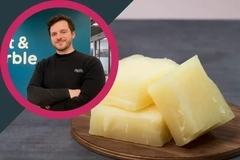
Vicki Barboiu, senior director Beauty & Care North America at dsm-firmenich, told us about Parsol Shield, a UV filter that is expected to be the first approved by the US FDA in over 25 years. She explained what its anticipated approval means for formulators and consumers and how it addresses the US broad-spectrum SPF gap. Barboiu also dove into what North American brands should know about preparing for this next era of sun care innovation.
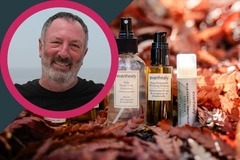
This is Sabina Waldeck for Personal Care Insights at New York Suppliers Day, joined by Vicky Barboo, the senior director of beauty and care in North America at DSM Firmanish.
Welcome.
Thank you, Sabina.
Nice meeting you.
So your innovation, Parasol Shield is anticipated as the first new UV filter in over 25 years.
What does its approval mean for formulators and consumers?
Thank you for the question.
Passo Shield is a game changer, so it is a turning point for the US suncare market.
It is on the track to become the first FDA approved UV filter over 25 years.
What it means for our formulators.
In the US is that our US formulators have had a very limited toolbox in the US for US market while their counterparts in other regions have more options in the Eurofilter selections.
With the partial shield, it will allow them to develop high SPF formulations which are also aesthetically pleasing.
This is giving our formulators much more options to play, to play with and also be more creative in developing suncare products for US market for US.
Consumers, it means even more.
US consumers can finally access highly stable broad spectrum UV products, which are also aesthetically pleasing, something desirable for consumers to use.
At the end, these allow consumers to apply sunscreens more frequently and more often.
And this will help consumers to protect skin from photoaging as as to prevent skin cancer, this is a public health benefit.
And what sets Parasol Shield apart from other suncare innovations, and why do you think it's the first one that has come so close to being approved for so long?
What sets partial shield apart is it's.
Compatibility, safety, and the performance.
In terms of performance, Psor shield is a broad spectrum.
It protect, has a, a broader UVA UVB protection.
In terms of compatibility, fossil shield works very with both mineral and chemical sunscreens.
It gives the freedom to US formulators to develop both hybrid and the chemical sunscreen products for US consumers.
And in terms of safety, ParcelShield has a very robust safety profile which allows us to fulfill a demanding FDA registration process.
ParcelShield is excellent for sensitive skin consumers, consumers with a different skin type.
It is safe for anyone 6 months and above.
And how do you see the current gap in effective broad-spectrum UV filters in the US shaping SPF formulation innovation today?
Up until now, US formulators have worked with very limited toolbox.
They face challenge when they develop formulations for US market.
The challenge they face is that they need to balance the need to achieve high SPF formulations while need for stability, as as balance the need for texture for US consumers.
Parssil shield will allow.
Formulators to overcome all these challenges and then develop a formulation which are desirable by consumers, and from there, consumers will be more willing to apply sunscreens, therefore help them to prevent skin aging as as prevent skin cancer.
And what are the biggest hurdles you're seeing in the FDA process for new UV filters and how is the industry adapting?
And then.
Now with the anticipated approval, how do you think it will shift and what does it mean?
Does it mean a new era of approvals?
Unlike anywhere else, Sun care products is considered as an FDA drug in the US market.
What it means for all the new UV filters is that it needs to be registered as a drug, meet pharmaceutical requirement.
As a result, there's no UV filter has been approved in the last over 25 years.
This is the biggest hurdle we have in the US market.
With the registration of ParcelShield, we hope that there will be a more transparent and also easier registration process.
In the meanwhile, protect our consumers and provide safe products to them.
And I hope that with the registration of ParcelShield, we create a movement where all the suppliers can come forward and bring more innovation to our industry, therefore benefit the public health and benefit our consumers.
And how should North American brands prepare for Parasol shield in terms of formulation and regulatory expectations?
It's very easy.
Be ready and be proactive.
If you are looking for ways to speed the go to market, please contact us.
We have a full line of product portfolio that can help customers like you to speed up a go to market.
We're happy to support you.
And then beyond Parasol Shield, where do you see the next frontier of suncare innovation heading in the US market?
I'm speaking as a consumer.
I'm a consumer myself.
I'm looking forward to seeing more SPFs incorporated into the skincare.
I'm also looking for desirable.
Products that I'm willing to happy to apply on my skin and at the end I'm also looking for high SPF products and I hope our US formulators can leverage ParcelShield into their toolbox to create more innovative suncare products for US consumers.