



Iridescent promotional banner from Kao Chemicals Europe featuring “Pearled Perfection,” advertising Danox Pearl GS with soft pastel swirls and a “Learn more” button
Home
Videos
In-cosmetics Global ...

In-cosmetics Global 2026: Mibelle Biochemistry debuts skin and hair care longevity ingredients

23 Apr 2026 | Mibelle Biochemistry

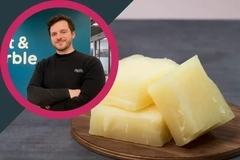
At In-Cosmetics Global 2026, Mibelle Biochemistry introduced new longevity-focused ingredients for skin and hair care. Franziska Wandrey, head of research, highlighted EpiSnow, an active ingredient designed to target the skin’s biological aging clock and tackles seven hallmarks of aging. The company also expanded into hair longevity with PhytoSpherix Hair, a plant-based ingredient that delivered glycogen to hair follicles to boost energy and support growth. While most glycogen sources are animal-derived, the alternative was sourced from sweet corn.


This is Sabina Waldeck for Personal care insights at In Cosmetics Global 2026 joined by Francisca Wandri, head of research at Mabel Biochemistry.

Welcome.

Glad being here.

So can you walk me through what you're showcasing here at In Cosmetics?

Yes, so at this year's In Cosmetics we have actually two new launches, one for skincare and one for hair care.

For skincare we have EpiSnow, our new longevity active ingredient that targets seven hallmarks of aging for turning back the aging clock.

For hair care, our new launch is Phytospheric Hair.

It's a plant-based glycogen that supplies hair follicle with energy for better hair growth.

And what makes EpiSnow truly innovative in epigenetic skincare, and how does it specifically reverse epigenetic alterations to restore skin cells to a younger biological state?

So what's really new about EpiSnow is that it can actually turn back the biological age.

So we target the aging clock.

The aging clock are epigenetic modification that can be measured on our DNA, on our skin cells' DNA.

And it can determine our biological age by different lifestyle like sleeping a lot or sleeping very little, whatever you eat, how much you exercise, how much you drink that can all influence your biological age and that can show on your skin your biological age might not be the same as your passport for a logical age and the aging clock can redetermine how old is your skin really.

With EpiSnow, when we treat skin cells, we can show that aged skin cells actually can have a lower biological age than without Epi Snow, so we can really turn back the aging clock.

And can you explain how Episode targets key hallmarks of aging at the cellular level, specifically, and how do these effects translate into visible improvements in skin texture and resilience?

So I mentioned EpiSnow targets 7 different hallmarks of aging.

So the hallmarks of aging are underlying processes, biological processes in our body that leads to aging phenotype.

There have been 9 original hallmarks of aging.

Now there are 14.

Maybe next year there will be more.

We now target 7 of them.

For example, we positively influence epigenetic alterations, that's the aging clock.

We positively influence mitochondrial dynamics, the energy production, for example.

We also protect the skin from DNA damage, so that would be genomic instability.

We.

Influence extracellular matrix, so collagen production, for example, LSin production, and how does this translate into clinical results.

We actually did a study in the summer months in Portugal where the volunteers encounter lots of UV radiation and we could actually measure senescent cells, zombie cells on the skin, and other hallmarks of aging.

And we could see that after 1 month in the Portuguese summer on the placebo half of the face, senescent cells increased in the volunteers with the epinow, we could prevent this from happening and even reduce senescent cells a bit.

Same with UV spots, and we also did a clinical study in the wintertime under other harsh conditions and we could show a nice increase in skin barrier and hydration.

And photospheric hair is a plant-based glycogen alternative for hair care.

How do those plant-powered solutions support hair follicle energy, and what makes it a breakthrough in hair longevity?

Yes, so hair longevity is a big buzzword now.

These hormarks of aging, they are now translating into hair care.

And what our phytospheric hair is doing, it's plant-based glycogen.

Glycogen is a sugar molecule made up of glucose units, and that can supply our hair follicle with the energy it needs to grow.

Hair is actually the second fastest growing tissue in our body.

Only bone marrow is faster, so you can imagine that hair growth needs a lot of energy as we age.

Again, hallmarks of aging.

Energy production goes low, energy storage goes low, and we need to resupply hair follicle with energy.

5 years ago there was a new publication that actually the hair follicle itself can store and use glycogen for energy use, so we thought it would be perfect to use glycogen to resupply the hair with energy.

And then lastly, how does phytospheryx hair compare to animal derived glycogen in terms of safety, effectiveness, and sustainability for hair care?

That's a good question, because most glycogen sources are animal-based because all animals, including us humans, we have glycogen in our body.

Not a lot of plants do.

And we get our glycogen from sweet corn that naturally produces glycogen, and it's actually identical to animal derived glycogen.

The molecule is the same, so the efficacy is the same.

You just have a much nicer sustainable plant-based source.

Perfect, and thank you for joining Personal Care Insights.

Thank you very much.

More videos

Image