



AI ends animal testing? Researchers create “most accurate” skin irritation prediction model

Key takeaways
- AI is revolutionizing skin irritation testing by eliminating the need for animal experiments.
- A new AI model uses human-relevant data, improving accuracy and safety in cosmetic chemical evaluations.
- The new technology accelerates the discovery of safer ingredients while reducing testing time and harm to animals.
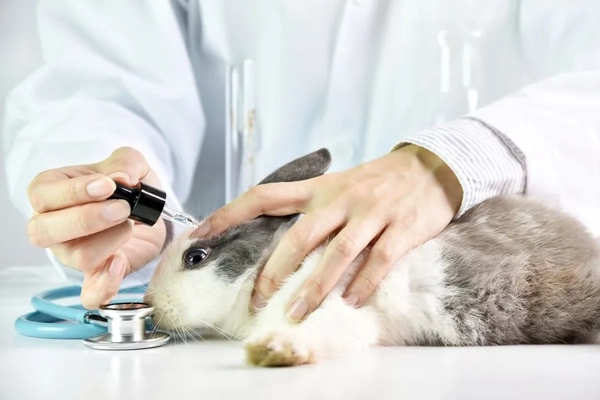
Osmo and the Institute for In Vitro Sciences (IIVS) have spared over 19,000 rabbits from animal testing. The collaborators have demonstrated how artificial intelligence (AI) can transform skin safety testing for thousands of chemicals without subjecting animals to experiments.
The study used AI to evaluate the skin-irritation potential of over 3,000 chemicals, using validated non-animal testing methods. The results generated safety data that would have required up to 19,134 rabbits under traditional approaches.
The research represents “the first” time an AI tool for predicting skin irritation has been trained on data generated by validated human-relevant laboratory methods rather than on often-irrelevant animal testing data.
“Training our AI entirely on human-relevant, non-animal data is critical because the goal is to predict human skin responses, not outcomes from other species. Animal models often fail to translate to humans in cosmetic safety, leading to the elimination of safe ingredients and, at times, accidentally letting through risky molecules,” says Jacob Sanders, senior machine learning engineer at Osmo, tells Personal Care Insights.
“Cosmetic animal testing is less aligned with human biology and heavily constrained on throughput, and a machine learning model based on human-relevant, non-animal data avoids both of these limitations.”
Sanders calls Osmo’s and IIVS’ testing methodology the “most accurate skin irritation prediction model developed to date.”
Faster and fewer experiments
The AI tool is designed to predict skin irritation across large libraries of molecules, which has significant implications for accelerating the discovery of safer cosmetic chemicals. The discoveries reveal how beauty ingredient testing can head toward modern, human-relevant methods.
“From a scientific and regulatory perspective, animal testing is no longer necessary when scientifically robust, human-relevant methods exist and have undergone validation for a specific use,” IIVS president Amanda Ulrey tells us.
“The validation process demonstrates that test methods are reliable, robust, and appropriate for the defined context of use. Validation increases the scientific community’s confidence in new methods, so it is very hard to justify using an animal model when a validated human-relevant method is available for use.” Safer cosmetic testing is available with AI-driven models.
The Skin Irritation Test was based on reconstructed human epidermis models. The method was used during a Gates Foundation-funded project to discover compounds that repel, attract, or destroy disease-carrying insects.
The method calibrated Osmo’s proprietary Olfactory Intelligence (an AI platform specialized in scent) to predict skin irritation. Osmo is known as “the first” company to digitize scent.
Osmo’s learning models identified approximately 100 molecules whose experimental results would be the most informative and deliver the largest boost in model performance. IIVS then generated validated, ground-truth skin irritation data using the throughput assay it developed. The results were fed back into Osmo’s models, creating a learn-test-learn loop that delivered “the fastest possible improvement with the fewest experiments.”
“This project is one of many that the industry is working on to improve the prediction of human outcomes with human-relevant systems. There are many more endpoints where different models are being proposed and validated to replace animal testing,” says Ulrey.
In addition to funding work developing novel methods, there needs to be funding mechanisms in place to support validation work to build confidence in the new science that is proposed, she explains.
“AI systems have the ability to help make sense of the data generated, and when built from and paired with human-relevant data from the laboratory, we are able to accelerate the pace of replacement faster than we have been able to do to date.”
AI for accuracy
Toxicological profiling is a critical component of the regulatory process that informs hazard characterization and the labeling of chemicals, thereby guiding their safe handling and use in cosmetic formulas. Skin irritation is a key endpoint for regulatory registrations, traditionally assessed by using the Draize rabbit test, introduced in 1944.
Since the 40s, advances in New Approach Methodologies, particularly those based on reconstructed skin models, have led to more human-relevant alternatives to animal testing methods.
“Predicting skin irritation with AI improves more than ethics — it improves scientific accuracy and real-world relevance. By screening out likely irritants early, our skin irritation machine learning model greatly reduces the number of molecules that ever need to be tested on rabbits or humans, saving time, money, and potential harm,” says Sanders at Osmo. 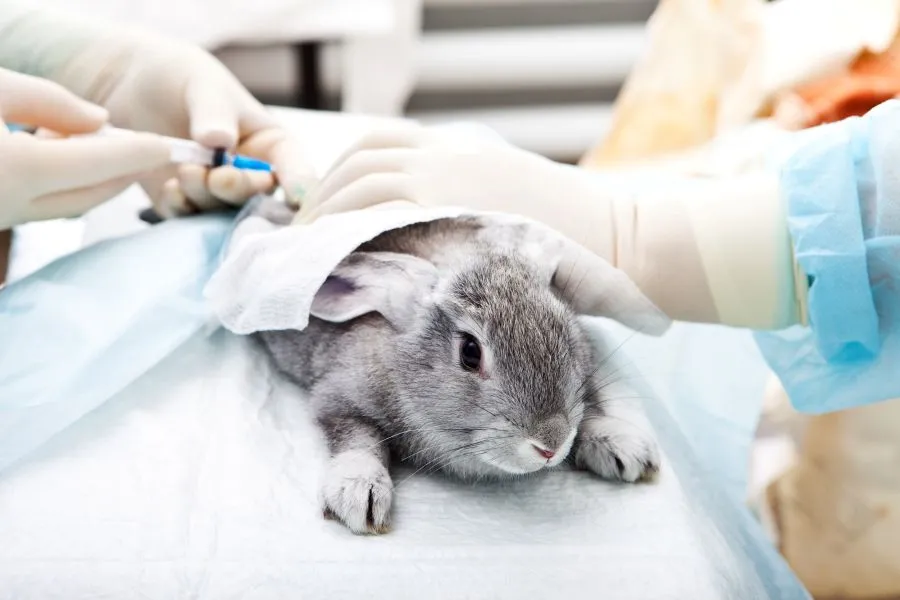 Beauty brands can reduce animal cruelty by using more accurate AI-based ingredient testing predictions.
“It also keeps our discovery efforts focused on safer regions of molecular space, avoiding wasted work on ingredients that would fail later and increasing the chance that candidates make it to market.”
The researchers call their recent work necessary and say it exemplifies the integration of AI with existing non-animal-based approaches to develop chemical safety assessment.
“Today, our model predicts whether a pure molecule is likely to be a skin irritant. As a result, molecules that pass screening have a strong chance of being non-irritant when used appropriately in a fragrance,” Richard Whitcomb, chief technology officer at Osmo, tells Personal Care Insights.
“Looking ahead, we expect to extend the approach to better account for concentration and dilution, helping identify additional ingredients that are non-irritant at the low levels typically used in cosmetics. Over time, and alongside other non-animal screening methods, this could enable faster and more scalable safety screening of formulations across the industry.”