




Amorepacific microbiome extract targets post-acne pigmentation


Key takeaways
- Amorepacific’s bacterial culture extract suppresses enzymes involved in producing new melanin, responsible for post-acne pigmentation.
- The extract also activates cellular pathways associated with breaking down pigment already accumulated in the skin.
- The findings are based on laboratory and ex vivo research, with clinical validation still required.
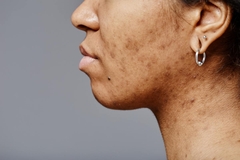
Researchers at Amorepacific have identified a microbiome-derived culture extract that may address post-acne hyperpigmentation by targeting new melanin production and pigment already accumulated in the skin.
The research expands the company’s approach to skin recovery by examining why discoloration persists after acne inflammation, potentially presenting a new avenue for post-acne skin care formulations.
The South Korean beauty group investigated an extract derived from its proprietary Bacillus velezensis AmoreLumina strain, with the findings published in the International Journal of Molecular Sciences.
Addressing acne issues
Post-inflammatory hyperpigmentation (PIH) can develop after acne inflammation subsides, leaving areas of discoloration that may persist in the epidermis and dermis.
Amorepacific’s approach has largely focused on inhibiting melanin synthesis, potentially limiting the treatment’s ability to address pigment already retained within skin cells, the company notes.
In its new research, the company examined whether a microbiome-derived ingredient could simultaneously reduce new pigment formation and promote the removal of residual melanin.
Researchers at Amorepacific’s R&I Center focused on Bacillus velezensis AmoreLumina because of its biocompatibility and ability to produce high concentrations of moranoline, a naturally occurring functional compound.
According to the study, the moranoline-rich culture extract suppressed the expression of melanin-producing enzymes elevated by acne-related stimuli.
It also activated autophagy and lysosomal degradation pathways in macrophages containing accumulated melanin. These cellular processes break down and remove unwanted or damaged cellular material, suggesting a potential route for clearing pigment that remains after inflammation.
Amorepacific’s extract demonstrated a dual mechanism targeting new melanin production and residual pigment.Amorepacific says the findings point to a dual-action mechanism that combines the inhibition of new melanin formation with the breakdown of residual pigment.
In an ex vivo model using human skin tissue, pigmentation induced by acne-associated bacterial stimuli and ultraviolet radiation was significantly reduced following treatment with the AmoreLumina culture extract.
Presently, the research remains at the laboratory and ex vivo stages. Further clinical studies could establish whether the observed mechanisms translate into visible and sustained improvements for post-acne hyperpigmentation.
Expanding skin recovery research
Byung-Fhy Suh, chief technical officer of the Amorepacific R&I Center, says, “The study … expands the scope of skin recovery research by looking beyond post-acne hyperpigmentation solely as a problem of melanin production to examine how existing melanin remains within the skin and causes discoloration to persist.”
Suh links the work to Amorepacific’s broader research into holistic longevity solutions designed to help skin recover and maintain a healthy condition over time.
The findings could inform future cosmetic ingredient and formulation development targeting persistent post-acne marks.