



Natural beauty ingredients get biotech rebuild as crop scarcity rises


Key takeaways
- Beauty brands are turning to biotechnology to produce natural ingredients with greater consistency, traceability, and supply security.
- Precision fermentation, microalgae, and cellulose-based solutions can reduce reliance on vulnerable crops and resource-intensive extraction.
- Natural origin alone does not guarantee sustainability, making scientific validation, responsible sourcing, and industrial scalability essential.

The personal care industry is changing the way it defines “natural” ingredients from an umbrella term for clean label claims to finetuned demands. Consumers want traceable and trustworthy supply chains, pushing beauty players to distinguish “natural sourcing” from “ethical sourcing.”
Innova Market Insights data indicates growth in natural claims, with 32% CAGR from April 2021 to March 2026 in product launches. This is underpinned by consumers increasingly seeking more natural ingredients when shopping for their beauty products. Skin care and hair care had the largest share of natural launches, while body care grew the fastest.
As demands for natural ingredients become more refined, the industry is keeping pace by fine-tuning technological developments for cosmetic applications. Technology, such as biomanufacturing or precision fermentation, is enabling formulators to address the desires at the core of natural ingredients demands without relying on resource-intensive extraction practices.
These methods can work to produce sustainable ingredients that maintain high efficacy and require fewer agricultural resources by combining natural sourcing and optimizing technologies.
Agricultural supply chain limitations are shaping the future of natural ingredients, from crop availability and climate pressure to regulations, cost, and traceability. Projected raw-material scarcities and tightening regulatory guardrails are incentivizing industry players to tap natural ingredients with resilient feedstocks, and to get creative with biotechnological solutions.
Personal Care Insights sits down with Algiecel, Melt&Marble, Seprify, and Abolis Biotechnologies, who provide their perspectives on natural ingredients and how the segment is evolving with consumer demand. We discuss the growing strain on agricultural resources due to harvest scarcity and climate change, and how modern biotechnology is working toward assuring renewable beauty supply chains.
The evolution of “natural”
The companies all agree that the way consumers define “natural” is becoming more nuanced. Gwenaël Servant, VP Business & Strategy at Abolis Biotechnologies, tells us that they are becoming more demanding, saying that showing an ingredient’s origin alone is no longer enough.
“Consumers increasingly expect a natural ingredient to be safe, effective, responsibly sourced, and environmentally preferable, even though those qualities do not automatically come together,” he says.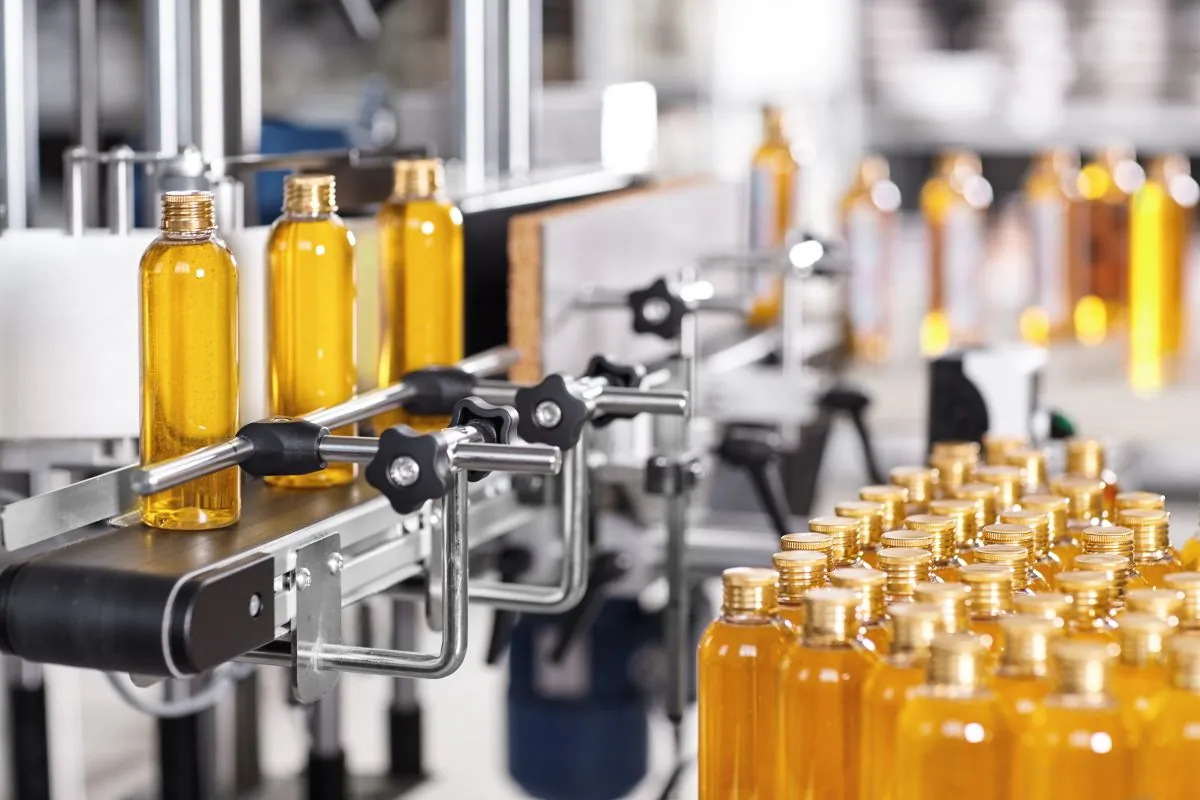 Biotechnology is reshaping the production of natural beauty ingredients.
Thomas Cresswell, CBO at Melt&Marble, builds on Servant’s point, stating that the differentiation between natural, clean label, and sustainable is still “a work in progress.” He tells us that the terms are often used interchangeably despite meaning different things: “Natural refers to origin, clean label to simplicity and transparency, sustainability to the wider environmental impact of production.”
Ricardo Daura, CCO at Algiecel, and Lukas Schertel, CEO and co-founder at Seprify, observe that the expectations around natural claims are also getting broader.
“Consumers are not only asking where an ingredient comes from, but they also want to know how it is processed, whether it is safe, how traceable it is, and what environmental impact it has,” says Schertel.
Daura underlines that the category now also concerns itself with ethical sourcing and alignment with broader wellness lifestyles. “This evolution presents an opportunity for the industry to ensure that the promise behind ‘natural’ is reflected in the ingredients themselves,” says Daura.
“The next generation of naturally derived ingredients will need to combine proven functionality, consistent quality, full traceability, and sustainable manufacturing, ensuring that consumer expectations are supported by tangible product performance rather than perception alone.”
All four speakers underline the point that natural origin does not always mean that an ingredient is better for the environment.
“A plant-derived material may still depend on a vulnerable crop or an intensive extraction process, while an engineered bio-based ingredient from an abundant renewable feedstock may offer strong traceability and greater consistency,” says Schertel.
He underscores the relevance of this critical distinction as brands assess alternatives to titanium dioxide or microplastics. “Moving to a naturally sourced or bio-based alternative may support a cleaner-label proposition, but its sustainability still depends on the feedstock, processing method, required dosage, and supply chain.”
Both Schertel and Servant state that brands need to explain what an ingredient is clearly, why it is a good natural option, and to scientifically substantiate their claims around efficacy and sustainability. Servant explains: “rather than allowing the word natural to imply every positive attribute.”
Personal care solutions that manage to achieve the increasingly more demanding requirements of natural ingredients are maintaining a competitive advantage in consumer trust.  Beauty brands are seeking natural ingredients with stronger traceability.
Biotech for renewable sources
Natural origin ingredients face the variability of weather conditions and crop yield, leaving formulators at the mercy of a volatile and capricious ecosystem as climate change accelerates.
Algiecel’s Daura tells us that demand for natural ingredients is growing faster than the resilience of many traditional supply chains. “Climate pressures, resource constraints, seasonal variability, and increasingly stringent traceability requirements are making ingredient quality, availability, and supply less predictable.”
Growing climate volatility is also increasing regulatory pressure on the industry as policymakers aim to quell potential damage caused by production. Regulatory requirements aimed at mitigating ecosystem strain, such as COSMOS or ECOCERT certifications, are tightening. Additionally, emerging deforestation regulations are raising expectations for documentation, transparency, and supplier verification, says Daura.
According to him, the rising regulatory constraints are making the use of natural ingredients less attractive to companies. This is driving interest in alternative production platforms for ethical sourcing of natural ingredients that offer greater consistency, resilience, and traceability.
“These pressures are pushing brands toward production systems that can guarantee consistent quality and quantity without sacrificing natural status,” says Cresswell.
Engineering naturals
Beauty companies are addressing the growing industry demand for reliable and resilient materials that hold up on sustainability assurances from a variety of biotechnical directions. According to Cresswell, this is where precision fermentation comes in. “Fermentation can draw on a variety of natural feedstocks depending on availability, producing a consistent, high-purity natural ingredient,” he says.
“This reduces reliance on seasonal crops, shortens and localizes supply chains, and improves traceability. It also allows the ingredient’s properties to be tailored to what a given application needs, rather than constrained by whatever a specific crop happens to yield.”
Drawing from the same concerns, Septrify’s Schertel proposes Cellulose, “the world’s most abundant biopolymer,” as an example of ingredients derived from abundant feedstocks and supported by controlled manufacturing processes.
“It is renewable and widely available, while its physical structure can be refined to provide consistent functional performance,” he says. “When combined with responsible sourcing, traceable supply chains, and efficient processing, this can provide a strong foundation for more resilient ingredient production.”
In another example of biotechnology-powered sustainability, Algiecel’s Daura tells us about how the company grows phototrophic microalgae in closed photobioreactors, turning light and CO2 into biomass through photosynthesis.
“This makes the system a form of carbon reutilization, while also producing a naturally rich and unique source of lipids, pigments, proteins, and other bioactives.”
He adds that, because the biomass is built by light, it naturally produces a distinctive, broad se Resource scarcity is accelerating biotechnology innovation in personal care. t of multifunctional bioactives that is difficult to replicate with other technologies. “That can support antioxidant defense, hydration, moisture, and skin repair in one ingredient source.”
Logistics of sustainable solutions
Abolis’ Servant draws the conversation to supply-chain design, stating that it is a strategic issue, not a purchasing decision.
“Traceability, responsible sourcing, regulation, processing capacity, and consistent specifications all have to be considered alongside price. The most resilient approach is likely to combine improved agricultural sourcing with alternative production routes where they make industrial sense,” he says.
“Fermentation and biotransformation can reduce dependence on a single crop, season, or geography while staying cost-competitive. However, they must still meet the same requirements for quality, reproducibility, and volume delivered.”
Servant explains that the potential only matters when the process works on an industrial scale. “Biological feasibility is one part of the equation. Yield, downstream purification, feedstock and energy use, cost, reproducibility, quality, and technology transfer are equally important. This is where an ideation-to-scale approach becomes critical.”
He says that agriculture remains the right production route for many ingredients, but microbial biotechnology can improve supply resilience or resource efficiency, “where it offers a clear technical and economic advantage.”
“Efficacy must still be demonstrated in the finished formulation, and any natural or natural-origin claim must reflect the applicable standard and the actual production route,” he concludes.