

Luxury beauty in business: Puig, Dolce & Gabbana and Capsum push beyond core categories

Key takeaways
- Puig posts record Q3 net revenue, led by makeup, niche fragrances, and dermocosmetics.
- Dolce & Gabbana Beauty plans a full skin care range and up to 70 standalone boutiques.
- Chanel sells its majority stake in Capsum to Motion Equity Partners.

Luxury giants are looking beyond their established strongholds for their next phase of growth, pushing into makeup and skin care with planned US and Asia expansions.
Puig posted record third-quarter net revenue of €1.39 billion (US$1.56 billion), up 5.6% like-for-like, with makeup, niche fragrances, and dermocosmetics among the categories delivering double-digit growth.
Dolce & Gabbana Beauty began as a fragrance licensee, but is now preparing for a full skin care launch. CEO Gianluca Toniolo says the business passed €1 billion (US$1.12 billion) in wholesale revenue in 2025, and it now plans up to 70 standalone boutiques over three years.
Meanwhile, Chanel has sold its majority stake in Capsum to Motion Equity Partners. The contract development and manufacturing organization (CDMO) is readying its entry into fragrance under a new majority owner. Capsum’s founder, Sébastien Bardon, also says the deal will fuel acquisition-led expansion in the US and Asia.
Puig posts record Q3
Puig has reported a record Q3 net revenue.
Jose Manuel Albesa, CEO of Puig, says: “Asia-Pacific, Niche Fragrances, Dermo-Cosmetics and Makeup were particularly strong, delivering double-digit growth, alongside continued healthy growth in Fragrance and Fashion.”
Net revenue for the first nine months of 2026 rose 4.8% on a like-for-like basis to €3.745 billion (US$4.2 billion). Like-for-like growth occurred across all of its categories and regions.
“I’m pleased with our strong and consistent delivery in the first nine months of 2026, with growth of 4.8%, alongside a record third quarter, up 5.6%. Momentum was broad across business segments and regions,” adds Albesa.
The company reiterated its outlook for the full year and will hold its first Capital Markets Day on October 28.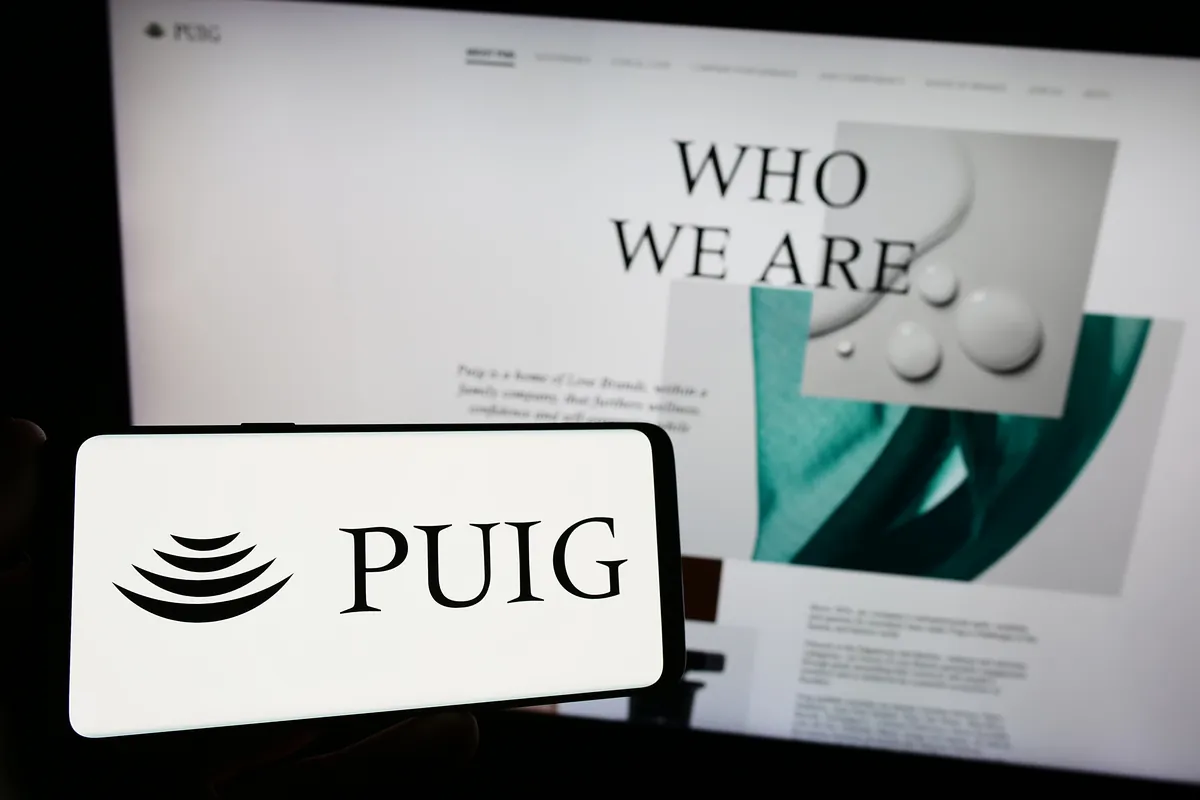 Makeup and niche fragrances drive Puig’s growth.
“This performance reflects the strength of our innovations and our distinctive portfolio, and is in line with our outlook for the year. We look forward to sharing an update on our strategy at our Capital Markets Day on October 28th, when we will set out our priorities for the next phase of Puig’s growth,” says Albesa.
Dolce & Gabbana Beauty goes beyond fragrance
Dolce & Gabbana’s beauty business expects to maintain double-digit growth in 2026 after surpassing €1 billion ($1.12 billion) in wholesale revenues last year. The company’s CEO, Gianluca Toniolo, gave the figures in an interview with the financial daily Il Sole 24 Ore.
The luxury group’s prediction is supported by its international expansion and investment in fragrance, make-up, and skin care.
What began as a fragrance-focused business is now a broader beauty platform. Toniolo describes the company’s next phase as its “most intensive” international expansion yet — strengthening its fragrance franchises, widening makeup distribution, and launching a full skin care range.
In 2022, Dolce & Gabbana brought its beauty business in-house after years under a licensing model. Since then, wholesale revenues have more than tripled, said Toniolo. In 2025, they rose 14% year-on-year, and the unit delivered a double-digit operating profit.
The Americas generate approximately 55% of revenue. The US is the unit’s biggest market, accounting for roughly 60% of that.
Europe contributes about 40%. Asia represents just over 6% but is growing rapidly, according to Toniolo.  Dolce & Gabbana Beauty expands beyond fragrance into skin care.
Wholesale remains the main sales channel, but the company is also building its own retail network. It aims to have 50 to 70 standalone beauty boutiques worldwide within three years, focusing on the Middle East, India, Brazil, Mexico, and the US. The push gives Dolce & Gabbana more direct control over how its beauty products reach consumers, an option it lacked under licensing.
Capsum changes hands
Capsum was sold to Chanel Motion Equity Partners by Chanel. The founding CEO and Chanel will retain a minority share.
The financial terms of the deal were not disclosed.
Capsum develops and produces skin care, makeup, and fragrance products for luxury and prestige beauty houses. It works with brands including Chanel, L’Occitane, Galénic, La Prairie, Meaningful Beauty, and Elizabeth Arden.
Chanel has been Capsum’s majority owner for 11 years and was the CDMO’s first client. It remains its biggest customer.
“Chanel and I decided to move to the [next] chapter — the expansion, to boost the growth of Capsum in Europe, but more so abroad in Asia and in the US. For this third chapter, we thought that we should add to the engine external growth and acquisitions, and that should be center to the strategy for the next five to ten years,” Sébastien Bardon, Capsum’s founding CEO, told Women’s Wear Daily.
This is where the private equity fund comes in. Motion Equity Partners is a French midmarket firm. Capsum says having Motion Equity Partners as a new majority stakeholder is in line with it reinvesting over 10% of its sales in R&D.
The company has ambitions to become among the top-five worldwide CDMOs in beauty. 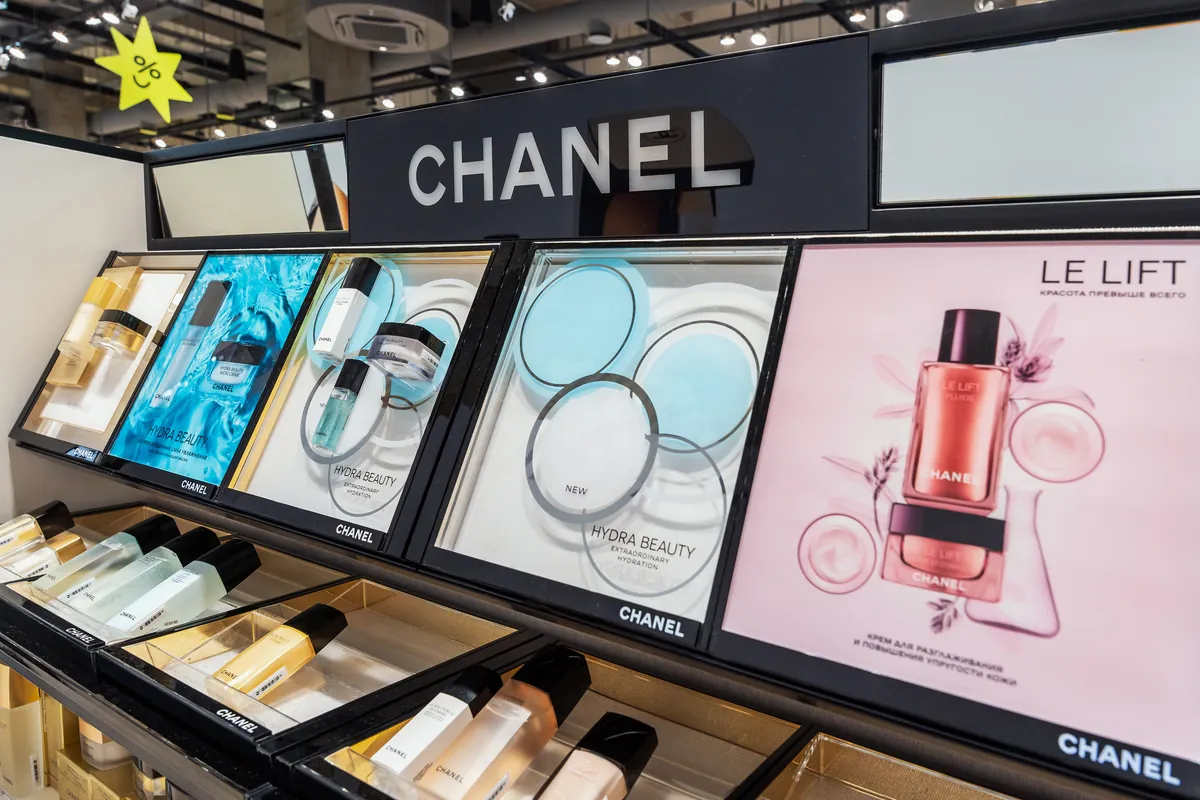 Capsum targets fragrance innovation and growth in the US and Asia.
“To do that, we expect and we aim at quintupling our revenue in the next five years,” said Bardon. “It’s possible, because when we look at the last 10 years, we have multiplied revenue by a factor of 17 only with organic growth. And now we’re bringing up external growth to complement organic growth.”
Capsum’s first lever to quintuple its sales is being successful in the US. “We are planning 50 percent growth in the US next year,” added Bardon. The company’s annual sales today are close to €80 million (US$89.64 million), with approximately one-third coming from the US.
Bardon also said he wants Capsum to become the destination for fragrance innovation. He explains it will center on water-based fragrance and innovative ancillaries, such as scented body products and hair mists. The group will also enter the fragrance category next year.
Capsum also plans to use acquisitions to build R&D and manufacturing capabilities in Asia, so it can serve local brands. “Since most of the packaging is made in China, it makes sense to operate directly [there],” Bardon said. “Also, we think that Asia is becoming a really big hub for innovation, and that’s what we are, so we want to be part of it directly.
In the future, Capsum hopes to move into producing nutraceuticals and other supplements.