


Staggered deadlines complicate EU citral compliance for natural beauty brands

Key takeaways
- Regulation (EU) 2026/909 sets a 1 July 2028 sell-through date for citral and 1 August 2028 for geranial and neral.
- Which date applies depends on how citral is declared in each raw material.
- Natural brands face the greatest risk because citral often arrives hidden inside essential oils.
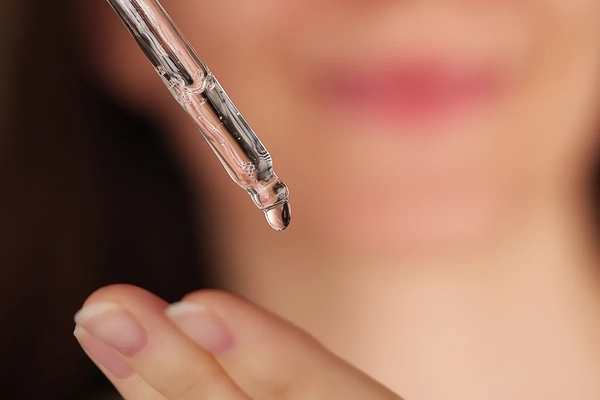
The EU’s incoming citral restrictions contain staggered deadlines that could catch out some cosmetics companies. Personal care products containing the same molecule may have to exit shelves a month apart, creating compliance confusion.
Regulation (EU) 2026/909 sets product-specific limits for several cosmetic ingredients, including citral, after safety assessments by the Scientific Committee on Consumer Safety (SCCS). The known fragrance allergen was evaluated for its potential to cause skin sensitization. The regulation converts the committee’s safe-use levels into maximum concentrations for different personal care products (lip care, oral care, fragrance, etc.).
Non-compliant products cannot be placed on the market starting 1 January 2027. However, there are four sell-through provisions for products already on shelves.
Three provisions end on 1 July 2028, including the one for citral. The fourth, covering geranial and neral — the two isomers that make up citral — ends on 1 August 2028. Which date applies depends on how citral is declared in each raw material.
For example, a fragrance compound listing citral falls on the July date. However, a product with lemongrass or litsea oil whose certificate lists geranial and neral falls on the August date. Many personal care products contain both — therefore, leading with precaution is advised.
Natural brands face the greatest risk of missing deadlines due to confusion. Their citral rarely appears under its original ingredient name, and is instead inside essential oils. A company checking its portfolio for the restricted substance by name may not flag the products. Compliance for natural brands depends on paperwork: lot-level composition data from every botanical supplier, checked before each batch goes into production.
Personal Care Insights speaks to David Vandevoort, a pharmacist and cosmetic safety assessor at Belgian regulatory consultancy SARVA Reg, about which date applies, how brands can prepare, and what retailers should ask brands for.
Since citral is made up of geranial and neral, how do brands know which sell-through date applies to their product?
Vandevoort: In the Annex, ‘3,7-dimethyl-2,6-octadienal’ (citral, CAS 5392-40-5) carries the 1 July 2028 date. The (E)- and (Z)-isomer lines carry 1 August 2028: geranial (CAS 141-27-5) and neral (CAS 106-26-3). The date depends on how each raw material is declared.
Vandevoort says brands should apply the earliest citral date to mixed products.
A product often contains both, and the notice is about the product (‘cosmetic products containing these substances’). I would apply the earliest date in the file to the whole product. I would rely on the later date only if the file shows that the isomer lines are the only source.
The limits do not depend on any of this. They sit in one entry. I read that entry as covering citral, geranial, and neral together, so I add the three up.
Which of the four sell-through provisions are brands most likely to get wrong?
Vandevoort: The 1 August 2028 date, because it is the odd one out. Three of the four provisions fall on 1 July 2028. Only one does not.
- Triphenyl phosphate, Annex II: 1 July 2028.
- The Annex III group (zinc salts, citral, benzyl salicylate, aluminum, and acetylated vetiver oil): 1 July 2028.
- DHHB, Annex VI: 1 July 2028.
- Geranial and neral, the lines of entry 70: 1 August 2028.
Summaries that compress these into a single date tend to pick 1 August 2028. That gives a brand an extra month it does not have for citral. The second mistake is mixing up the two kinds of dates. From 1 January 2027, a non-compliant product cannot be placed on the market at all. The sell-through dates protect only what was already placed on the market before that.
Is a fragrance supplier’s International Fragrance Association (IFRA) certificate enough to show compliance with the new EU citral limits?
Vandevoort: No. It covers the fragrance compound, and nothing else in the formula. The certificate is set against IFRA’s categories and the IFRA standard in force when it was issued. The EU limit is the law. It uses the Annex’s own nine product types, and it applies to the finished product from all sources. For example:
- 0.032 % for deodorants.
- 0.15 % for leave-on skin products.
- 0.063 % for wipes for the anogenital area.
The certificate is a good start for the compound. I would ask the supplier for the citral, geranial, and neral content of the compound, so the brand can do the calculation itself.
Can a formula pass with one batch of lemongrass or litsea oil and fail with the next?
Vandevoort: Yes. Both oils are mostly citral, in the order of 60–85 %, depending on origin and harvest. Take a leave-on skin product, where the citral limit is 0.15%. If the oil is 75% citral, the formula can contain about 0.20% oil. If it is 85% citral, that drops to about 0.18%. The formula has not changed. The amount of oil it can take has moved by about 12 %. A file that sits close to the limit has no room for that. 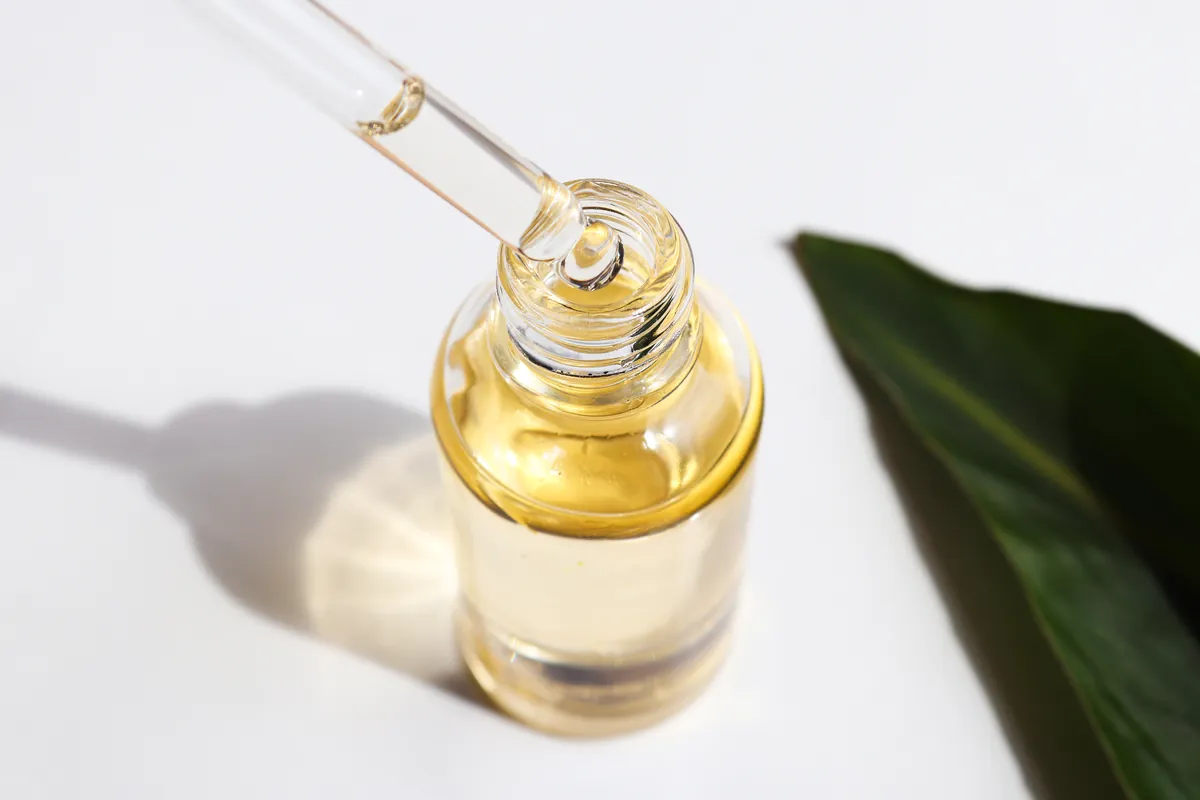 Natural brands must track citral in every batch of essential oil.
The practical answer is to set a maximum citral content in the raw-material specification, calculate at the top of the supplier’s stated range, and check each lot’s certificate against that specification before the lot goes into production. Relying on a single certificate from a single batch is how a formula ends up over the limit.
What should retailers and distributors ask brands for now?
Vandevoort: They should ask for four things. A dated statement of whether any of the twelve named substances is in the formula, and for which dates. The date each batch was first placed on the Union market, as that date decides whether the stock is covered by the 1 January 2027 date and the sell-through dates. Confirmation that the safety report, the product information file, and the Cosmetic Products Notification Portal notification have been updated where the formula has changed. And lastly, the contact details of the Responsible Person.
Under Article 6 of the EU Cosmetics Regulation, distributors have a legal duty to act with due care and must not sell products they have reason to believe are non-compliant. A written answer from the brand protects them as much as it protects the brand.
Are market-surveillance labs equipped to ensure compliance, and where will the first cases come from?
Vandevoort: Measuring citral in a finished product is not the hard part. It is a standard GC–MS target in the allergen panels that labs already run for label checks. What is hard is the number of product types. There are nine different limits, so the lab has to know which category the product falls into.
I would not forecast where the first cases will come from. What the text does settle is the timing. Non-compliant products can still be placed on the market until the end of 2026, so I would expect enforcement on citral to start in 2027, with the first checks most likely on products sold online from outside the EU.  Citral limits now vary across nine product types.
Which SCCS opinions do you expect to become law next?
Vandevoort: I would not name a winner. The history in this act shows the timing. The citral opinion is dated 29 July 2024 and became law in April 2026, about 21 months later. The benzyl salicylate opinion of October 2023 took about 30 months, and the acetylated vetiver oil opinion of 2019 took seven years.
For an essential oil audience, the one I would watch is tea tree oil. It has a final SCCS opinion and, as of the 18 May 2026 consolidation, no entry in Annexes II–VI. Heliotropin is a step behind. Its opinion was still being finalized as of early September.
What else should brands keep in mind as they prepare for the new rules?
Vandevoort: The corrected text matters. The 5 May 2026 corrigendum renumbers the new Annex III entries, and the 8 May 2026 corrigendum corrects an Annex II reference. Anyone working from a copy downloaded before then has the wrong entry numbers.
For natural brands, the problem is documentation. The restriction applies to the substance, whatever its origin, so the work is to get a lot-level composition from each botanical supplier.