



GLP-1 users and Gen Z steer collagen to skin longevity

Key takeaways
- GLP-1 use and Gen Z’s preventative mindset are reshaping collagen demand toward skin longevity.
- Suppliers are moving from single peptides to collagen systems with studied doses and clear mechanisms.
- Rapid GLP-1 weight loss is opening space for collagen in skin, hair, and body composition.

Collagen and its anti-aging properties are now expected to work more precisely and under the messaging of longevity. The industry movement is pushed by consumers demanding scientific proof and the rising use of GLP-1 medications.
The personal care industry at large is moving from correction to maintenance. Anti-aging claims are turning into well-aging, skin longevity, and resilience. This is broadening the audience from mature consumers to younger adults, building preventative routines, and using collagen to do so.
The ask from consumers is also that the claims of their collagen products include cellular backing and transparent, measurable proof that the product works.
Personal Care Insights speaks to Gelita, Rousselot, and Puredia about how GLP-1 use, longevity science, and preventative routines are reshaping demand for collagen-based skin solutions.
Peptides to systems
Michael Yuen, general manager at Puredia, says that collagen has stopped being a one-ingredient story. He cites that nutricosmetics is a US$10.29 billion category in 2026, growing 8.31% a year through 2031, and skin care is the largest segment at close to US$9 billion, most of it collagen.
Peptides have traditionally been the anchor to collagen anti-aging solutions. Yuen says that while they are still the anchor, the company is seeing heightened demand for collagen systems. These collagen systems may look like peptides combined with actives that help the skin make its own collagen, protect what it already has, and feed the layers that collagen alone does not reach.
“Two gaps in most formulas are driving [new collagen demand]. The first is upstream. Most of the shelf supplies material, collagen to add, and hyaluronic acid to top up, while ingredients with human data on the skin’s own synthesis and renewal are rare,” he explains. Rousselot’s Andrew Ross says collagen peptides support skin during GLP-1 weight loss.
“The second is the epidermis. Nearly every collagen product targets the dermis, yet the dryness, dullness, roughness, and visible pores consumers notice week to week are largely epidermal, and that layer depends on a lipid matrix that thins with age.”
According to Yuen, Puredia’s CyanthOx and Omegia were built to tackle these problem areas. Collagen peptides give the skin material to place, and CyanthOx works on the cells that do the placing. Meanwhile, Omegia, Puredia’s omega-3-6-7-9 sea buckthorn oil, was designed to turn oral sea buckthorn into a complete beauty formula for both layers at once: lipids and antioxidants for the barrier, omega-7 signaling for dermal collagen.
According to Dr. Andrew Ross, science liaison and writer at Rousselot, the most significant innovation for collagen is occurring across targeted bioactive collagen peptides for specific biological actions, microneedling, combining whey with collagen to support the entire musculoskeletal system and muscle unit, synthetic peptides like GHK-Cu for tissue regeneration, and ECM remodeling.
GHK-Cu is a naturally occurring copper peptide linked to tissue repair, while ECM remodeling refers to the constant breakdown and rebuilding of the skin’s structural scaffold.
“The collagen-stimulating peptides, such as GHK-Cu, certainly represent an area of growing interest and make sense from a mechanistic point of view, but still lack substantial human clinical trial data,” says Ross.
“This type of peptide could theoretically be combined with a hydrolyzed collagen peptide product, like Peptan, to further ECM remodeling and support tissue health, but none of those studies have been done and remain an area of future interest.”
Collagen meets longevity
Oliver Wolf, head of global B2B marketing at Gelita, says that collagen sits at the intersection of three powerful consumer ideas: looking well, feeling well, and staying well for longer.
“Skin is highly visible, but it is also connective tissue. That makes collagen relevant to a more holistic longevity conversation in which appearance is not treated as a superficial add-on, but as one expression of tissue quality and healthy aging.”
He explains that brands increasingly want an ingredient with a defined purpose, a clinically studied dose, and a mechanism they can explain — not simply a high number of grams on the front of the pack.
“This matters because collagen peptides are not interchangeable: their biological activity depends on the peptide profile created by the hydrolysis process, not merely on the raw-material source, collagen type, or average molecular weight,” he adds.
According to Yuen, longevity is the biggest driver of current collagen solutions, and it started in Asia. Anti-aging supplements reached US$4 billion this year and are heading for US$5.5 billion by 2030, he says.
Yuen details that NAD+ precursors are dominating anti-aging launches. He adds that NMN (nicotinamide mononucleotide), a precursor to the cellular energy molecule NAD+, went mainstream in Japan and China well before the West, “so consumers there already talk in cellular aging terms.”
Younger consumers are a part of the cellular focus shift. They are asking for protection rather than repair, tying into the preventative aging trend.  Puredia’s Michael Yuen sees collagen evolving from single peptides into complete systems.
“Gen Z now ranks third among its wellness priorities, up from sixth in 2023. A 25-year-old doesn’t have a wrinkle problem. She has a UV, pollution, glycation, and stress problem, and she wants to keep the collagen she has. That pulls demand toward antioxidant and anti-inflammatory co-actives,” says Yuen.
Wolf echoes that young people are searching for preventative beauty, and says that mindset is changing the commercial brief.
“Younger consumers are not necessarily looking for an ‘anti-wrinkle product;’ they are building repeatable self-care routines around hydration, glow, firmness, and future resilience.”
“Brands, therefore, ask for positive, age-inclusive language, credible science, and formats that feel natural in everyday life. For established beauty consumers, the demand is increasingly for measurable results and transparent substantiation rather than a long list of fashionable actives,” says Wolf.
Ross adds that anti-aging is a difficult goal to achieve when talking about lifespan or an isolated body system. He believes a more realistic goal is how to age as gracefully as possible and maintain the highest functioning of our body’s system as we age.
“When discussing longevity and aging, mobility and muscle mass are two of the most critical variables. Supplementing collagen peptides with a well-balanced, high-protein diet assists in repairing and building the entire musculoskeletal system, including muscle, bones, tendons, and ligaments. Promoting bone, tendon, ligament, and ECM health is where collagen really shines compared to other protein sources,” he says.
The GLP-1 effect
A large challenge caused by the current GLP-1 agonist weight loss craze is that the rapid loss of substantial subcutaneous fat is leading to people being concerned with “sagging” or “wrinkled” skin. Ross says this is turning people to seek beauty and skin-enhancing supplements in parallel with weight loss.
“This is a perfect instance where collagen peptides provide a source of protein as part of a healthy diet that also has the added benefit of years of research demonstrating collagen’s ability to support healthy skin and skin aging,” he explains.
“With Nextida GC, the specific bioactive collagen peptide composition has been clinically shown to stimulate the body’s natural release of GLP-1 and GIP (glucose-dependent insulinotropic polypeptide), which in turn aids in lowering blood glucose following meals. What many people do not realize is that those collagen peptides, after interacting with our intestinal cells and stimulating the release of those incretin hormones, the peptides are further digested and have holistic skin and beauty from within benefits of traditional hydrolyzed collagen peptides.”
Yuen also says that GLP-1 is rapidly changing the collagen and anti-aging landscape. He cites that about 1 in 8 US adults have used a GLP-1, approximately 31 million people, and double the level of spring 2024.
Alongside the rise of its use have been concerns over “Ozempic face,” which is a nickname for the effects on the skin after rapid weight loss. Yuen details that two-thirds of US facial plastic surgeons say they’re seeing more rapid-weight-loss patients, and facial fat grafting is up about 50% for the second year running.
He notes that hair is the under-reported part, creating whitespace for brands to target. A 2026 meta-analysis found more than three times the risk of hair loss versus placebo, with women disproportionately affected and shedding peaking at months three to six.
“And the damage goes beyond fat loss. GLP-1 receptors on adipose-derived stem cells appear to suppress collagen synthesis and increase MMP-1 (matrix metalloproteinase), a net loss of collagen and elastin, which is why dermatologists now argue volume restoration alone won’t fix it, and preventive nutrition deserves study,” says Yuen.
“So the GLP-1 brief now reads: protein for structure, a collagen builder and MMP protector, lipids for the barrier, polyphenols for inflammation, in small, neutral-tasting formats because users report nausea and heightened sweetness sensitivity.” 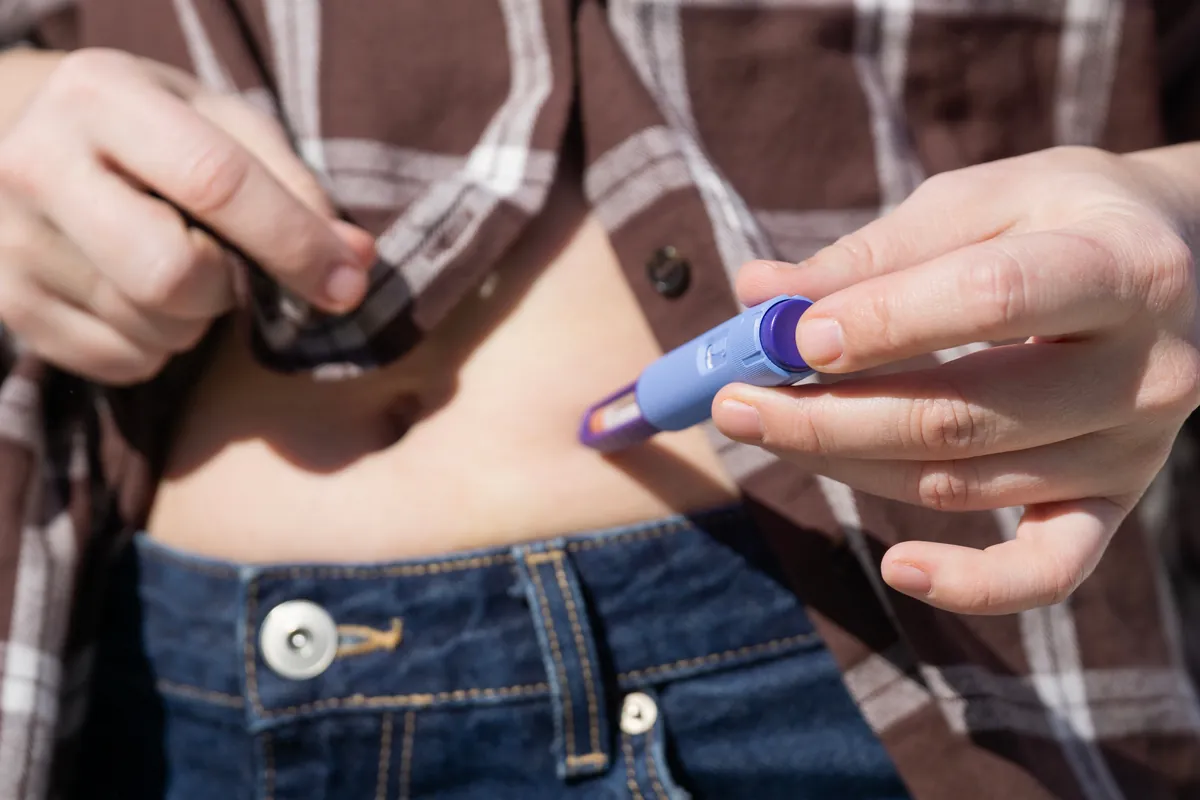 Gelita’s Oliver Wolf expects precision collagen ingredients to outpace generic products.
Gelita’s Wolf agrees that the rapid weight loss GLP-1 consumers are facing is adding another layer to the collagen space. Consumers using GLP-1-based weight-management therapies may become more attentive to changes in facial volume, skin appearance, and overall body composition.
“A collagen ingredient should not be presented as a treatment for medication-related effects, and it cannot replace adequate nutrition or medical advice. However, the trend reinforces the need for product concepts that look beyond the scale and support a broader self-care routine,” says Wolf.
“Gelita can contribute targeted Bioactive Collagen Peptides for different consumer goals — for example, Verisol for skin, hair, and nails, and BodyBalance for body composition in combination with resistance exercise — allowing brands to build coherent, evidence-led concepts rather than stretching one ingredient across unrelated claims.”
Precise over generic collagen
Over the next few years, Wolf expects greater separation between generic collagen products and precision ingredients backed by a defined peptide profile, mechanistic data, and human outcomes.
“We also expect more hybrid beauty routines that combine topical care, ingestible support, and lifestyle guidance; further growth in low-dose formats; and closer scrutiny of traceability, sustainability, and evidence quality,” he says.
“In short, the category is moving from ingredient recognition to ingredient accountability.”
Meanwhile, Rousselot’s Ross predicts that future areas of interest are stacking collagen with whey protein to drive muscle synthesis while also strengthening the entire musculoskeletal system and supporting common areas of injury — tendons and ligaments.
“Additionally, combining collagen peptides with other performance supplements like creatine warrants further research as a strategy to shorten recovery and enhance athletic performance,” he adds.
“The most promising area of collagen peptides research will be in targeted bioactive peptides that take advantage of the glycine-hydroxyproline residues of the collagen molecule, which allows collagen peptides to resist enzymatic degradation and enter the bloodstream with a high bioavailability.”