



Estée Lauder boosts water resilience at Belgium site

Key takeaways
- Estée Lauder has invested €5.7 million (US$6.37 million) in water circularity infrastructure at its Oevel, Belgium, manufacturing site.
- The project is expected to cut water intensity from 9.3 to 3.6 L per kilogram of product and save around 25 million L annually.
- Estée Lauder plans to use the Oevel project as a scalable model for improving water resilience and resource efficiency across its wider manufacturing network.
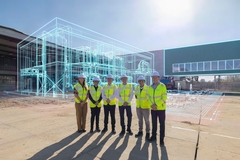
The Estée Lauder Companies (ELC) has invested €5.7 million (US$6.37 million) in water circularity infrastructure at its Oevel site in Belgium. The site is said to advance manufacturing resilience and prep ELC for future innovations.
The company cites growing pressures for manufacturers across Europe to remain competitive while meeting sustainability and resource efficiency goals.
ELC’s Oevel campus is undergoing broader transformations with new technologies, automation, digital capabilities, and advanced infrastructure developing the company’s beauty manufacturing, states ELC. The campus is one of the global beauty giant's largest manufacturing sites worldwide.
Water resilience is becoming a priority across the private and public spheres with increasingly violent droughts and volatile weather phenomenon observed globally. Across Europe, manufacturers are investing in solutions that improve water efficiency while maintaining quality, operational reliability, and long-term performance, says ELC.
According to the company, the Oevel plant’s integrated water circularity approach is designed to keep water in use longer during manufacturing operations while reducing reliance on incoming freshwater and minimizing wastewater discharge.
Reimagining water austerity
ELC touts the project as distinctly ambitious in its rethinking of the complete water cycle within production operations. The initiative combines three elements into one integrated water circularity program, says the company.
It reduces freshwater use with enhanced purified water systems. It also reuses water within equipment cleaning and sanitization operations. Finally, it reuses wastewater for operational purposes such as equipment cleaning and sanitization.
The project is forecast to minimize water intensity from 9.3 L/kg to 3.6 L/kg of product, once operational. It is expected to save approximately 25 million liters of water annually; this is equivalent to approximately 10 Olympic-size swimming pools.
ELC anticipates that the project will serve as a scalable model for potential future deployment across the company’s manufacturing network.
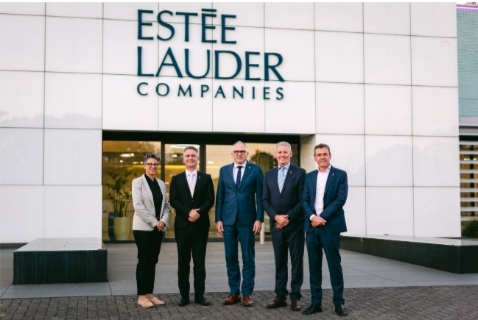
The Oevel project is expected to save around 25 million liters of water each year.
The investment comes as part of ELC’s Beauty Reimagined ambition to accelerate innovation, strengthen agility, and build a more resilient manufacturing network.“Beauty Reimagined is about building a more agile, more resilient, and more consumer-centric company for the future,” says Alexander Gregorian, senior VP, Manufacturing & Engineering, at ELC.
“Oevel demonstrates how we are translating that ambition into reality through advanced manufacturing, digital innovation, and responsible resource management. Just as importantly, the learnings from this project will help inform future manufacturing initiatives across our broader network. The combination of innovation, operational excellence, and water stewardship will play an increasingly important role in the future of manufacturing.”
Regional investments
The site is said to also possess regional significance, pushing Flanders into a competitive position in manufacturing and production capabilities and fostering job opportunities.
“ELCs’ investment in Oevel is a strong vote of confidence in Flanders as a leading region for manufacturing and innovation,” says Matthias Diependaele, minister-president of the Flemish Government.
“By investing in advanced technologies and more sustainable production, the company is strengthening its competitiveness and resilience. This is exactly the kind of investment we want to see in Flanders: innovation and technology that strengthen our industry and create jobs and growth for the future.”
ELC has invested over €150 million (US$167.6 million) in the Oevel campus over the last decade. The investments have focused on the campus’ artificial intelligence, automation, digital manufacturing, logistics, and production technologies to create a more agile, efficient and future-ready manufacturing operation.
“As access to water becomes an increasingly important consideration for manufacturers, communities and consumers around the world, projects like this illustrate how businesses can strengthen resilience while managing resources more efficiently,” says Nancy Mahon, chief sustainability officer, at ELC. “Responsible water management helps support the communities where we live and work, the regions from which we source, and the long-term resilience of our operations.”