


L’Oréal reportedly weighs talc liability exit as lawmakers press Revlon on asbestos testing


Key takeaways
- L’Oréal’s US business has reportedly hired advisers to weigh offloading its talc and hair relaxer lawsuit liabilities without filing for bankruptcy.
- Nine US lawmakers are pressing Revlon over an FDA warning letter that found inadequate asbestos testing of talc.
- No federal rule requires asbestos testing of talc in cosmetics after the FDA withdrew its proposal in November 2025.
L’Oréal US has reportedly hired restructuring advisers to explore how to mitigate mounting legal liabilities relating to the use of talc and other chemical ingredients in some of its cosmetics.
The alleged move comes shortly after Revlon faced questions by US lawmakers over adequate talc testing of its products.
Revlon’s congressional scrutiny and L’Oréal’s reported liability talks reveal a pressurized landscape for beauty brands over talc. Talc is commonly used in cosmetic and personal care products to absorb moisture, add softness, and help make facial makeup opaque. However, the ingredient can be contaminated with asbestos, a known carcinogen.
L’Oréal US has reported that it has approximately 760 pending proceedings as of June 30 over the alleged presence of asbestos particles in certain talc-containing cosmetics.
According to recent reporting by The Wall Street Journal (WSJ), the beauty giant has now called on law firm Weil Gotshal & Manges and investment bank Ducera Partners to weigh options for handling the growing number of lawsuits against its US business.
The alleged plan is to move the liabilities into a separate entity and sell it to an investor, without filing for bankruptcy, according to people familiar with the matter.
L’Oréal is not the only major beauty brand to find itself in hot water in the US over talc recently. Last week, US Congress members demanded answers from Revlon about an FDA warning letter the company received regarding whether it properly tested for asbestos in its cosmetics.
In June, the FDA said Revlon had not demonstrated adequate testing of asbestos in its talc-containing cosmetics manufactured at its Oxford, North Carolina, facility. The FDA did not say asbestos was found in any product.
The new letter sent from US lawmakers last week, addressed to the brand’s CEO, argues that Black women and girls would be disproportionately exposed if products were contaminated.
Personal Care Insights has reached out to L’Oréal and Revlon for comment, but has not received correspondence at the time of publication.
Offloading talc liabilities?
L’Oréal US is facing hundreds of lawsuits from plaintiffs who allege its talc-containing cosmetics had asbestos and caused them illnesses. The company has stated that it strongly contests the claims.
As of June 30, none of the cases went to trial, according to L’Oréal’s half-year financial report. Some claims have been dismissed, and others settled.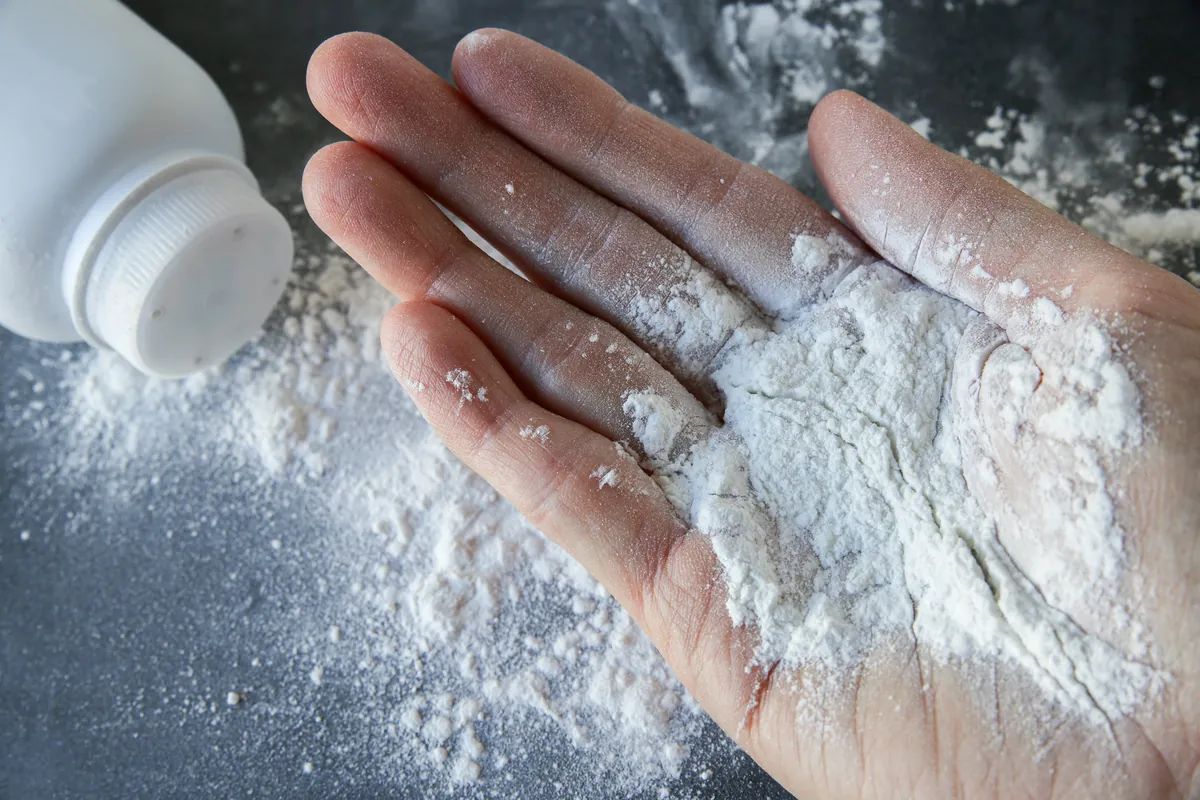 Talc absorbs moisture and adds softness in cosmetics and personal care products.
L’Oréal is now reportedly looking for a financial exit from years of litigation.
The beauty conglomerate’s US subsidiary has hired Weil Gotshal & Manges and Ducera Partners to explore ways of moving its litigation liabilities off its books, according to the WSJ. The potential transaction could limit the group’s exposure to the cost of thousands of pending lawsuits.
The option under consideration would avoid a bankruptcy filing, reports the WSJ. The liabilities would be moved into a separate entity and sold to an outside investor. L’Oréal has not confirmed the report.
Companies facing mass injury lawsuits have used bankruptcy proceedings to pause litigation and seek court-approved settlements.
Johnson & Johnson tried to use this strategy for its talc lawsuits without putting the wider business into bankruptcy. It moved the liabilities into a new subsidiary and placed only that subsidiary into Chapter 11. However, courts dismissed the filings, finding that the subsidiary was not in genuine financial distress.
Hair relaxer litigation
In tandem, L’Oréal US is also facing thousands of lawsuits from plaintiffs who claim that endocrine-disrupting chemicals in its hair relaxers caused injuries, including uterine and other cancers.
Hair relaxers are marketed largely to Black women.
According to L’Oréal’s June 30 half-year financial report, the group’s US companies were defendants in 11,554 consolidated federal proceedings in multidistrict litigation pending in the US District Court for the Northern District of Illinois. A further 1,082 individual, sometimes consolidated, actions are also pending in various state courts.
On September 10, Arizona’s Attorney General filed a consumer fraud suit against L’Oréal and its SoftSheen-Carson unit over hair relaxers, including Dark and Lovely, Optimum, and Mizani. L’Oréal USA told Cosmetics Business the allegations have no legal or scientific merit.
Congress questions Revlon
Members of the US Congress have addressed Revlon over what they call “failed adequate testing of products for the presence of contaminants, including cancer-causing chemicals and mold.”
In an open letter, US officials urge Revlon “to take immediate action to implement and disclose a comprehensive remediation plan and ensure that proper steps are taken to identify potentially contaminated products.”
The call follows the FDA finding that the cosmetics company did not adequately test products for the presence of contaminants. Revlon could not show it had tested the talc it uses in over-the-counter drug products for asbestos. It relied on its supplier’s testing without checking the results.  Lawmakers warn that Black women and girls face disproportionate exposure risks.
After the FDA’s alert, Revlon told Bloomberg News that it stands by the safety of its products and is working with the FDA to address the issues. According to the warning letter in June, the company also told the agency it plans to reformulate its talc-containing drug products.
Months later, nine members of congress have now written to Revlon’s CEO, Michelle Peluso, demanding answers about those findings. They argue that Black women and girls, who are major buyers of beauty products, would be disproportionately exposed if products were contaminated.
“Black consumers, specifically women and girls, occupy a significant space within the overall US beauty landscape. In 2026, beauty spending among Black consumers reached US$16.2 billion, representing a 9% increase from the previous year. Given their prevalence in your customer base, it is our serious concern that Black women and girls would be disproportionately exposed to carcinogenic chemicals in contaminated beauty products,” wrote the members.
US FDA and talc testing
There is no federal rule requiring asbestos testing of talc in cosmetics, because the FDA withdrew its proposed one last November. The withdrawal was said to be in line with the US government’s “Make America Healthy Again” strategy.
The proposal would have required manufacturers of talc-containing cosmetics to test the mineral for asbestos contamination before using it in products, keep records, and demonstrate compliance. The draft was intended for cosmetics, but the FDA says it would have had consequences for other consumer products, such as drugs and food additives.
The withdrawal was widely criticized by toxic watchdogs.
“The FDA’s decision to withdraw its proposed rule requiring standardized testing for asbestos in talc-based cosmetics is dangerous and irresponsible. Needlessly exposing people to asbestos in personal care products will not make Americans healthy again,” said Scott Faber, senior VP for Government Affairs at the Environmental Working Group.
Faber stressed that thousands of products containing talc can be contaminated with asbestos, which is “one of the world’s deadliest substances.”
“Tests for the presence of asbestos are the only way to ensure products made with talc are safe. Today’s action is also illegal. Congress clearly required the FDA to mandate tests for talc in cosmetics,” he added.