

Unilever invests US$6M to expand Vaseline production in South Africa


Key takeaways
- Unilever has invested R100 million (US$6 million) in a new Vaseline Petroleum Jelly production line in Durban.
- The expansion could raise Maydon Wharf’s share of global Vaseline Petroleum Jelly supply from 60% to 80%.
- The investment strengthens South African manufacturing, export capacity, and supply chain resilience.
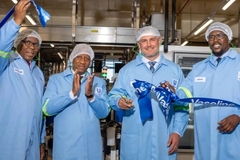
Unilever has invested an additional South African Rand 100 million (US$6 million) in the commissioning of a new Vaseline Petroleum Jelly production line in Durban, South Africa.
The production line is in Unilever’s Maydon Wharf manufacturing facility and represents an incremental investment to develop local manufacturing capacity, strengthen supply resilience, and bolster international export capabilities.
The Maydon Wharf facility supplies approximately 60% of Unilever’s global Vaseline Petroleum Jelly volume. The new line supports the company’s capacity and supply resilience to address growing demand across Africa and international markets.
According to Business Insider Africa, the enhancements to the Durban factory are projected to increase the facility’s global Vaseline Petroleum Jelly volume to 80% of the supply.
With the expansion, the facility alone is poised to supply approximately four-fifths of Unilever’s global supply of Vaseline Petroleum Jelly, signaling a large strategic consolidation of production capabilities.
“This additional R100 million investment strengthens our ability to manufacture trusted brands locally, supports jobs and skills development, and reinforces South Africa’s role as a strategic manufacturing hub serving both regional and global markets,” says Stefan Cloete, CEO of Unilever Southern Africa.
“This investment is a vote of confidence in South Africa’s manufacturing future and in the talented people who make Maydon Wharf such an important part of Unilever’s growth story.”
The new production line strengthens Unilever’s global Vaseline supply capacity.
Promoting local industry
Established over a century ago in 1912, the Maydon Wharf facility maintains its significance in Unilever’s production history as its second manufacturing facility established globally.
Unilever anticipates the additional investment will support the coastal South African province of KwaZulu-Natal’s position as an industrial and export platform.
“By continuing to invest in South Africa, Unilever is showing how local manufacturing can serve consumers, sustain livelihoods, strengthen supply chains, and connect South African-made products to regional and global markets,” says the company.
Unilever Vaseline investments
Unilever reported that its beauty, personal care, and home care divisions drove its H1 2026 results and delivered the best volume quarter the company has seen in over a decade. The financials indicate the effectiveness of the company’s Desire at Scale strategy at driving demand.
Unilever’s Beauty & Wellbeing, Personal Care, and Home Care divisions accounted for 75% of the company’s total turnover. Power brands like Vaseline made up 78% of the conglomerate’s turnover, and grew at 6%, outpacing the rest of the portfolio.
Earlier this year, Unilever upgraded Vaseline to make the legacy brand more “desirable, sensorial, and culturally fluent.” Its Gluta-Hya Lip Serum Gloss, for example, contains tripeptide and hyaluronic acid, and targets Gen Z and Gen Alpha’s demand for nourishing skin care properties in makeup formulas.
“There has been a fundamental shift in how the lip category is behaving culturally and emotionally,” Melissa Houston, global associate brand director of Vaseline at Unilever, told Personal Care Insights.