

K-beauty glass-skin trend exposes safety gaps in viral skin care


Key takeaways
- Research has found 95% of viral glass-skin TikToks contained at least one potentially misleading claim.
- Basic safety information on irritation, sun protection, and contact dermatitis was largely absent.
- The findings point to growing concerns about the reliability of online beauty trends and content creators’ credibility.
Almost all viral TikTok videos about the “glass skin” trend that K-beauty popularized contain misleading claims, according to a new study. The researchers found that 95% of these videos included at least one potentially misleading claim, and basic safety information was also largely missing.
The findings arrive as skin care and beauty content take up a growing share of the internet, with more amateur creators rolling out advice. Consumers are increasingly turning to social media for skin care education, but experts warn of the soundness of the guidance.
The study, presented at the European Academy of Dermatology and Venereology Congress 2026 (September 30–October 3), analyzed 38 of the most popular TikTok videos across five different Korean skin care search terms in May 2026.
The “glass skin” trend chases a skin complexion that is extremely smooth, clear of blemishes, and deeply hydrated, to the point that it reflects like a pane of glass.
The researchers used a neutral account to avoid algorithmic bias and found that 84% of videos did not account for different skin types. Meanwhile, 45% of the viral videos promoted excessive combinations of active ingredients without safety guidance; additionally, 32% promised instant results.
“What surprised us most was how consistently basic safety information was absent,” says Dr. Maria Lúcia Paysano, lead author of the study. “Only one of the 38 videos mentioned irritation risk, only two addressed sun protection, none mentioned contact dermatitis risk, and none recommended consulting a dermatologist.”
.webp) Viral K-beauty advice can omit key skin care safety guidance.The researchers rated all the videos as unreliable or less reliable according to the Global Quality Scale and a modified Discern scheme.
Viral K-beauty advice can omit key skin care safety guidance.The researchers rated all the videos as unreliable or less reliable according to the Global Quality Scale and a modified Discern scheme.
Checking for reliability?
The “glass skin” trend took off globally in recent years as the rise of Korean beauty principles and pop culture pushed it onto the international stage.
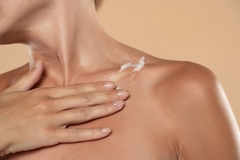
To achieve the glass-like skin finish, beauty influencers often emphasize elaborate multiple-step routines with layers of products. The routines can call for double cleansing, toners, essences, serums, sheet masks, and moisturizers, and often have multiple active ingredients stacked over each other.
Experts have warned against stacking multiple active ingredients without proper dermatological guidance, as it can cause permanent skin damage. Montagne Jeunesse previously told us that “overzealous use of actives” can cause rosacea and eczema, and the skin might appear redder or darker than its original color.
“Following these routines without individualized guidance may contribute to irritation, over-exfoliation, acne flares, or skin barrier disruption, particularly when multiple active ingredients are combined,” adds Paysano.
According to her, a core concern from the study’s findings was how highly engaged users were with the videos despite the absence of safety information.
The researchers linked the safety concerns to the creators behind the content. Nearly 82% of the videos were made by non-physician influencers, 11% by beauty brands, and 8% by other beauty content creators.
No videos were produced by dermatologists, and none of the videos cited an external source or reference.
.webp) Glass-skin routines often layer multiple skin care products and actives.“Our findings show a clear gap between the popularity of this content and the quality of the information provided,” says Paysano.
Glass-skin routines often layer multiple skin care products and actives.“Our findings show a clear gap between the popularity of this content and the quality of the information provided,” says Paysano.
She warns that following viral skin care routines risks adopting a one-size-fits-all approach to skin care, which is unlikely to yield the same results for people with different skin types and concerns.
Safety-proofing viral beauty
Social media has been playing a growing role in skin care trends in recent years, but emerging research is raising concerns about the potential harms of some viral practices. For example, multiple experts have flagged the dangers of chasing tan lines by burning the skin intentionally or spending too much time in artificial sunbeds.
Beauty giants alike have admitted that widespread misinformation persists, and multiple industry efforts have aimed to fill the education gap.
Recently, Neutrogena launched its Break the Rules campaign to help consumers cut through the overwhelming amount of beauty information online and choose their products based on science, rather than hype.