


Food-based beauty moves from novelty to standout category


Key takeaways
- Gourmand beauty has outlasted its 2025 summer surge and now sustains a year-round launch pipeline.
- ELF, Kayali, and MCoBeauty are extending food cues into new formats, from lip balm to body cream to confectionery.
- Nestlé’s GLP-1 nutrition push signals food-adjacent beauty moving beyond themed products into ingestibles.
Food-inspired beauty launches have taken over the shelves this summer, driven by consumer demand for personal care products with indulgent formulations.
Industry players, such as ELF and Kayali, are responding to the trend by expanding their food-blended portfolios. Meanwhile, the momentum garnered attention from confectionery giant Cadbury, which has released a chocolate-based beauty collection in collaboration with MCoBeauty.
Personal Care Insights reported last summer that the beauty industry was coated with gourmand product launches. What could have died as a single-summer surge has proliferated into a category with a continuous innovation pipeline.
“Food-based ingredients are part of our daily lives, and that makes them accessible, intuitive, and easier to trust. What’s exciting is that this familiarity often drives more research. We see this crossover as a fertile space for innovation, not a passing trend,” Miriam Freixa Villena, R&D manager at Tara Formula, told us.
Brands are leveraging the flavor and sensory qualities food evokes to recreate the favorable tastes and textures in their cosmetics. Where the demand is coming from is contested, but some draw the throughline from the rise of GLP-1 medications and consumers craving a satiable solution outside of food.
“We… ramped up our innovation pipeline to meet this cultural craving,” says Laurie Lam, chief brand officer of ELF Cosmetics, about the brand re-launching its “highly demanded” pickle-inspired Glow Reviver Melting Lip Balm.
Briny beauty returns
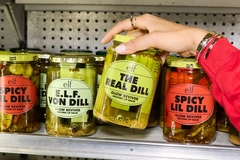
Yesterday, ELF reintroduced its pickle-inspired Glow Reviver Melting Lip Balm in three limited-edition shades. The launch follows the viral success of the product, which originally debuted earlier this year and sold out in eight minutes.
The cosmetics brand reports that over 20% of Gen Z say they are “obsessed” with pickles. The new release is said to be a direct answer to a fandom that erupted after the original pickle-inspired launch, which brought in a wave of new community members to ELF, with 77% of purchasers new to the brand.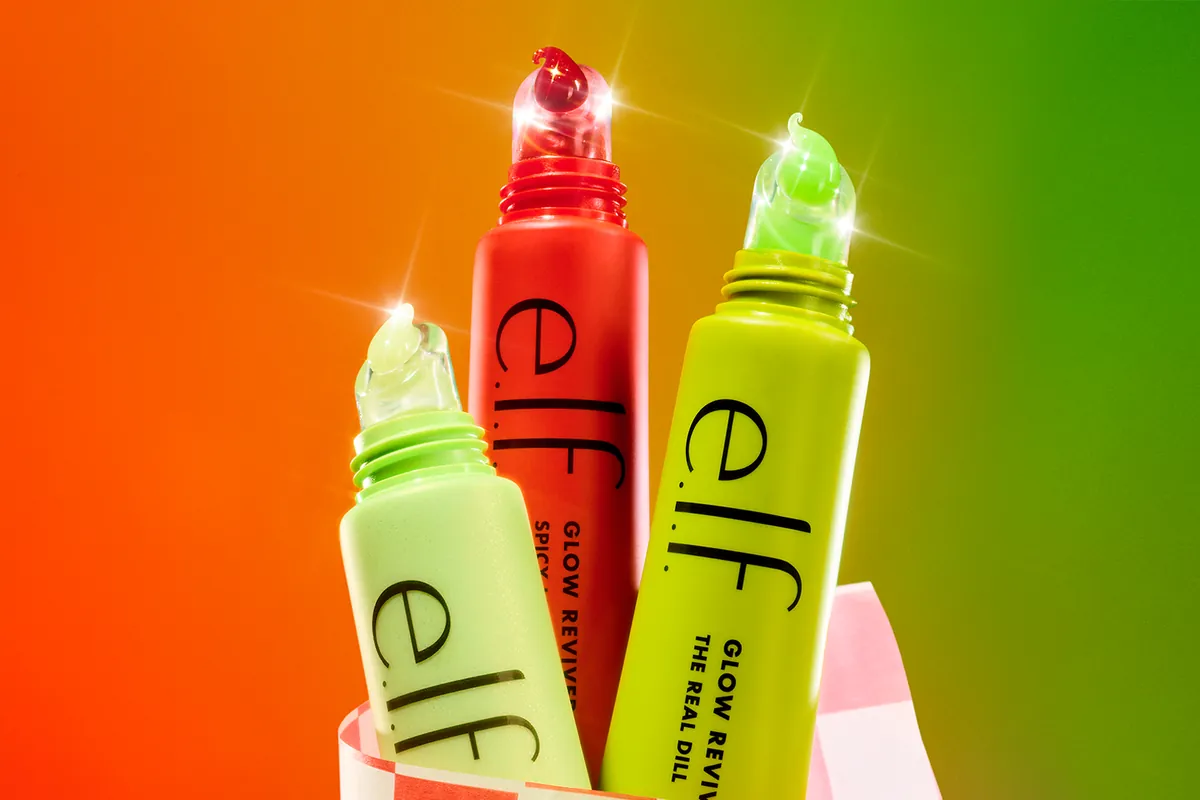 Lam says ELF ramped up its pipeline to meet a cultural craving.
“When our community speaks, we listen. With the first launch of our pickle-flavored Glow Reviver Melting Lip Balm, we popped the lid on a new wave of fandom,” says Lam.
“As we learned in real-time the depth of passion out there for pickles, it was an opportunity to stretch further to produce something like the plumping formula in Spicy Lil’ Dill. We are here answering the call for more fans to get in on the fun.”
Yesterday’s re-launch features more options than the original, which include: The Real Dill, ELF von Dill, Spicy Lil’ Dill, and Briny Blender. The products are available on ELF’s webstore, Ulta’s site, and TikTok Shop. This marks the first time the brand is available at Ulta Beauty’s TikTok Shop.
“At Ulta Beauty, we’re always looking for opportunities to bring our guests the beauty moments everyone is talking about, and ELF’s latest Big Dill collection is a perfect example of how innovation, culture, and community come together to create excitement,” says Kaitlin Rinehart, VP of merchandising at Ulta Beauty.
Gourmand goes topical
Kayali is introducing the Yum Lip & Body Collection, a new category expansion for the brand. The range reimagines two products from its Yum franchise — Yum Boujee Marshmallow | 81 and Yum Pistachio Gelato | 33 in a Cashmere Kiss Lip Balm and Silk Soufflé Body Cream.
Kayali touts being known for its gourmand DNA and signature approach to fragrance layering. The launch signifies the first time the brand has expanded beyond the bottle, and it will launch worldwide on August 28.
The four-piece collection includes:
- Yum Boujee Marshmallow | 81 Silk Soufflé Body Cream
- Yum Boujee Marshmallow | 81 Cashmere Kiss Lip Balm
- Yum Pistachio Gelato | 33 Silk Soufflé Body Cream
- Yum Pistachio Gelato | 33 Cashmere Kiss Lip Balm
To spotlight the launch, Kayali is partnering with Sephora and going to five colleges across the US. It will bring the Kayali Café and the Yum Lip & Body Collection to campuses and college towns nationwide. The tour will offer attendees fragrance-inspired beverages, chances to win prizes, and the opportunity to test the new collection. 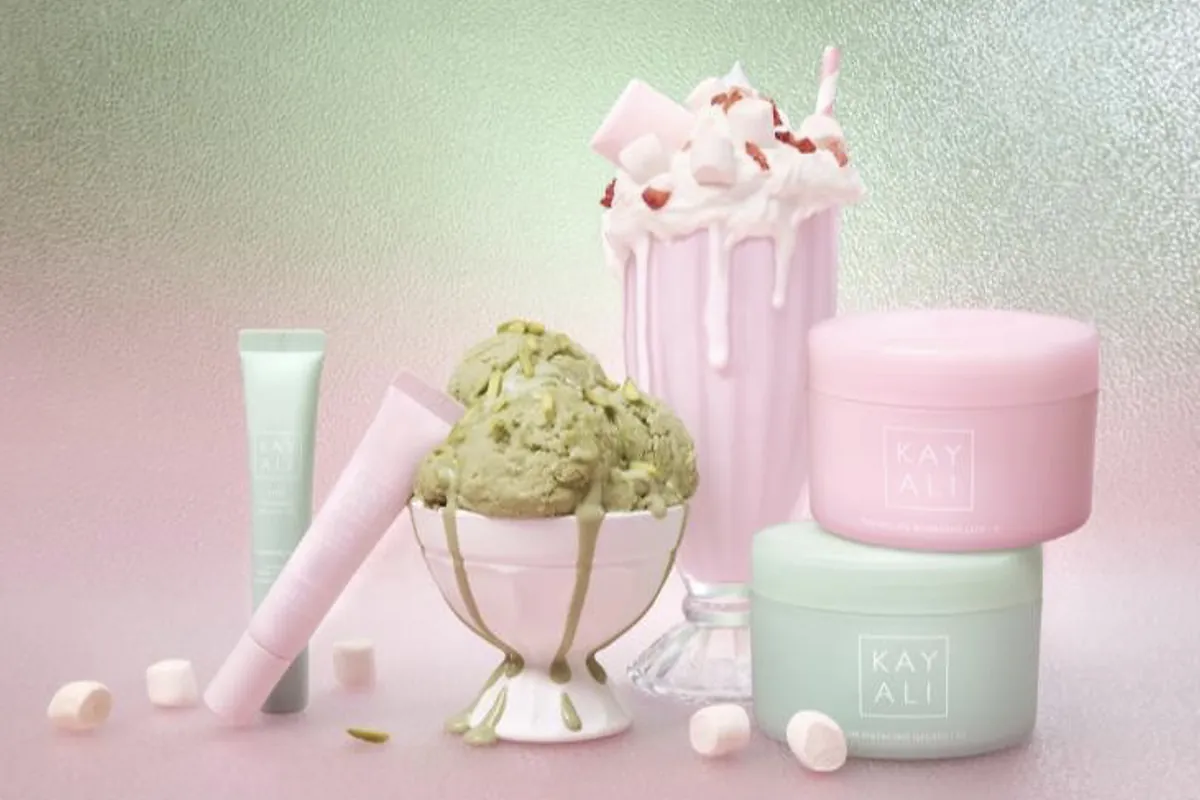 Kayali reworks Boujee Marshmallow and Pistachio Gelato into topical formats.
Confectionery meets cosmetics
Cadbury Dairy Milk and MCoBeauty have partnered for a beauty collection that fuses the two companies, which they say is where the confectionery aisle meets the beauty aisle.
The Australian companies aisle crossing collab lands exclusively at Woolworths. It features a Watermelon flavor Chocolate Block inspired by MCoBeauty’s cult Watermelon Glow range from Cadbury Dairy Milk.
Meanwhile, MCoBeauty has released a chocolate-inspired beauty collection. The items include an eyeshadow palette with six chocolate-inspired shades, a lip peptide treatment, and an Icons Collection that has a curated mini set of lip treatments, mascara, liner, pressed powder, and a setting puff.
The companies ask: Why choose between your snack aisle and your beauty fix?
“We’ve always believed beauty should be fun, accessible, and a little unexpected. So when the opportunity came to bring the iconic Cadbury Dairy Milk experience into beauty, it was an easy yes,” says Lucy Robinson, head of marketing, MCoBeauty.
“We are always looking for new ways to surprise and delight our consumers and disrupt conventional beauty ideas. Our limited-edition exclusive collection perfectly captures this and allows both brands to tap into each other’s worlds and create a cultural conversation at scale.”
The GLP-1 factor
Growing alongside the food-related beauty launches is the use of GLP-1 medications, which have sparked debate over whether the two are interlinked. Some discourse suggests that consumers who are using the popular drug may be searching for indulgent food experiences in their beauty solutions. 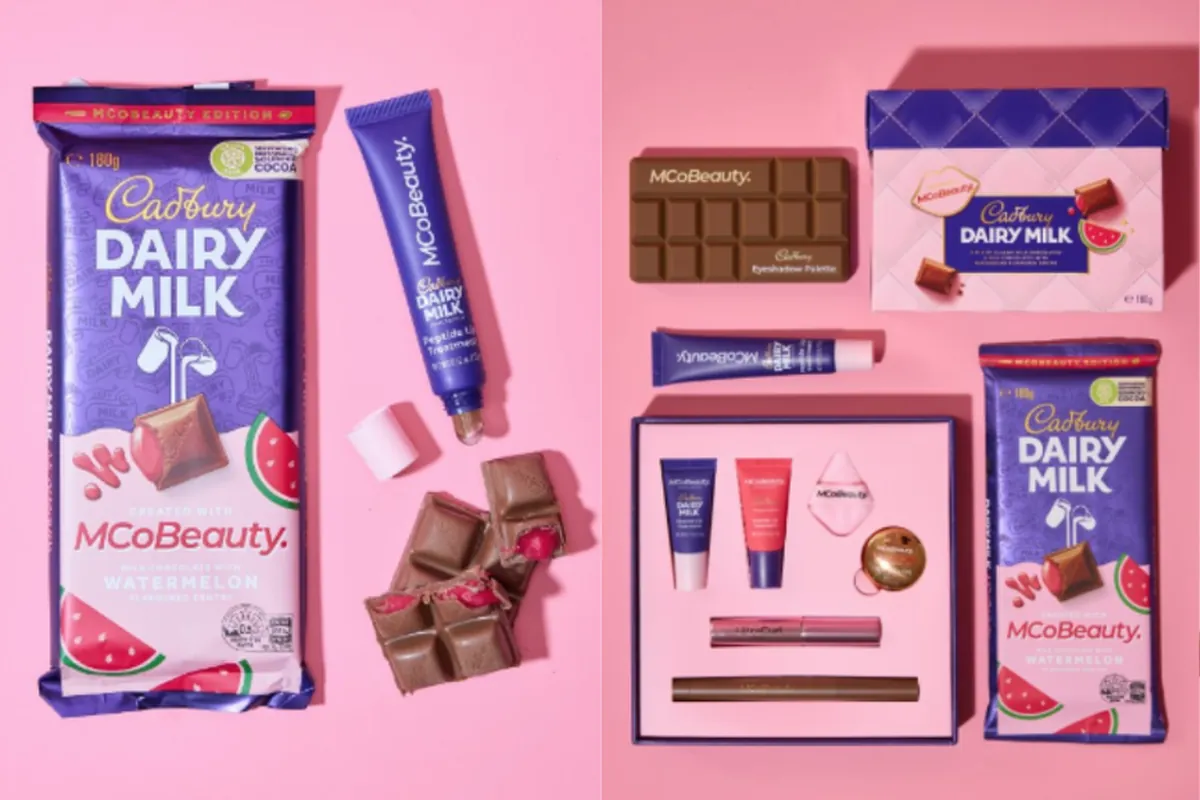 Robinson pitches the Cadbury tie-up as a cultural conversation at scale.
Food-related beauty extends beyond themed products as businesses create complementary beauty solutions to GLP-1 use. For example, Nestlé is developing products for consumers using the weight-loss drugs, targeting nutritional and appearance-related effects associated with rapid weight loss. It is turning the growth of medicines such as Ozempic, Wegovy, Mounjaro, and Zepbound into a commercial opportunity.
Rather than attaching a “GLP-1-friendly” label to an existing line, Nestlé is working from the nutritional consequences of eating less — maintaining protein intake, supporting muscle health — and pairing that with AI to identify ingredient combinations and reformulations. It has begun incorporating collagen protein into products under Vital Proteins to address appearance concerns tied to rapid weight loss. Products already on shelf include Boost Advanced Nutrition Shake in the US and Milo Pro High Protein in Asia and Australia.
Nestlé’s approach treats GLP-1 growth as an opening across beauty, wellness, and nutrition instead of a threat to categories built on people eating more. For beauty, consumer concerns about skin, hair, nails, and facial changes during rapid weight loss could accelerate demand for ingestible beauty positioned alongside weight-management treatments. This is a food-adjacent beauty play running parallel to the wave of gourmand launches.