



J&J caught between dropped cosmetic talc damages and retracted Lancet safety article


Key takeaways
- A California court dismissed a US$950 million punitive damages award against Johnson & Johnson in a talc-related mesothelioma case.
- The decision comes as The Lancet retracts a 1977 commentary on cosmetic talc safety due to an undisclosed industry conflict of interest.
- Johnson & Johnson disputes the retraction and says the criticism is part of ongoing litigation tactics.
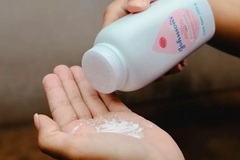
A California, US, court dismissed a US$950 million punitive damages award against Johnson & Johnson (J&J) in a talc-related mesothelioma case. The dismissal comes amid heightened scrutiny of scientific evidence used in talc litigation. Yesterday, The Lancet retracted a commentary on cosmetic talc safety due to an alleged conflict of interest with J&J in the 1970s.
The US lawsuit was filed by the family of Mae Moore, a California resident who died in 2021 at age 88 after developing mesothelioma — a cancer strongly linked to asbestos exposure.
The jury had previously ordered the company to pay US$16 million in compensatory damages and US$950 million in punitive damages after finding that J&J’s talc-based baby powder products caused Moore’s mesothelioma.
J&J maintains that its talc products are safe, do not contain asbestos, and do not cause cancer, and in a statement addressing the lawsuit, said the arguments against it are based on “junk science.”
Talc is a naturally occurring mineral used in cosmetics to absorb moisture and give powder-based products, such as makeup, a soft texture. The plaintiffs claimed that J&J knew its talc products contained asbestos or that it intentionally hid information about product risks.
Ruth Kwan, a judge in the Los Angeles County Superior Court, dismissed the punitive damages award after finding insufficient evidence that J&J knowingly hid asbestos risks or acted maliciously.
However, Kwan left the US$16 million compensatory damages award intact, stating that substantial evidence supported the jury’s finding that J&J’s talc products caused the cancer.
The Moore lawsuit adds to 67,000 similar ongoing claims J&J is facing. The company has filed for bankruptcy three times before in an effort to settle the lawsuits collectively, all three of which were rejected by federal courts.
Conflict of interest?
Recent developments are challenging the foundations of talc litigation. The Lancet, one of the most influential medical journals, has retracted a 1977 commentary that argued against stricter government testing for asbestos in cosmetic talc. The retraction comes after researchers found that the author had undisclosed ties to the cosmetics industry.
Public health historians David Rosner and Gerald Markowitz discovered that cancer researcher Francis JC Roe, who wrote the anonymous article, worked as a consultant to the cosmetics industry. According to Rosner and Markowitz, Roe shared a draft of the commentary with J&J before publication.
“Roe’s conflict of interest with J&J was a clear breach of publishing ethics. In our view, had the editors at the time known of this situation and been aware of the author’s undeclared competing interest, they would not have published this commentary. The Lancet has therefore decided to retract the commentary,” a statement from the Lancet notice reads.
Attorneys defending cosmetics companies used the Lancet’s commentary “to basically say that the medical field did not consider asbestos in talc dangerous,” Rosner says.
J&J has responded to the retraction, stating that it “strongly disagrees with the suggestion that a 1977 editorial in The Lancet reflects misconduct or warrants retroactive condemnation.”
.webp) J&J began removing talc from its baby powder in 2020 and completed a global switch to cornstarch-based formulas by 2023.The company maintains that conflict-of-interest disclosure rules did not exist when the 1977 editorial was published, and argues that anonymous opinion pieces were common at the time. J&J says that the Lancet article did not mislead regulators or represent hidden corporate influence.
J&J began removing talc from its baby powder in 2020 and completed a global switch to cornstarch-based formulas by 2023.The company maintains that conflict-of-interest disclosure rules did not exist when the 1977 editorial was published, and argues that anonymous opinion pieces were common at the time. J&J says that the Lancet article did not mislead regulators or represent hidden corporate influence.
According to J&J, the retraction reflects “ongoing and underhanded litigation tactics.”
“The renewed focus on a nearly 50-year-old editorial arises entirely from certain plaintiffs’ lawyers’ desire to breathe new life into a tall tale in the hopes of reframing historical scientific debates for their present-day courtroom narrative,” the company says.
Cosmetic contamination
The safety of cosmetic talc has been disputed for decades. Earlier this year, UK regulators confirmed that the mineral can cause severe lung toxicity after repeated inhalation, but did not escalate talc’s classification to a carcinogen as EU regulators did.
According to the UK body, the scientific evidence available to determine talc’s cosmetic safety is insufficient, as historically, talc and asbestos have been mined in close proximity to one another. This makes it challenging to determine whether reported cancer risks are linked to talc itself or to contamination from asbestos.
The regulators emphasized that its scientific opinions apply only to talc that does not contain asbestos, but cited a 2021 review that concluded: “cosmetic talc is not and never was asbestos-free.”
Last November, the US FDA withdrew its proposal to require standardized asbestos testing in talc-containing cosmetics. Toxic watchdogs met the decision with criticism, hailing it “dangerous and irresponsible.”