


Estée Lauder takes stake in 111Skin to capture post-procedure care surge


Key takeaways
- Estée Lauder invests in 111Skin to expand its portfolio in luxury clinical skin care, focusing on post-procedure recovery.
- 111Skin’s advanced NAC Y2 technology and clinical-led approach align with the rising demand for high-performance, preventative skin care.
- The brand has a global presence, with significant sales in North America, China, and Europe, and is expanding through luxury retail and e-commerce channels.
The Estée Lauder Companies (ELC) has invested in 111Skin, a luxury clinical skin care brand. The minority investment comes as the industry is adapting to a rising demand for recovery care amid the increasing popularity of aesthetic treatments.
111Skin was founded by plastic and reconstructive surgeon Dr. Yannis Alexandrides in 2012 to accelerate his patients’ healing time following procedures.
The brand’s central product is NAC Y2, a complex designed to support skin repair and maintain a healthy, radiant, and resilient complexion. 111Skin has developed a portfolio of over 30 products, anchored by its Black Diamond and Reparative collections and priced from US$50 to US$1,000.
The investment aligns with The Estée Lauder Companies’ continued focus on science-driven innovation, as 111SKIN’s advanced NAC Y2 technology and commitment to clinical-led product development reflect consumers’ growing preference for high-performance and preventative skin care. The move is one of many recent business plays by the beauty conglomerate.
The terms of the investment were not disclosed.
Post-procedure care wave
The personal care industry has seen a recent uptick in ingredient and product launches tailored to post-procedure care.
“Skin care is entering a new phase, shaped by the convergence of procedures, longevity, and beauty, as consumers increasingly seek products that deliver visible, treatment-inspired results,” says Stéphane de La Faverie, president and CEO of ELC.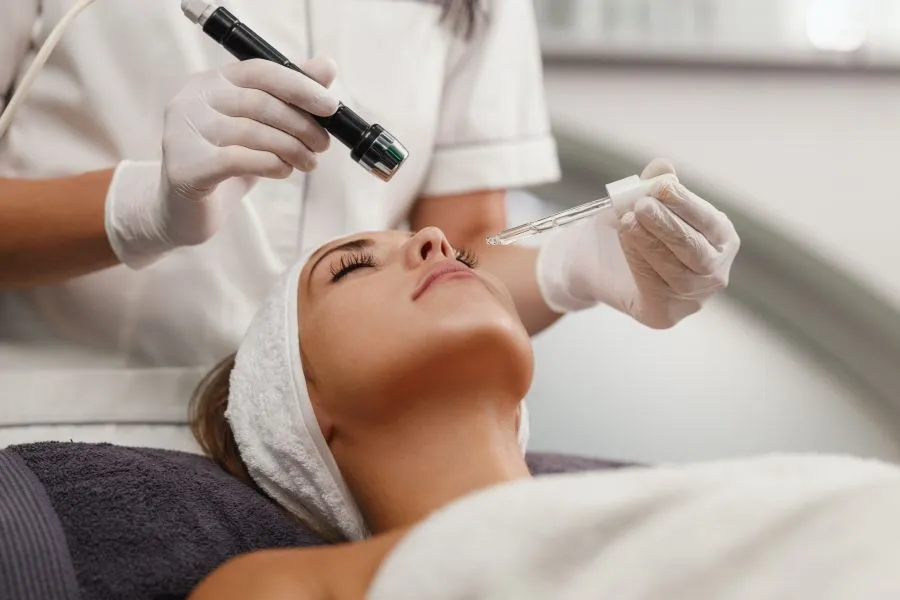 Consumers are seeking recovery solutions after aesthetic treatments.
“111SKIN exemplifies this shift, translating Dr. Alexandrides’ more than 35 years of surgical and aesthetic treatment experience into high-performance luxury skin care inspired by in-clinic treatments and built on clinical insight, next-generation actives, powerful formulas, and proven efficacy.”
IMCD recently leaned into procedure-driven beauty with seven new formulations. The global specialty chemicals and ingredients distribution company cited post-procedure care as one of the fastest-growing segments in modern hair and skin care.
According to IMCD, aesthetic procedures have increased 42,5% globally since 2020, with many new consumers partaking for the first time. In February 2026, #FirstTimeBotox generated 477,000 views weekly, a 12,000% week-on-week increase in engagement on social media.
Also tapping into the trend is Givaudan Active Beauty, which last month launched a hyaluronic acid-based skin healing ingredient for post-procedure recovery, and BioCorneum, which unveiled a dual-action Bruise Care System, designed to prepare patients and support bruise and scar recovery after cosmetic procedures.
The clear increase of post-procedure personal care solutions aligns with the bustling trend of more people – and at younger ages — seeking medical aesthetic treatments such as Botox and fillers.
A survey by the International Society for Aesthetic Plastic Surgery has estimated there were approximately 20.5 million non‑surgical cosmetic procedures in 2024. This represents a roughly 44 % increase since 2020.
Anti-wrinkle injections, such as Botox, were the most common procedure, with just under one in four patients aged 18 to 34 having Botox. Additional polling from ITV’s Youth Tracker poll showed one in five 18 to 25-year-olds surveyed in the UK had had some form of filler or Botox.
ELC’s CEO says its investment is grounded in consumer-centricity and transformative innovation. “[It] reflects our Beauty Reimagined vision and underscores the significant opportunity we see to support the brand’s continued growth — expanding its global reach while preserving the distinctive approach that has made it so relevant with today’s consumers.”
Brand and segment expansion
111SKIN is a luxury clinical skin care brand, operating in a fast-growing segment where medical expertise and powerful high-performance formulations are increasingly shaping consumer demand.
“We are thrilled to be partnering with The Estée Lauder Companies and to unlock an exciting new chapter for 111SKIN,” says Dr. Yannis and Eva Alexandrides, co-founders of 111SKIN. 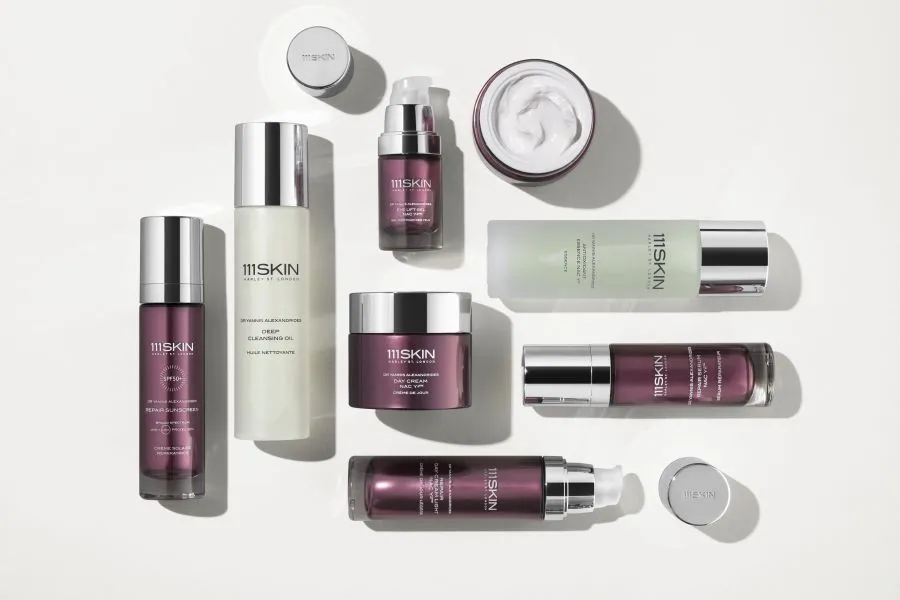 Estée Lauder backs 111Skin’s clinical innovation.
“We look forward to building on our momentum and driving future growth together,” added CEO Vanessa Goddevrind.
The brand is distributed through luxury retail, e-commerce, and spa channels such as Harrods, Bluemercury, Nordstrom, Mandarin Oriental, and Aman. It also has a robust direct-to-consumer business representing approximately 20% of sales. The brand says this reflects strong digital engagement with prestige consumers.
111SKIN touts a diversified global footprint. North America made up approximately 40% of 2025 sales. Meanwhile, it has an established presence across China, the UK, Europe, and the Asia Pacific.
Dr. Alexandrides will remain actively involved in the brand and will continue to lead 111SKIN alongside its experienced management team.
Personal Care Insights recently sat down with Lesley Blair MBE, CEO and chair of the British Association of Beauty Therapy and Cosmetology, to discuss the risks associated with the skyrocketing prevalence of cosmetic procedures.
ELC business moves
Recently, ELC has been, or is reported to be, exploring many business avenues.
In March, ELC confirmed it was in talks with Spanish beauty group Puig about a potential business merger that would bring major fragrance and beauty brands. The potential deal could create a luxury beauty group valued at around US$40 billion, and may strengthen both companies’ position in the global fragrance market.
The company was reported last week to be arranging €5 billion (US$ 5.84 billion) in funding for the potential Puig merger. The beauty conglomerate was said to have commissioned JP Morgan to structure a financing package to fund its acquisition of Puig.
In an effort to streamline paid media and marketing across its brands and markets, last month, ELC appointed WPP as its first global media partner. The media system is powered by data and AI, and will replace the company’s decentralized regional approach to advertising.
At the same time, Estée Lauder implemented a restructuring program under its Profit Recovery and Growth Plan to alleviate the US$1.13 billion loss it reported for fiscal 2025. The company expects the loss may escalate through 2026. 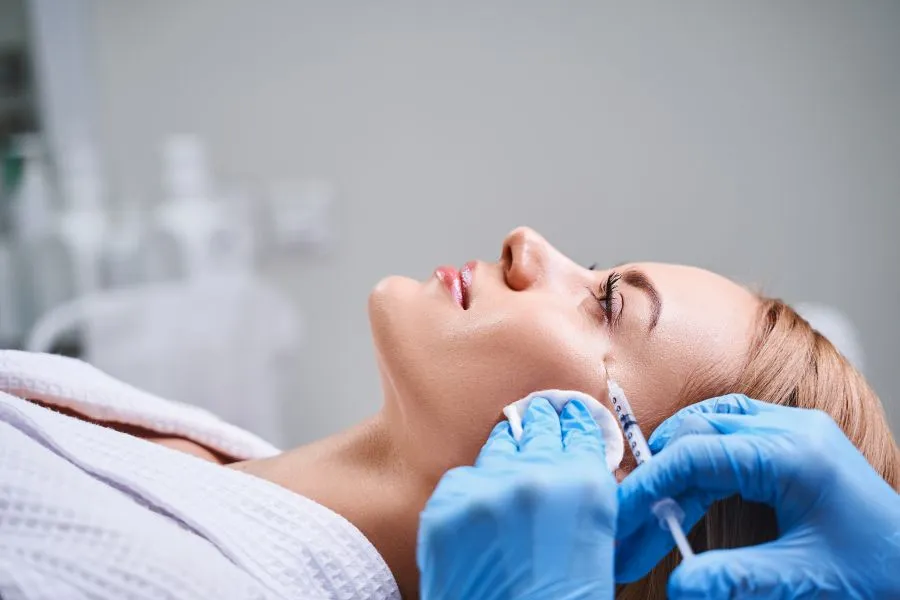 111Skin’s luxury products promote skin recovery.
In December last year, the cosmetics company’s restructuring program was announced to cost far more than the US$500–$700 million figure it first expected, with approved charges reaching US$1.14 billion. The PRGP restructuring program is expected to generate between US$0.8 billion and US$1 billion in gross savings, and was forecast to cost around US$500–700 million.
Earlier this year, ELC was reported to be considering the sale of Smashbox, Too Faced, and Dr. Jart+ as a package deal. The combined price was estimated in the low nine figures (US$100 million to US$199.99 million).
Following, the company announced it would acquire the remaining stakes in Forest Essentials, an Indian beauty brand focused on Ayurvedic cosmetics. The acquisition gave ELC full ownership of the brand.