


Estée Lauder rethinks global marketing by unifying partner data


Key takeaways
- Estée Lauder Companies has appointed WPP as its first global media partner.
- The partnership will centralize advertising and marketing across the company’s brands to improve efficiency and promote growth.
- The move supports Estée Lauder’s One ELC operating model and wider transformation strategy.
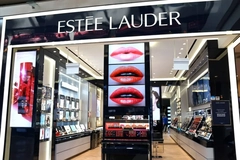
Estée Lauder Companies (ELC) has appointed WPP, a global advertising and marketing services company, as its first global media partner. The partnership will create a unified system for paid media and marketing across ELC’s brands and markets where it operates.
The new media system is powered by data and AI, and will replace the company’s decentralized regional approach to advertising.
The WPP appointment forms part of the company’s One ELC operating model, which aims to simplify operations and support growth as the beauty giant works to recover from recent financial pressure.
The company is also connecting its other partners as part of the One ELC model, including Accenture, which is helping modernize ELC’s shared services, and Shopify, which is powering ELC’s direct-to-consumer e-commerce platform.
With the partners connected, ELC aims to gain deeper consumer insights, integrate the data into its decision-making, and thereby improve the global execution of its media initiatives.
“Today, beauty is discovered and experienced across a constantly evolving mix of platforms. To lead in this environment, we are building a connected, AI-enabled media system that brings brand building and performance together at a global scale,” says Aude Gandon, chief digital and marketing officer at ELC.
Money matters
Estée Lauder is also implementing a restructuring program under its Profit Recovery and Growth Plan (PRGP) to alleviate the US$1.13 billion loss it reported for fiscal 2025. The company expects the loss may escalate through 2026.
However, following improved results for H1 2026, ELC is also exploring strategic changes, including merger talks with Puig, as it looks to strengthen its position in the global beauty market.
The PRGP restructuring program is expected to generate between US$0.8 billion and US$1 billion in gross savings, and was forecast to cost around US$500–700 million. However, by last December, ELC had spent US$1.14 billion on job cuts, contract terminations, and outsourced tech. CEO Stéphane de la Faverie notes that the cost savings move won’t show its full financial impact until 2027.
“We have now approved initiatives to achieve the high-end of the target gross savings range and affirmed we are on track to realize the vast majority of PRGP’s full run-rate benefits in fiscal 2027. The PRGP has instilled a strong sense of cost discipline into our organization that is now embedded in our ways of working,” he says.
.webp) ELC aims to strengthen growth through a new global marketing and operating strategy.The PRGP and One ELC fall under the company’s broader Beauty Reimagined strategy, which focuses on restoring profitability while modernizing how the business operates.
ELC aims to strengthen growth through a new global marketing and operating strategy.The PRGP and One ELC fall under the company’s broader Beauty Reimagined strategy, which focuses on restoring profitability while modernizing how the business operates.
One ELC advances
The One ELC operating model is built on three pillars: One Team, One Culture, and One Operating Ecosystem. One Team simplifies the company’s workforce structure by reducing layers to clarify decision-making. One Culture focuses on collaboration, accountability, and agility between employees.
The appointment of WPP falls under the third pillar, One Operating Ecosystem, which connects ELC’s platforms, data systems, and partners to support consistent global operations. By unifying its advertising and marketing activities, ELC aims to improve efficiency and campaign performance across its brands.
“Partnering with WPP strengthens our ability to invest with greater precision, move with greater speed, and deliver stronger, more measurable returns, while keeping creativity and brand leadership at the center of everything we do,” Gandon concludes.