



Estée Lauder faces legal battles over China’s grey-market sales and Jo Malone trademark


Key takeaways
- Estée Lauder has accepted a US$210 million settlement over claims it misled shareholders about reliance on China’s grey-market daigou sales.
- The lawsuit alleges the company failed to disclose the impact of China’s crackdown on unofficial resale channels until sales and shares sharply declined.
- Zara and Jo Malone are facing a separate trademark dispute with Estée Lauder over the use of the “Jo Malone” name in fragrance collaborations.
Estée Lauder Company (ELC) has agreed to a US$210 million settlement on a class action lawsuit alleging that the company defrauded shareholders in China, though it still requires approval by US District Judge Arun Subramanian. The suit claims that the ELC was non-transparent about its dependency on grey-market sales in China.
ELC denies any wrongdoing as part of the agreement and has stated that its insurance would cover part of the settlement costs.
In another ongoing lawsuit in the UK High Court, Zara has denied claims that the fashion retailer violated ELC’s Jo Malone London trademark in its partnership with Jo Malone, the individual. The lawsuit against Jo Malone and Zara is pursuing over £200,000 (US$272,000) in damages.
Grey-market sales suit
The lawsuit against ELC hinges on allegations that the company underrepresented its dependence on grey-market, or “daigou,” since the COVID-19 pandemic. Daigou refers to a practice in which resellers buy luxury items sourced for duty-free pricing and resell them at below-market prices to consumers.
According to the claim filed by shareholders, the company became heavily reliant on unofficial sales through daigou, especially in China’s Hainan province, due to tightened borders and restricted travel during the pandemic.
ELC is accused of being unforthcoming in how the restrictions on grey-market sales imposed by the Chinese government were harming sales. The Chinese government’s crackdown on daigou, which started in January 2022, was allegedly not disclosed to shareholders until November 1, 2023.
This caused the beauty conglomerate’s shares to take a 19% nosedive and drop market value by approximately US$8.7 billion. This hit was partially caused by the ELC’s large portion of operations in the country, as it generates an approximate 20% of its sales in mainland China.
Allegedly, the company was deceitful in its communications as it assured shareholders that the dip in the Chinese market was temporary and growth would rebound. According to the lawsuit, investors claim that ELC’s management was aware that the underlying business model was atrophying.
A preliminary settlement was filed in the United States District Court for the Southern District of New York. The company had previously reported a US$84 million loss contingency attached to a class action lawsuit on the grounds of alleged violations of the Securities Exchange Act of 1934 in its Q3 financial report.
The company made a bid in March 2025 to dismiss the lawsuit, but US District Judge Arun Subramanian rejected the appeal.
“Defendants attributed the decline to everything but the crackdown and reassured investors that an upswing was coming soon,” said Subramanian.
“What matters is that Estée Lauder touted the reasons for its success while leaving out the parts of the truth it found inconvenient.”
What’s in a name?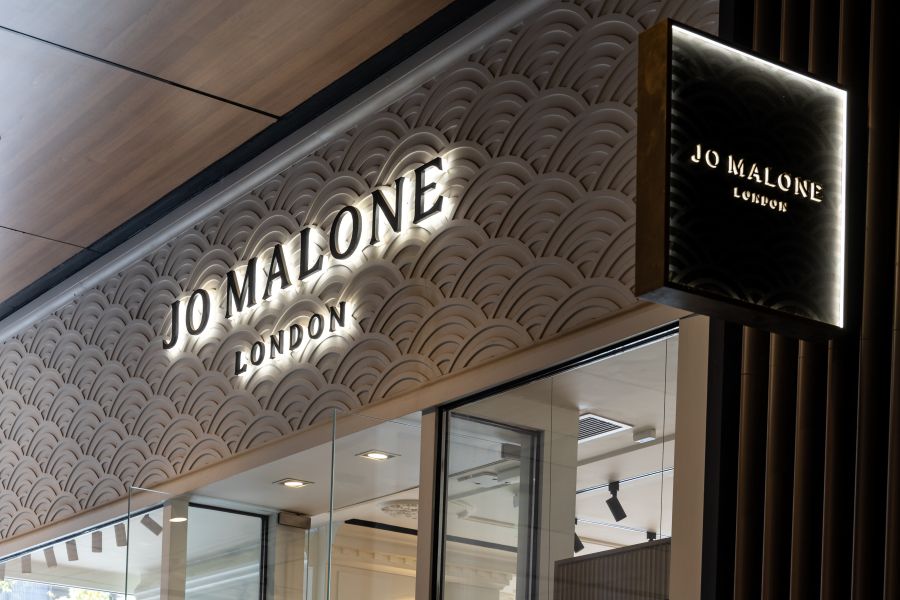
Zara denied trademark infringement claims tied to Jo Malone.
In other courtroom news from ELC, Zara has rejected the accusation that it infringed upon ELC’s Jo Malone trademark, stating that its use of the name has been aligned with principles set out by ELC in 2020. Zara has had an ongoing fragrance collaboration with “Jo Loves” — Jo Malone’s fragrance label — since 2019.
ELC purchased Malone’s fragrance brand, Jo Malone, and the rights to the name in 1999. Malone started Jo Loves in 2011, after leaving Jo Malone in 2006.
While the Zara perfume bottles feature original branding, the lawsuit has sparked discussion on when Malone can use her name, as the suit is based on the words “Jo Malone” being used in the collaboration’s branding.
Zara’s defense argues it uses Malone's name in line with the principles ELC’s lawyers set out in October 2020, when they said Zara should use “Jo Malone CBE,” “Ms Jo Malone,” “Ms Malone,” or “Jo” to differentiate between the individual and the brand.
“Seven years ago, I started to work with Zara. They approached me, they didn’t approach a company, they didn’t approach a brand, they didn’t approach a logo; they approached me, Jo Malone, the person,” said Malone in an Instagram video.
“We have gone above and beyond to make sure everyone understands this has nothing to do with Jo Malone London, the company.”
A spokesperson for ELC said that in the 1999 contract, Malone “agreed to clear contractual terms that included refraining from using the Jo Malone name in certain commercial contexts, including the marketing of fragrances.”
“We respect Ms. Malone’s right to pursue new opportunities. But legally binding contractual obligations cannot be disregarded, and when those terms are breached, we will protect the brand that we have invested in and built over decades,” the statement reads.
“I sold a company, I did not sell myself,” Malone responded, and expressed that she hoped “sense will prevail,” as the lawsuit progresses.