


K-beauty shapes global formulation and breaks into new categories

Key takeaways
- K-beauty has shifted from a trend-led category into a global formulation model that non-Korean brands now build from.
- Suppliers and brands say durable innovation rests on evidence, barrier-focused formulation, and everyday usability.
- Hair, scalp, and body care are the next expansion categories, with future advantage coming from proprietary technology and coherent brand systems.
K-beauty is growing away from a trend-based category into a global innovation model for the personal care industry. The category’s rapid spread has raised expectations around ingredient transparency, product efficacy, and an enjoyable sensorial experience during daily routines.
South Korean skin care principles are moving beyond the simple “glass skin” or “cloud skin” trends and into a global force that other non-Korean innovators are inspired by.
“In many ways, global beauty itself is becoming more K-beauty in the way it innovates,” Hyeseong Oh, head of global marketing at Manyo, tells Personal Care Insights. “Consumers are no longer simply interested in Korean products — they are increasingly curious about the routines, ingredients, and beauty philosophies behind them.”
Last year, South Korea’s cosmetics exports reached a record high of US$11.4 billion, surpassing the previous year’s US$10 billion. The Ministry of Food and Drug Safety reported that the figure was a 12.3% increase from 2024. The number is only forecast to continue rising.
With global expansion, accelerating development cycles, and rising demand for evidence-backed claims, K-beauty has set a new skin-first standard in beauty. It is expected to grow into other categories like hair care and body care.
“K-beauty has influenced global beauty standards, from lightweight layering, skin care-like sun protection, to multifunctional preservation systems,” Petra Kudla, global marketing manager Hair Care at Clariant, tells us.
“Geographic origin is becoming less important as these principles become mainstream. Credible brand communication, clear benefits, validated claims, distinctive sensory, and intuitive formats are now key. Western adoption influences speed, experimentation, and texture innovation, while global markets add new priorities.”
Speed to market
In recent years, K-beauty has reshaped the pace of product development in the global personal care industry and influenced consumers’ expectations of value in shorter delivery times.
“By identifying emerging needs quickly and translating them into distinctive formulations and accessible ingredient stories, K-beauty has delivered strong performance and sophisticated user experiences at approachable price points,” Debbie Kim, product marketing management, senior manager at Dr.Brid C, a barrier-focused skin care brand, tells Personal Care Insights.
She says that what K-beauty has done particularly well is make cosmetic science tangible and relevant to everyday use. One of its most influential principles is that efficacy and user experience should be designed as one system rather than treated as separate goals. This integrated system allows for quicker turnaround time on product development.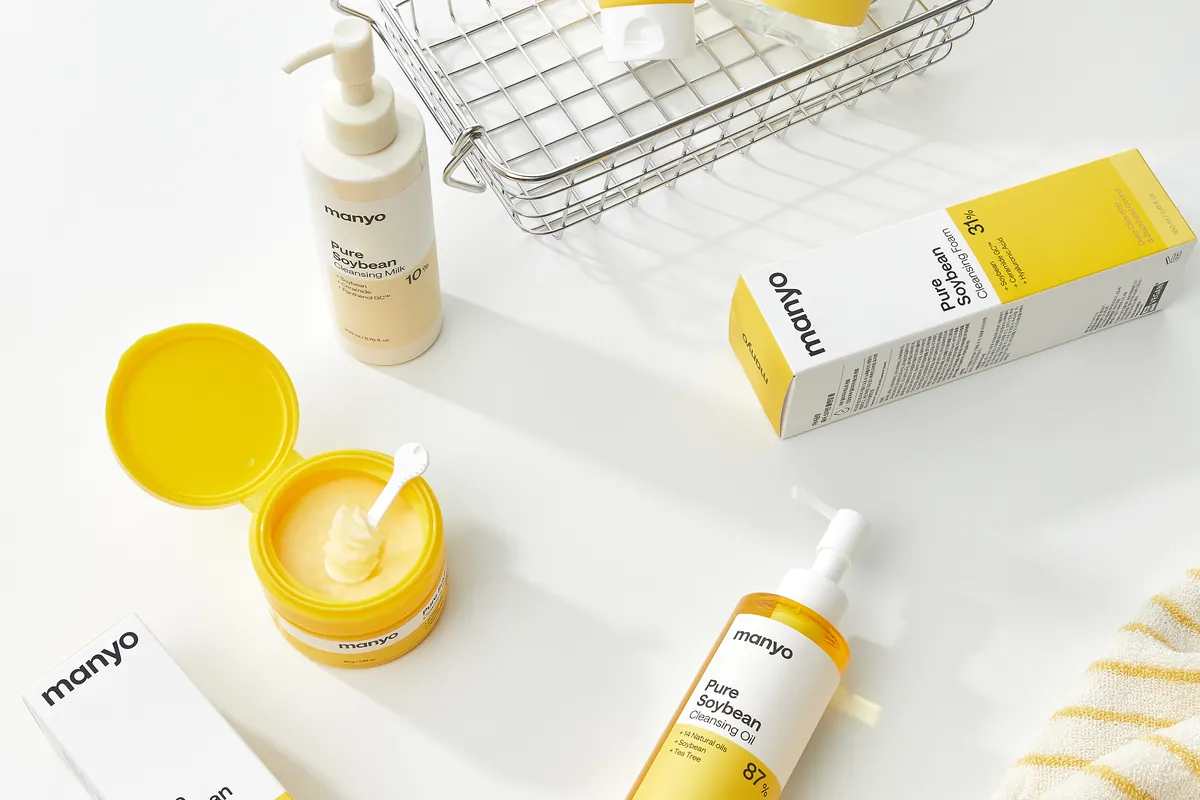 Manyo’s Oh says global beauty increasingly innovates the way K-beauty always has.
However, K-beauty’s expansion is not only about speed. Selecting a promising active ingredient is the starting point for a successful formulation. Creating the product performance that consumers now expect depends on concentration, stability, release, delivery, compatibility with other ingredients, and the texture of the finished formulation.
Manyo’s Oh attributes consumers’ newer expectations of accelerated beauty innovation to Korea’s well-connected beauty ecosystem. She names “world-class R&D labs, highly specialized manufacturers, ingredient suppliers, fast-moving retailers, and extremely engaged consumers” as part of this network.
“K-beauty is no longer competing only as a geographic category. Its principles are becoming part of the global beauty playbook. Consumers everywhere now expect faster innovation, sophisticated textures, ingredient transparency, and accessible efficacy.”
She tells us that many of those expectations were accelerated by K-beauty.
K-beauty principles’ impact on cosmetics
Karolina Scierski, portfolio marketing manager for Preservation at Clariant, says that K-beauty uses the collaboration of nature and science in cosmetic ingredient development.
“K-beauty has demonstrated that naturally derived ingredients and high performance are not mutually exclusive.” Scierski says this principle has influenced Clariant’s Plantasens portfolio.
She also notes that the skin barrier is regarded as the foundation of beauty in Korean skin care principles, which encourages formulators to look beyond the headline active and consider how every component can support the skin.
Meanwhile, Oh says that one of K-beauty’s most important principles is that efficacy and gentleness should not be a trade-off.
“Korean consumers are highly ingredient-literate, but they also care deeply about texture, layering, irritation, and how a product fits into everyday life. This has pushed formulators to think beyond simply adding a trending active at a high concentration. The challenge is to create a balanced formula that consumers can use consistently and comfortably while still delivering visible results,” explains Oh.
For Korean brands, Oh says the “K-beauty mark” is an opportunity and a challenge. She believes going forward, simply being a Korean beauty brand will become less differentiating as more global companies adopt these principles.
“The next competitive advantage will come from distinctive brand heritage, proprietary formulation expertise, and hero products that consumers continue to choose even after a trend moves on.”  Kim sees K-beauty competition shifting from product formats to coherent brand systems.
Virality versus real success
Much of K-beauty’s original momentum was built online. Virality can put an ingredient in front of millions of consumers overnight, but it reveals nothing about whether the formulation behind it holds up.
To distinguish durable K-beauty innovation from a short-lived viral trend, Clariant says it considers whether the trend solves a real consumer need and whether the promised performance can be demonstrated.
Sophia Kim, global marketing manager, Skin Care at Clariant, Seoul, South Korea, tells us: “This involves examining efficacy data, formulation stability, reproducibility, compatibility, safety, and the relevance of the claim, rather than focusing solely on the novelty of a texture or format. While virality can be a valuable source of inspiration, evidence determines whether an idea has lasting value.”
For Dr.Brid C, virality is a signal of consumer interest, not proof of efficacy. “When evaluating a new technology, we consider whether its mechanism is credible. For example, research on injectable PDRN cannot simply be applied to the performance of a topical PDRN cosmetic,” says Kim.
Manyo agrees that virality alone is not enough and that while social listening tells companies what to pay attention to, it does not tell them what to launch. Oh details seeing strong interest in highly recognizable actives such as glutathione, retinal, ceramide, and fermentation-derived ingredients, as well as delivery formats that make efficacy more intuitive and convenient for consumers.
“A viral ingredient may bring a consumer to a product once, but efficacy, texture, and overall experience are what create repurchase. That distinction only becomes more important as social platforms accelerate beauty trend cycles. And it is the question we return to in every development review: does this formula deserve to remain in a consumer’s routine after the trend has passed?” questions Oh.
Clariant’s Scierski says that K-beauty made formulation itself visible and exciting to consumers, allowing it to become part of the beauty conversation. She believes that the opportunity for ingredient developers is to respond at the speed of culture without sacrificing scientific discipline. “The concepts with the greatest staying power will be the ones that unite relevance to consumers, performance that can be measured, an enjoyable sensory experience, and responsible formulation choices.”
K-hair and body care
In the coming years, Clariant expects K-beauty to further focus on skin longevity, barrier health, and sensorial wellness, supported by simpler yet more multifunctional routines. Kudla tells us that ingredient technologies that enable each component of a formulation to contribute will become increasingly relevant.
The standout category next up for K-beauty domination is hair and scalp care, according to Clairant and Dr.Brid C.
Kudla says that hair and scalp care offer the strongest potential as K-beauty’s next wave, using the “skinification” of hair care. She believes skin care principles like gentle cleansing, barrier-conscious care, targeted serums, and sophisticated leave-on textures will be taken to the scalp.
Dr.Brid C’s Kim says there is particularly strong growth potential in hair and scalp care. 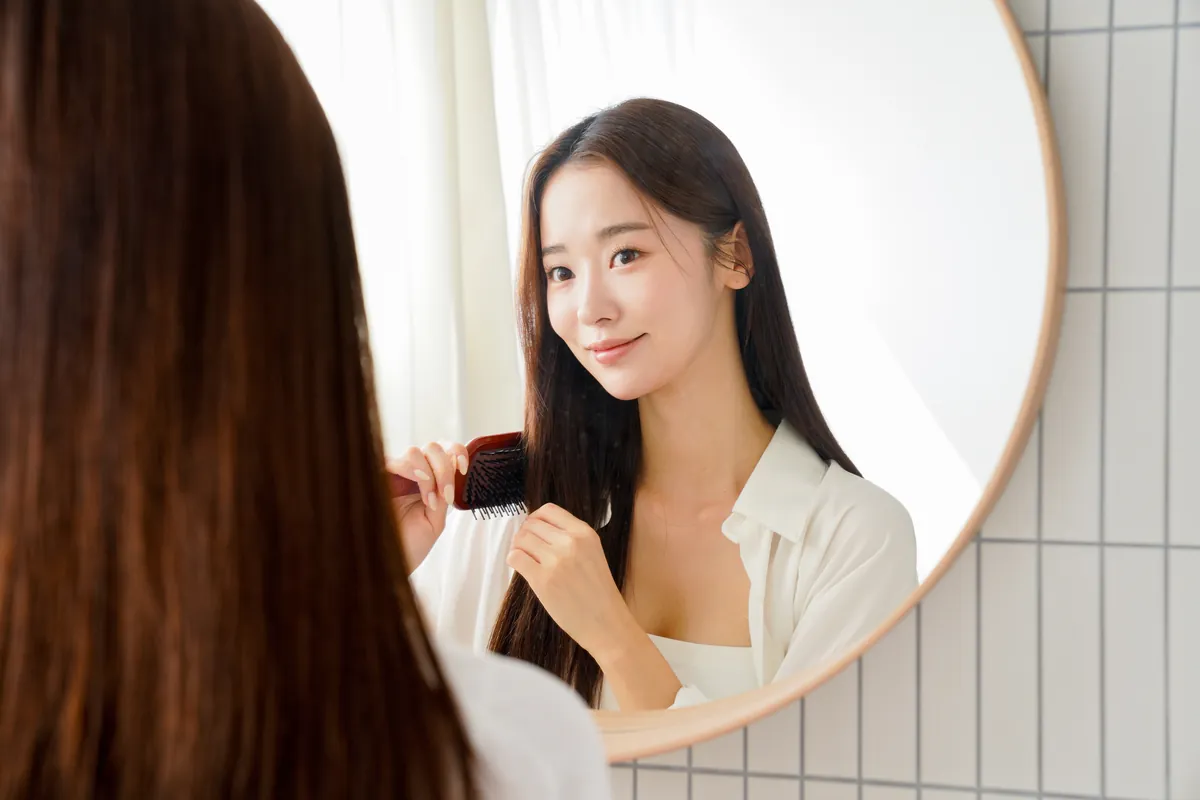 Kudla points to hair and scalp care as K-beauty’s strongest next-wave opportunity.
“Many of the principles that have driven the success of K-beauty skin care — including strong ingredient literacy, routine-based care, and a focus on the underlying condition of the skin rather than visible results alone — are now beginning to extend into hair and scalp care,” she says.
She explains that this cannot be achieved by simply adding skin care actives to hair care and needs to take scalp skin’s specifications into account. “This is why K-hair care must build formulation expertise of its own rather than merely extending familiar skin care ingredients into a new category.”
Clariant says that following closely behind hair and scalp care is body care. “Consumers expect facial-skin care levels of moisturization, barrier support, and sensorial refinement in products for the whole body. We see the next wave less as a single category and more as the expansion of K-beauty’s skin-first philosophy across the complete personal-care routine,” adds Kudla.
Oh agrees that Korean-inspired body care is a new section for innovation. She says that over the next few years, there is particularly strong potential in body care, especially as consumers begin to treat the skin on their body with the same level of attention as their face.
“Traditionally, body care focused mainly on cleansing and moisturization. But we are now seeing consumers look for more targeted solutions for concerns such as dark spots, uneven tone, rough or bumpy texture, and body breakouts, using ingredients and technologies that were previously associated primarily with facial skin care,” says Oh.
“We believe this ‘skinification of body care’ fits naturally with K-beauty’s strengths: ingredient-focused formulas, specific concern-based solutions, and making effective skin care easy to incorporate into daily routines.
Growing through business foundations
According to Dr.Brid C, the biggest change in K-beauty is that it is no longer competing only with other K-beauty brands. Lightweight textures, ingredient-led communication, barrier care, and hybrid formulations are now part of the global competitive set rather than qualities associated only with Korean brands. As a result, competition is shifting from formats to systems.
“In the early days of K-beauty, differentiation often came from being first to introduce a new texture, ingredient, or product format. Today, those innovations can be adopted quickly across markets. The more sustainable advantage lies in building a distinctive and coherent system — one that connects a clear philosophy with proprietary technology, purposeful product architecture, a recognizable consumer experience, and credible evidence,” explains Kim.
Looking ahead, Kim predicts that continued growth will depend less on reacting quickly to trends and more on building sustainable brands and business foundations. Clearly defined expertise, proven product performance, reliable global distribution, regulatory readiness, and the ability to adapt to local markets will become increasingly important.
“We also expect K-beauty to move from innovation centered on individual products and formats toward innovation built around proprietary technologies and coherent brand systems…We are seeing strong interest in technologies that bring a more advanced, treatment-inspired mindset to everyday skin care, including PDRN, peptide complexes, spicule-based systems, and at-home beauty devices,” says Kim.
“The next stage of K-beauty will be defined not just by how quickly a brand can launch, but by whether it can build long-term authority around a clear area of expertise.”