



Science-led minimalism shapes future sustainable skin care

Key takeaways
- Biotech and precision fermentation are enabling the development of high-performance, lower-impact skin care ingredients.
- Minimalist routines are driving multifunctional, fewer-ingredient formulations.
- Sustainability now hinges on proven performance, microbiome compatibility, and credible data.

Minimalist skin care with an environmental sustainability focus is gaining traction. Consumers expect fewer ingredients and multifunctional products that do not exploit natural resources, harm ecosystems, or pollute the environment. Lab-grown, microbiome-friendly, and innovative cosmetic formulations are therefore gaining traction in the industry.
Personal Care Insights sits down with industry experts from Äio, Melt&Marble, and Sequential to discuss the variety of sustainable skin care coming from labs or nature, what consumers expect for 2026, and the differences in formats.
“Sustainable skin care trends are moving beyond just natural labels toward science-driven ingredients that combine performance with sustainability,” Magdalena Koziol, head of cosmetics development at Äio, tells us.
She identifies fermentation-derived ingredients and actives as one of the strongest trends. This includes lipids, ceramides, peptides, and postbiotics, and can be produced in controlled environments, with lower resource utilization, such as land and water. They also provide greater batch-to-batch consistency than conventionally sourced materials.
Petronille Houdart, skin care director at Sequential, forecasts that in 2026, sustainability in skin care will be defined less by marketing claims and more by product performance and proof.
“As consumers increasingly simplify their routines, well-formulated, well-tested products that are transparent about their effects on skin and the microbiome become even more important. When products work as intended, consumers are less likely to experiment, switch frequently, or discard partially used products, directly reducing waste.”
Houdart details that as expectations and regulatory scrutiny continue to rise, sustainability will extend beyond packaging and ingredient sourcing to include formulation quality, biological compatibility, and real-world product longevity.
“Brands that can substantiate ‘clean’ and ‘sustainable’ claims with credible data will be best positioned to align performance, trust, and environmental responsibility,” says Houdart.
More functionality, fewer ingredients
Melt&Marble’s chief business officer, Thomas Cresswell, says there’s a clear shift toward simpler, more intentional skin care routines.
 Cresswell says there’s a clear shift toward simpler, more intentional skin care routines.“Consumers are prioritizing fewer products with transparent, high-performance ingredients that align with clean and sustainable values, rather than complex multi-step routines,” he says.
“This is pushing brands to focus on multifunctional formulations that deliver results while reducing ingredient count and environmental impact. At Melt&Marble, we see precision-fermented fats playing a key role in enabling this shift by combining sensory performance, stability, and skin benefits in a single, traceable ingredient.”
Apart from fewer products, consumers are also seeking fewer ingredients but with increased functionality.
“We’re seeing strong growth in waterless and solid formats, refillable and low-plastic packaging, and products built around multifunctional ingredients that deliver texture, stability, and skin benefits in one,” says Cresswell.
He explains that at the ingredient level, there’s a clear shift toward bio-based, fully traceable materials that are designed for both performance and sustainability.
“We see precision-fermented fats enabling exactly this: next-generation formulations that meet sensory expectations while reducing environmental impact and supply chain complexity.”
Houdart adds that beauty companies will shift from ingredients that sound sustainable to ingredients that can be tested for real biological impact.
“Microbiome-supportive ingredients, such as prebiotics, postbiotics, and mild botanical actives, are gaining traction because brands increasingly need to demonstrate that these ingredients preserve skin balance rather than disrupt it. From a testing perspective, this means moving beyond INCI lists and assessing how formulations affect microbial diversity and stability on skin,” she says.
Houdart continues that the industry is also seeing momentum in ferments and biotech-derived actives, which can offer high performance with better consistency and a reduced environmental footprint compared to some traditional extracts.
Rinse-off vs leave-on
A crucial aspect to consider with sustainable skin care is whether it is meant to be left on the skin or rinsed off down the drain.
From a manufacturing perspective, Äio’s Koziol notes that producing sustainable skin care presents distinct challenges for both rinse-off and leave-on products.
“Rinse-off products, such as body washes and cleansers, need to maintain stability in high-water environments requiring preservatives that meet safety and ecotoxicity standards. They typically require surfactants, which can be harsh on skin or environmentally problematic, and consumers still expect rich foam, easy rinsing, and no residue, which is hard to achieve with natural or biodegradable alternatives,” she says.
 Avoiding microplastics and ensuring full biodegradability in wastewater often means rethinking traditional formulation approaches.Meanwhile, avoiding microplastics and ensuring full biodegradability in wastewater often means rethinking traditional formulation approaches.
Koziol explains that leave-on products, such as serums and moisturizers, pose different challenges.
“They require long-term stability and refined skin feel, without compromising texture or sensory appeal. These formulations often contain high concentrations of active ingredients, which can destabilize emulsions or increase the risk of skin irritation. At the same time, preservatives must be gentle enough for prolonged skin contact while still ensuring adequate shelf life.”
Both formats must meet stringent safety and efficacy standards while substantiating claims such as biodegradability, vegan, and cruelty-free, which are increasingly scrutinized by regulators and consumers.
Houdart from Sequential tells us that the key challenges for rinse-off cosmetics lie in understanding the biological impact of repeated use.
“Rinse-off products are often reformulated to be milder and more sustainable, but even short-contact products can significantly influence the skin microbiome if used daily. Testing needs to assess not just immediate cleansing performance, but cumulative effects on skin balance.”
She notes that there is an increased focus on biodegradable emulsifiers and mild surfactants that reduce aquatic impact while maintaining skin tolerance. However, these often require careful real-world testing.
“Bio-based and upcycled ingredients are becoming more common, but they introduce variability. That variability makes robust product testing essential, particularly when brands want to ensure consistency, tolerance, and claims reproducibility across batches and markets.”
“Leave-on products pose a different challenge: they remain on the skin for extended periods, so brands must ensure long-term compatibility with both the skin barrier and the resident microbiota.”
Replacing fossil fuels
The beauty industry is moving away from its reliance on direct plant harvesting, mining, or animal-derived sources, toward precise, lab-based cultivation of bioactives.
 Biotech-derived ingredients are designed to mimic or enhance compounds found in nature.Koziol at Äio states that biotechnology-derived ingredients, including bio-identical collagen, bio-fermented hyaluronic acid, and advanced bio-actives such as peptides and exosomes, are designed to mimic or enhance compounds found in nature.
“Upcycled ingredients also remain important, with oils, antioxidants, and polymers derived from different side-streams supporting a more circular beauty economy,” says Koziol.
Melt&Marble’s chief business officer, Cresswell, notes that Biotech is offering new opportunities for formulators seeking to replace fossil-based and synthetic ingredients with biologically derived alternatives.
“While sustainability-focussed brands have focused on using ingredients found in nature for decades, science-driven biotech innovators are introducing new ingredients with improved functionality, performance, and health benefits,” he says.
“Examples include algae-based polysaccharides, exfoliants made from spent coffee grounds, and ingredients of various kinds, including designer lipids and fats derived from fermentation.”
Lipids, for example, can be produced by precision fermentation to offer a dramatically smaller carbon footprint than animal- or even plant-derived fats. Precision fermentation offers the added benefit of controlling the properties of the lipid, such as melting temperature and viscosity, or even its bioactivity.
“Biotech will continue its rapid progression from niche concept to everyday ingredient, while expanding the range of ingredients it is used for. The successful incorporation of some biotech-produced ingredients into sustainable skin care and other personal care applications should result in more innovation in uses for biotech in skin care,” says Cresswell.
Beyond ingredients
Sustainability trends are increasingly reflected not only in ingredients but also in product formats.
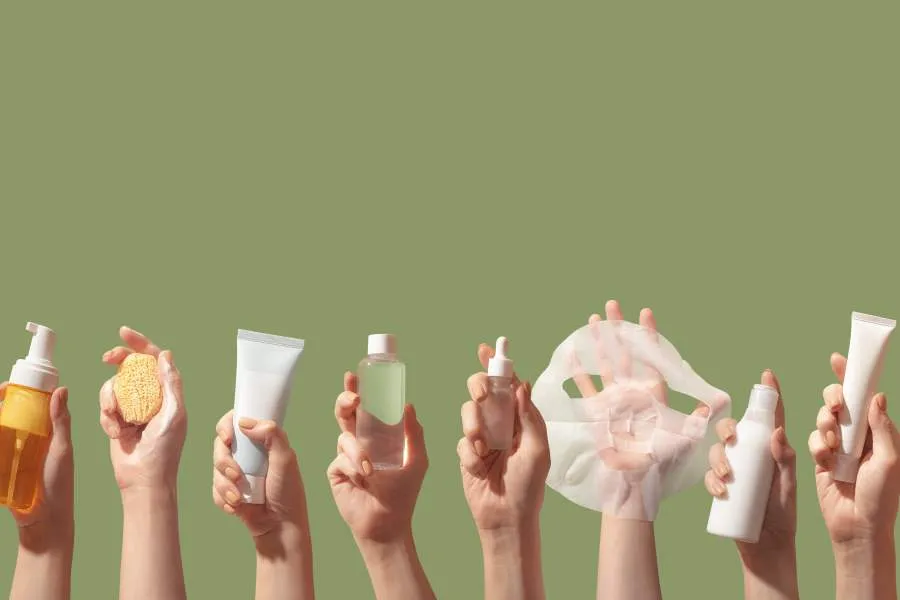 Sustainability trends are increasingly reflected not only in ingredients but also in product formats.Waterless formulations, including solid bars such as moisturizers, shampoos, and cleansers, as well as powder-to-liquid formats, are gaining traction because they reduce water use, packaging, and transportation impact. Meanwhile, they also deliver concentrated, high-performance textures.
“Refill and reuse systems, such as refillable bottles, jars, compacts, and ‘just-add-water’ powder sachets and tablets, are supporting a more circular economy by reducing waste and encouraging repeat use,” says Koziol.
There is also an increase in biodegradable formats, including sheet masks made from materials like bamboo, biocellulose, or coconut pulp, alongside multi-use products that reduce reliance on single-use plastics.
Minimalist formulations for multi-purpose use are gaining popularity, as they deliver multiple benefits, such as hydration and barrier support, in a single product, thereby helping to reduce overall consumption. Formats that minimize waste, maximize efficacy, and extend product life are gaining momentum in sustainable skin care.
“By 2026, we expect the sustainable skin care landscape to be defined by science-based stewardship rather than broad greenwashing,” she says.
“Biotechnology is here to stay and will move firmly into the mainstream,” concludes Koziol.