



Research highlights safety trade-offs in PCR materials for personal care


Key takeaways
- Norner finds higher chemical migration in PCR HDPE than in virgin plastic, but confirms safe use with strict quality controls.
- Orkla Home and Personal Care reports increased confidence in PCR packaging following migration testing and risk assessment.
- Blending PCR with virgin HDPE or using multilayer designs significantly reduces migration risks and supports PPWR readiness.
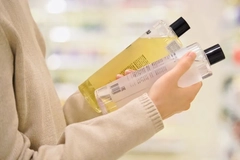
Norner, a Norway-based polymer and plastics research company, has partnered with Orkla Home and Personal Care to assess the safety of post-consumer recycled (PCR) plastic in personal care packaging.
The project reports that bottles made from recycled high-density polyethylene (HDPE) exhibit higher chemical migration than those made from virgin HDPE. However, the research concludes that, with proper quality controls, PCR can be used safely in personal care packaging.
Jorunn Nilsen, principal researcher at Norner, says: “Consumer safety has always been a primary concern for brand owners. This is especially relevant now, as regulations like the Packaging and Packaging Waste Regulation (PPWR) are making the use of post-consumer recycled materials mandatory.”
The project also found that toxic substances, such as bisphenol A and a fragrance compound (hexyl salicylate), were detected in PCR samples but not in virgin HDPE, highlighting the importance of maintaining strict quality control for PCR materials.
Kristine Holmqvist, senior regulatory and safety manager at Orkla, says: “Through our partnership with Norner, we have made significant progress and gained confidence in the safe use of recycled materials in our cosmetic packaging.”
Testing types of plastic
In the project, Orkla provided industry context, while Norner brought expertise in polymer research. In addition, the research received funding from the Norwegian Retailers’ Environmental Fund.
Norner conducted a migration testing and risk assessment. It involved a comparative analysis of bottles made from 100% virgin HDPE, 100% PCR HDPE, and hybrid designs, including blends of virgin and PCR materials and multi-layer constructions.
.webp) Packaging design changes can reduce migration risk, with 10% PCR blended into virgin HDPE lowering migrating substances.In the experiment, the packaging was exposed to 95% ethanol for seven days at 60 degrees Celsius. Then, targeted and non-targeted chemical analyses detected any substances migrating from the plastic into the simulant.
Packaging design changes can reduce migration risk, with 10% PCR blended into virgin HDPE lowering migrating substances.In the experiment, the packaging was exposed to 95% ethanol for seven days at 60 degrees Celsius. Then, targeted and non-targeted chemical analyses detected any substances migrating from the plastic into the simulant.
PCR quality controls
The project finds that modifications to packaging design helped to reduce the risk of migration. For example, blending 10% PCR into virgin HDPE resin reduced migrating substances by approximately 60–70% and total migration concentrations by 80–90% compared to using 100% PCR.
Moreover, bottles with a thin virgin plastic inner layer also prevented most PCR-derived compounds from reaching the product-contact surface.
The research also highlights that PCR quality is important, as lower-quality materials can lead to greater chemical migration than high-quality PCR materials.
Meanwhile, Norner suggests that high-density virgin HDPE for the inner layer offered better protection, which is a “crucial insight for designing sustainable packaging that balances barrier properties with required mechanical performance.”
Lastly, the research outlines that, while some PCR materials exceeded migration limits, an Orkla risk assessment found that appropriate quality controls allow safe use across applications.
Planning for PPWR
According to Norner, the initiative anticipates Article 7 of the EU’s PPWR, which requires at least 10% recycled content in contact-sensitive packaging by 2030.
The PPWR stipulates that by 2027, cosmetic brands must adopt refillable packaging systems and embrace a “circular asset” model. This move signals a fundamental shift, forcing companies to rethink their approach entirely. By 2035, brands will need to prove that their packaging is recyclable and actively being collected, sorted, and recycled across the EU.