




What does the historic EU–India trade agreement mean for cosmetics?


Key takeaways
- The India–EU FTA aims to significantly reduce tariffs on cosmetics, boosting trade between the regions.
- Major European beauty brands like L’Oréal and Estée Lauder are investing heavily in India, capitalizing on the growing beauty market.
- The FTA is expected to double EU exports to India by 2032, making India a strategic hub for the global beauty industry.

India and the EU have struck a historic Free Trade Agreement (FTA) that is predicted to lower the price of cosmetics and boost the already accelerating Indian beauty market.
The two countries have agreed to wide-ranging tariff cuts and eliminations. According to the EU, the agreement will remove or reduce duties on over 90% of its goods. The current 22% tariff on cosmetics will be mostly removed after five or seven years. The EU says the agreement will boost exports to India and deepen economic ties amid ongoing global trade turbulence.
European Commission President, Ursula von der Leyen, says: “We have sent a signal to the world that rules-based cooperation still delivers great outcomes. This is only the start — we will build on this success and grow our relationship to be even stronger.”
The French trade union representing perfume, cosmetics, and personal care companies (FEBEA) advocated for the FTA. It warned that US tariffs could lead to a 21% drop in French cosmetics exports to the US, worth €620 million (US$743.4 million). The association hopes the new FTA with India will offset this potential loss.
Emmanuel Guichard, general manager of FEBA, calls India “a key priority” and says, “We are investing a lot in India in anticipation of the FTA.” India is the world’s most populated country, with 1.4 billion people. Industry analysts predict that India’s beauty sector will nearly double to US$40.8 billion by 2030.
The FTA will be sent to the European Council and Parliament, and India’s Cabinet, for approval before it takes effect.
Export boom expected
The deal comes after almost two decades of negotiations between the two regions. The EU–India relationship dates back to 1962, when India became one of the first countries to forge diplomatic ties with the European Economic Community. Now, over the last six months, discussions accelerated and culminated in the FTA this Monday.
The agreement, if ratified, is expected to double EU exports to India by 2032. The EU–India FTA paves the way for cheaper cosmetics in India.
“The EU and India make history, deepening the partnership between the world’s biggest democracies. We have created a free trade zone of two billion people, with both sides set to gain economically,” says von der Leyen.
The European Commission president has called the FTA the “mother of all deals.”
Beauty leaders look to India
Major beauty players have been taking new ground in India this year. The country’s beauty market has been attracting industry giants such as L’Oréal and Estée Lauder.
L’Oréal announced plans to significantly expand its operations in India over the next few years, positioning the country as a central hub in its global growth strategy. In November, L’Oréal launched La Roche-Posay in India through a partnership with Nykaa, one of the country’s largest beauty retailers.
CEO Nicolas Hieronimus said: “India is a very strategic market for L’Oréal. We intend to more than double our business in the next couple of years, expand our factories — which are today manufacturing 95% of what we sell in India — and also export to the rest of the region.”
Meanwhile, Estée Lauder has been deepening its retail and marketing investments in the country. Last year, it expanded its entrepreneurship program, Beauty & You India, in partnership with Nykaa and Startup India. The company is not just selling EU products in India, but investing in local innovation, partnerships, and consumer‑centric offerings, signaling a position for long‑term growth ahead of trade shifts like the India–EU FTA.
It appears that L’Oréal and Estée Lauder are racing to scale in India amid global trade uncertainty with other major regions like the US. 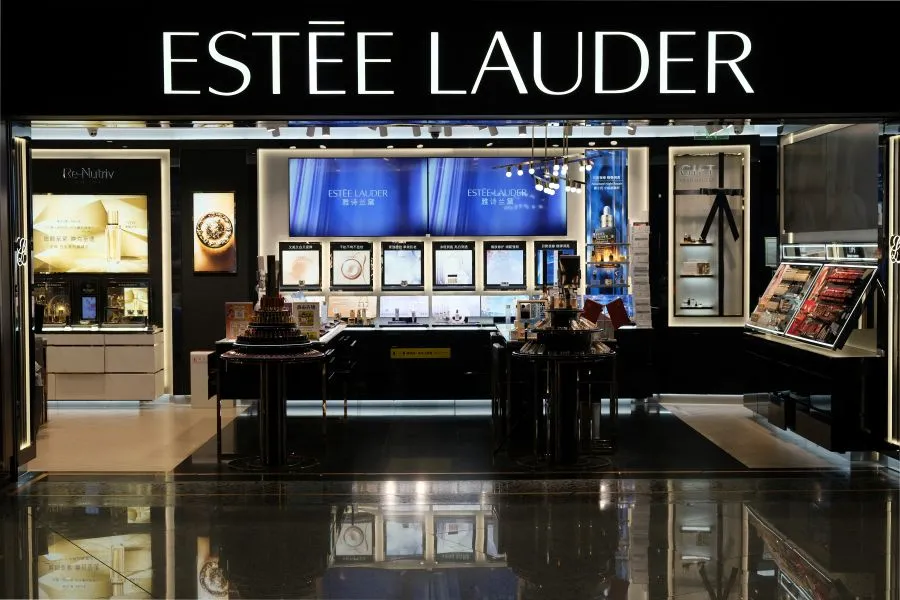 Estée Lauder’s investment signals long-term growth in India.
Last year, major European beauty companies urged the EU to exclude American cosmetic goods from its tariff rollout. The group of 16 beauty executives, called the Value of Beauty Alliance, warned that tariff retaliations against the US could hurt the EU’s personal care industry — one of the region’s biggest sectors.
The beauty and personal care value chain adds €180 billion (US$194.34 billion) to the EU27 GDP and supports almost 3.2 million jobs. FEBEA reports that in France alone, beauty imports from the US amount to US$500 million, while exports are worth roughly €2.5 billion (US$2.7 billion).
Since the US began threatening and implementing tariffs, trade tensions have not let up, leaving the European cosmetics market uncertain about the status of a major market. European beauty companies may now be turning to the EU–India FTA to offset the financial impact of declining US exports under President Trump’s policies.