


Saanroo study reveals serum cuts gray hair by 15.5% as pro-aging reshapes hair care

Key takeaways
- Saanroo’s Ageratum serum cut gray hair density 15.5% over 12 weeks.
- The ingredient targets pigmentation at the follicle rather than coating hair with dye.
- Pro-aging demand is shifting gray hair from color cosmetics to treatment.

Saanroo has published the first clinical study of its HairAge Vitae ingredient on hair pigmentation, reporting a 15.5% reduction in gray hair density among adults who applied a topical serum for 12 weeks.
The research arrives as longevity and preventative aging are transforming the personal care industry. Saanroo’s findings suggest a potential route to reducing gray hair at the source, rather than masking it with dye.
“Consumers are moving from covering/darkening gray hair by dyes and toners and moving more into the pro-aging, slowing gray hair shift. With longevity, it allows consumers to age gracefully and look dignified without standing out as someone having dyed their hair,” Ramasamy Venkatesh, managing director of Saanroo, tells Personal Care Insights.
“This category will grow in a big way, in our opinion. So far, there have been no natural solutions for reversing the gray of hair with a known mechanism of action. HairAge is able to plug that gap by providing a well-researched solution to address this need.”
At the end of the study, 67.8% of participants agreed their hair looked thicker and healthier, 41.1% reported a darker hair appearance, 35.7% reported less gray hair, and 30.4% noticed darker roots.
“With HairAge, we’re offering a new option of a natural product that works through a well-validated mechanism of action, which reduces gray hair. We believe it should sit in the scalp serum treatment range,” says Venkatesh.
Saanroo offers HairAge Vitae for creams, gels, serums, capsules, tablets, and powders.
Testing the serum
Graying, known clinically as canities, results from the progressive loss of melanin in the hair as follicular melanocytes lose function. The researchers noted that the biggest contributor to graying hair is oxidative stress — an imbalance between free radicals and antioxidants.
The study proposes that the antioxidant activity of Ageratum conyzoides, commonly known as goatweed, may mitigate oxidative damage and help maintain melanocyte function.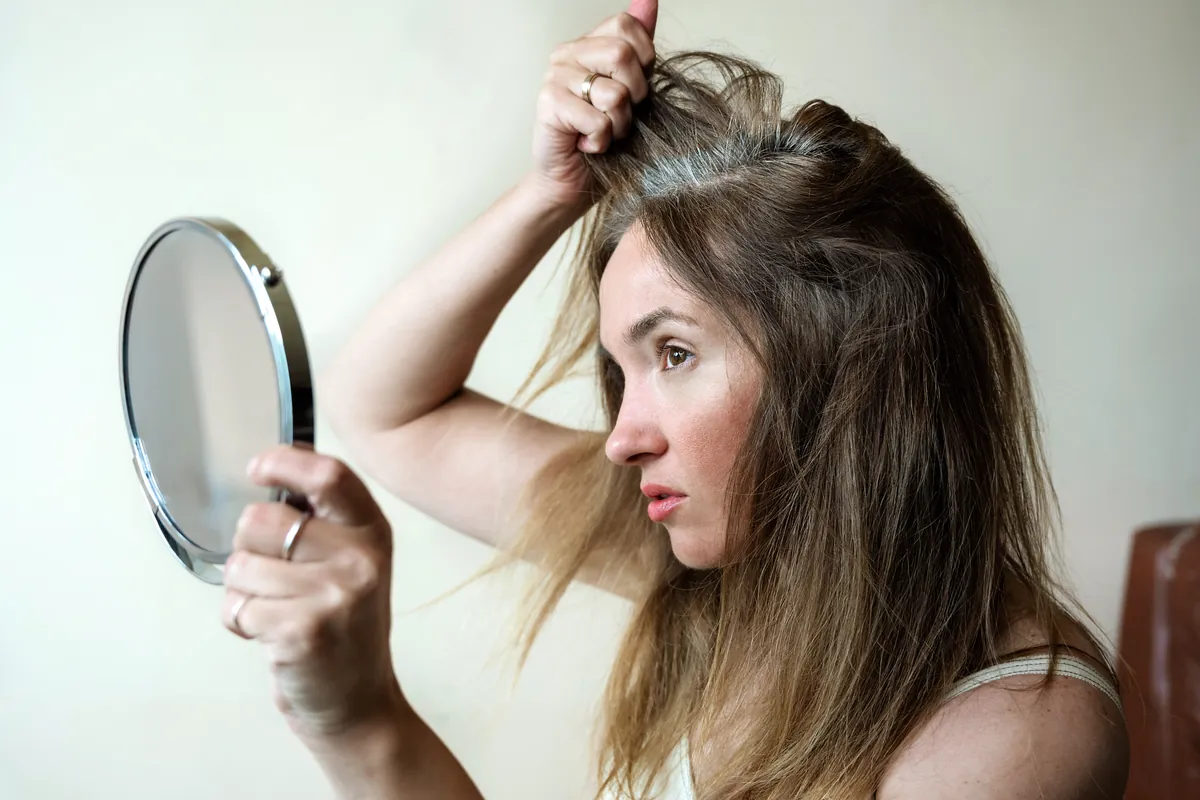 Oxidative stress damages the melanocytes that pigment hair.
The open-label, single-arm trial ran in Brisbane, Australia, and appears in the Journal of Cosmetology & Trichology. It enrolled 65 adults aged 31–79 with 10% to 50% gray hair in the temporal scalp region —56 completed both required assessments.
Participants applied two teaspoons of a serum containing 0.5% Ageratum conyzoides to the scalp twice daily. Gray hair count in a one-square-centimeter section of temporal scalp averaged 95.5 at baseline. Then, after 12 weeks, it was reduced to 80 (p = 0.031).
“The product has proven hair growth and hair thickening properties as evidenced by two topical and one oral human clinical trial, with the studies peer-reviewed and published in leading journals,” says Venkatesh.
“This adds to the volume of science on the product by giving a two-way solution, hair growth and reduction of graying hair, in one shot.”
In the latest study, gray hair percentage fell significantly in the temporal, frontal, and vertex regions, by 9.8%, 12.0%, and 10.1%, respectively. The occipital region changed by 1.2% (p = 0.781). Averaged across all regions, gray hair percentage fell 8.9%, from 41.3% to 37.6% (p = 0.0003).
John Quilter, CEO at Saanroo, says: “The findings demonstrate meaningful improvements in hair pigmentation and overall hair appearance, providing formulators with clinically substantiated evidence to support the development of innovative topical hair care products.”
By sex, the reduction was 12.8% in women and 17.4% in men, reaching statistical significance in women (p = 0.034) but not in men (p = 0.205). The authors attribute the difference to higher baseline counts in men, who averaged 123.5 gray hairs against 71.2 in women, and note that the sample size limits subgroup analysis.
The authors describe the findings as preliminary and call for placebo-controlled studies with mechanistic assessment.
Adverse and unsure responses
Some participants reported unsure responses. They ranged from 23.2% on hair thickness to 46.4% on darker roots. The authors attribute the uncertainty to the difficulty of self-assessing subtle changes in pigmentation, and suggest a longer study would allow more noticeable differences to accumulate.
Additionally, five adverse events were reported. Two were assessed as product-related, both mild and both resolved. 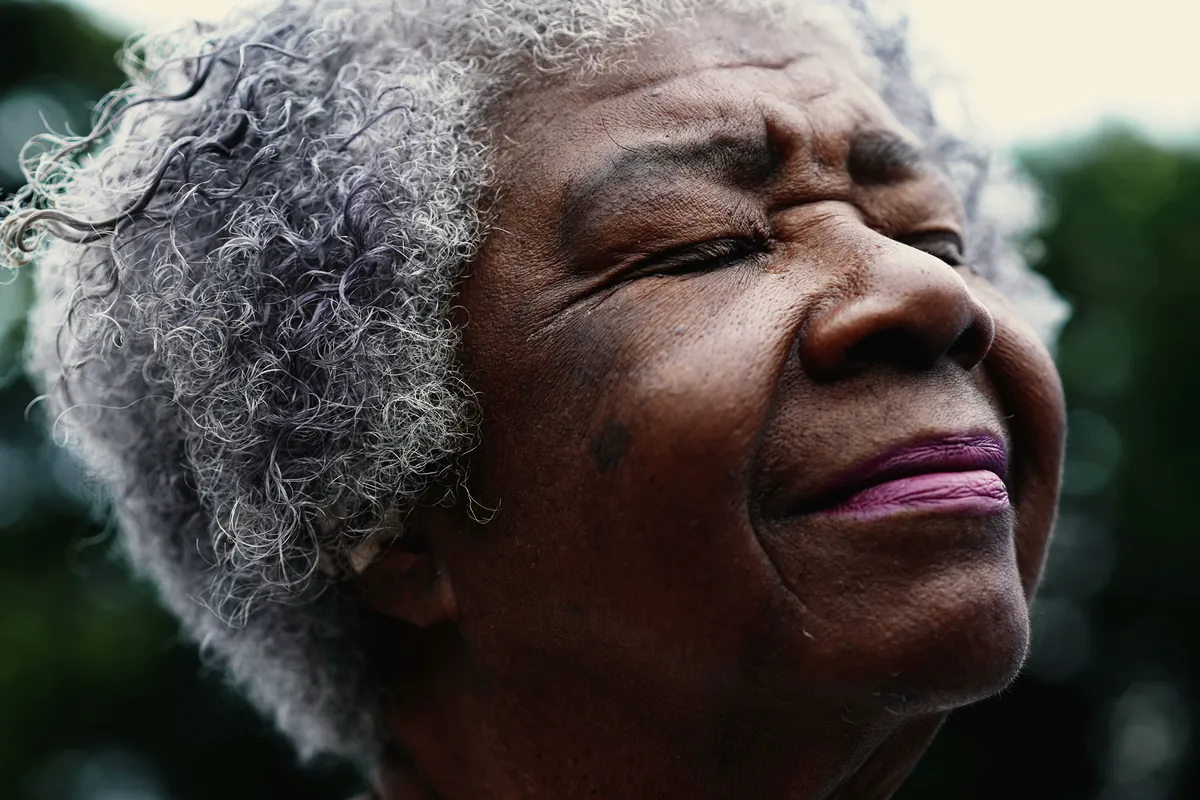 The trial enrolled 65 adults with 10% to 50% gray hair.
One participant developed small pimple-like bumps on the forehead where excess product had accumulated, and another had pimple-like growth with mild redness and dryness on the scalp. One participant withdrew because of a product-related event. No serious adverse events occurred, and vital signs showed no clinically significant changes.
Dyes dominate category
Saanroo’s paper positions its ingredient as an alternative to synthetic dyes.
“Gray hair is currently a color cosmetics problem that is catered to by chemical-based dyes and toners,” says Venkatesh.
In another gray hair care innovation, No Gray has expanded its Quick Color Shampoo line with the launch of Medium Brown. It touts providing permanent gray coverage in five minutes.
The Quick Color Shampoo is said to deliver up to 100% gray coverage while washing the hair. The formula features No Gray’s proprietary Dual-Chamber Pump Technology, which keeps the color and developer separated until the moment of application.
Beyond gray coverage, Quick Color Shampoo is powered by the brand’s exclusive Hyaluronic YouthRenew Bond Complex, which aims to help hair feel healthier, softer, and shinier after coloring.
However, Venkatesh tells us that traditional hair color treatment methods can have side effects and need to be applied on a regular basis. “Long-term usage can irritate the skin, cause allergic reactions, weaken hair strands, and disrupt the scalp microbiome,” he says.
Saanroo details concerns about allergic reactions, scalp irritation, and toxic effects associated with long-term colorant use. The company positions its ingredient as working through antioxidant activity on the hair follicle rather than depositing color on the hair shaft.