

Sephora’s C-beauty path: Social platforms designed to “rewrite” retail

Key takeaways
- Social platforms like Douyin and Xiaohongshu now function as primary testing grounds, with Sephora stepping in once products have proven demand and cultural relevance.
- Even as rivals exit China, growth and repeat purchase remain firmly anchored in social and digital channels, forcing physical retail to redefine its role.
- Integrating fast-cycling C-beauty brands brings traffic, but Sephora’s value may hinge on maintaining editorial authority and premium credibility in a hype-driven market.
As multibrand beauty retailers retreat from mainland China, due to structural challenges and shifting consumer behavior in the region, Sephora is increasingly using social impact as a filter for in-store assortment rather than a competitor to it.
Sephora China has begun onboarding beauty brands that first proved their commercial power on Douyin and Xiaohongshu, leading Chinese social commerce platforms. Viral, social media-native C-beauty labels such as Censto, Joocyee, and Red Chamber have already appeared on shelves at the beauty store, while Florasis is preparing for a Sephora China launch in March.
The move signals more than a merchandising refresh, but reflects a strategic repositioning of Sephora’s role in China — from brand discoverer to brand validator — in a market where discovery, education, and conversion now happen more frequently online.
Business developments continue to unfold in China’s cosmetics sector to strengthen brand identity, improve international communication, and compete more effectively in global markets.
In November 2025, L’Oréal took a minority stake in the Chinese mass-market skin care brand Lan. The move marked the beauty giant’s second investment in a Chinese beauty company in recent weeks, underscoring L’Oréal’s heightened focus on China as international brands are losing ground to fast-growing domestic players.
In December 2025, Ulta Beauty entered C-beauty for the first time by launching Flower Knows on its platform. The US is reported as the brand’s largest overseas market, accounting for 60–70% of international revenue.
The end of the traditional multibrand model?
Currently, China’s offline beauty retail landscape is undergoing a significant reset. In November 2025, Personal Care Insights reported that China was revising its cosmetics rules to speed up approvals, raise safety standards, and make the market more accessible for foreign brands.
Longstanding players such as Mannings and Sa Sa have exited mainland China entirely, while Watsons continues to rationalize its store network after years of declining performance. The retreat highlights a broader challenge for multibrand retailers — they no longer control how consumers discover or access products.
In the beauty marketplace, it is clear that information asymmetry has largely disappeared. Consumers encounter products first through livestreams, short-form video, and peer recommendation — often long before they appear in physical stores. Broad assortments and slow product cycles, once the backbone of multibrand retail, are increasingly misaligned with how beauty trends now form and scale.
Against this backdrop, Sephora China’s embrace of social-native brands is less reactive. Rather than introducing unfamiliar labels to consumers, the retailer is increasingly selecting brands that have already demonstrated traction, conversion, and cultural relevance online.
In effect, Sephora is outsourcing early-stage discovery to social platforms, then using its physical stores to validate, elevate, and extend those brands. Offline presence becomes a trust signal — reinforcing quality, safety, and legitimacy — rather than the primary engine of awareness.
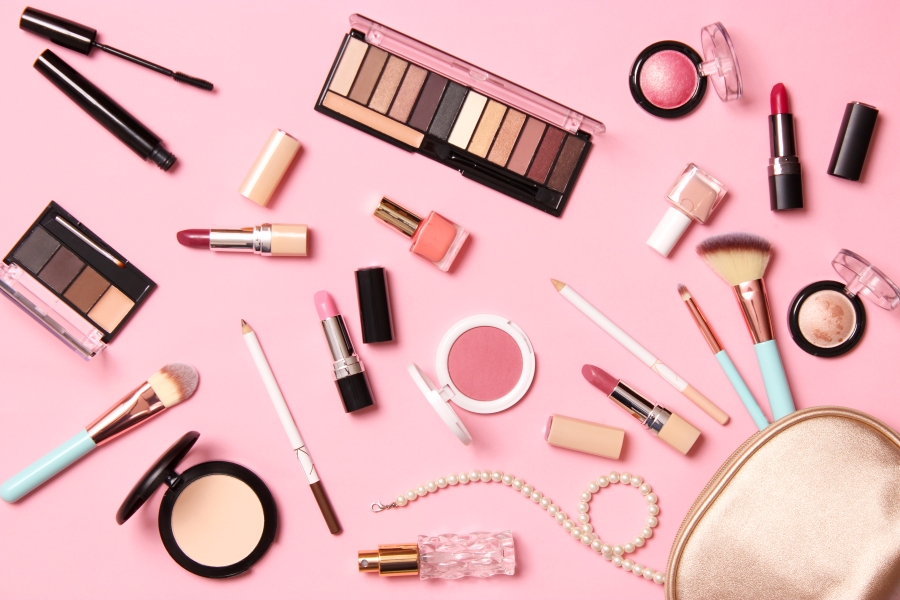 Sephora China’s pivot reflects a pragmatic response to a social-commerce-first market.This approach allows Sephora to remain culturally current while reducing merchandising risk. Brands arriving from Douyin and Xiaohongshu typically bring established hero SKUs, engaged Gen Z audiences, and proven messaging frameworks shaped by real-time consumer feedback.
Reduced competition
Despite the withdrawal of rivals, Sephora’s position in China is not automatically strengthened. The overall offline beauty market in China continues to contract as online and social commerce absorb both growth and repeat purchases.
Physical retail is increasingly relegated to trial, gifting, and experiential engagement, with many consumers adopting an “online discovery, offline trial, online purchase” journey. Fewer store visits place pressure on traditional retail economics.
For Sephora China, the strategic question is no longer how to compete on scale, but how to make in-store experiences meaningfully complementary to a digitally native consumer journey.
Sephora’s C-beauty brands
For domestic brands, Sephora remains a powerful validation platform. Being stocked by Sephora signals compliance with high formulation standards, quality control, logistics, and after-sales support — attributes that matter as C-beauty matures beyond viral cycles.
Offline distribution also offers access to higher-spending consumers and partial relief from rising digital customer acquisition costs. However, the economics are not trivial. Listing fees, margin structures, and inventory risk require scale and portfolio depth.
In a market where discovery no longer happens in-store, Sephora’s future in China may depend on how well it can turn social proof into sustained brand value — for itself and for the next generation of C-beauty brands.