




Shiseido discovers ring-shaped collagen structure linked to youthful skin


Key takeaways
- Shiseido has identified “Ring Collagen” as a structure that helps generate skin tension, supporting facial firmness and a youthful appearance.
- The company found that aging reduces proteoglycans linked to Ring Collagen, contributing to facial sagging.
- Moderate physical stimulation, rosehip extract, and safflower extract may help improve Ring Collagen structure.
Shiseido has discovered that facial skin possesses a distinctive ring-shaped collagen structure, dubbed “Ring Collagen,” responsible for generating tension that maintains a youthful appearance and firmness in the face.
The Japanese cosmetics company found that moderate pressure physical stimulation can improve the structure of Ring Collagen, providing anti-aging benefits and reducing sagging. It also reports that rosehip extract and safflower extract may have positive effects on Ring Collagen integrity.
As part of the study design, Shiseido developed Digital-Skin Reality, a 3D-rendering technology that depicts the force generated within the skin. The rendering technology has uncovered how tension is generated in skin tissue to preserve facial shape and the appearance of youth.
The study was conducted as a collaboration between various Japanese institutions. Dr. Kyoichi Matsuzaki, chief of External Plastic Surgery at the Faculty of Medicine at the International University of Health and Welfare, researchers at Jichi Medical University, and the National Institute for Physiological Sciences contributed to the research.
Defying facial gravity
Shiseido states that gravity-induced sagging becomes a concern for people as they age and that the research team set out to identify the root cause of skin sagging. The company based the research around the thesis that sagging occurs when skin loses its tightening ability and tension with age.
The research found that, in young people, skin contracts rapidly after being removed. Utilizing the Digital-Skin Reality technology, the company analyzed how this excised skin contracts and found that young skin has a “strong contraction force in specific areas within the skin.”
The areas with a strong contraction force feature collagen in a ring-shaped formation. The research uncovered that firmness is achieved as these contracting forces and individual rings pull against each other, creating tension in the skin.
This tension is responsible for the skin wrapping tightly around the face, achieving the appearance of youth.
Ring Collagen deterioration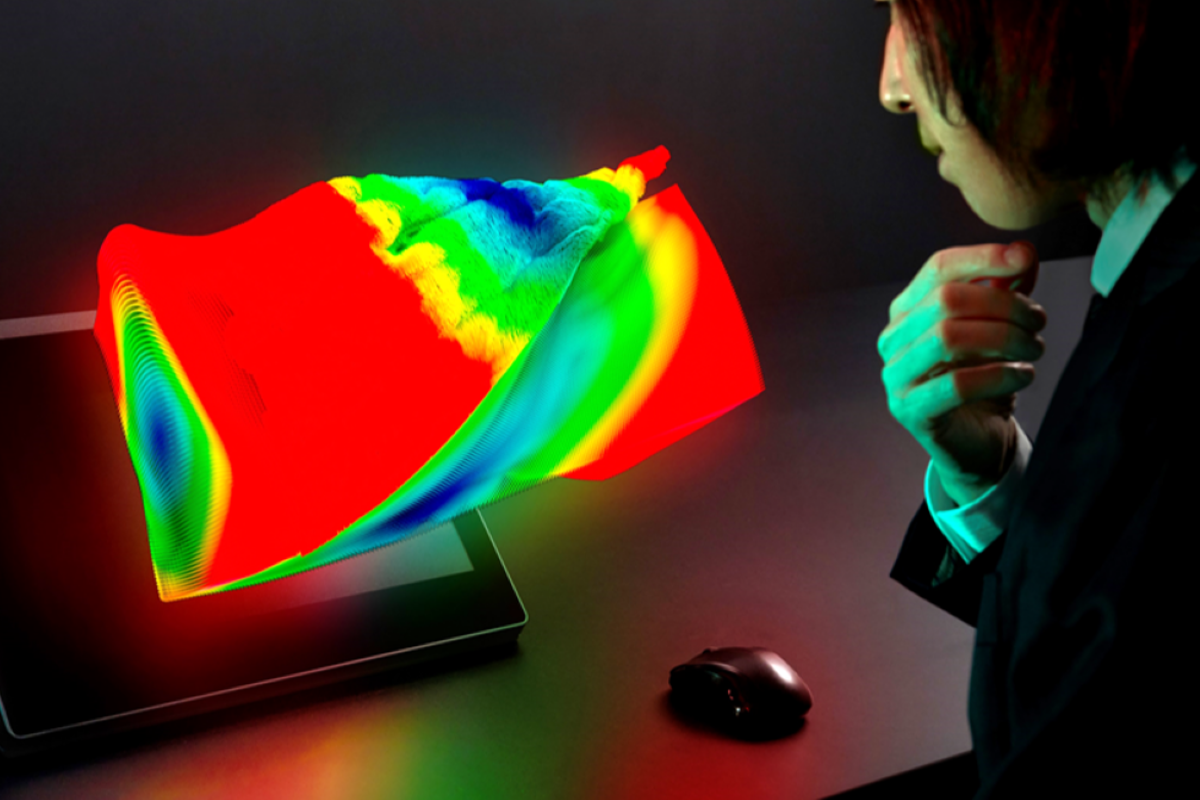
Shiseido’s Ring Collagen research points to new approaches in anti-aging skin care.
Shiseido found Ring Collagen around vellus hairs, also known as peach fuzz, sebaceous glands, and surrounding proteoglycans — substances with a high cushioning effect.
The study has established that the amount of proteoglycans decreases in aging bodies, causing disruption to the structure of Ring Collagen. Consequently, skin loses tension and starts to sag with the loss of Ring Collagen integrity.
Shiseido found that physical stimulation and plant extracts may be beneficial in combating this deterioration of Ring Collagen.
Moderate physical stimulation in the form of omnidirectional stretching boosted the amount of proteoglycans associated with Ring Collagen. This stimulation was found to improve Ring Collagen structure and lead to reduced sagging.
Furthermore, the research revealed that rosehip extract and benibana (safflower) extract increased the expression of proteoglycan-related genes, demonstrating possible efficacy in anti-aging skin care.
Shiseido taps AI
Shiseido has been investing in AI and its role in scientific research. The study on Ring Collagen was enabled by Shiseido’s AI-powered Digital-Skin Reality imaging technology that depicts forces generated within the skin. It allows for an array of observation points within the skin and gathers data on how each point moves as the skin contracts, allowing the researchers to observe forces generated within the skin.
Earlier this year, Shiseido also unveiled two AI-based technologies that aim to assess ingredient biodegradability and identify safety information for cosmetic ingredients, which require the collection and analysis of large datasets.
The biodegradability assessment method for cosmetic ingredients supports the industry-wide shift toward materials that can return to a natural state, promoting circularity. Meanwhile, the safety information identification system assesses accuracy and monitors compliance with safety and quality regulations.
The company also developed a novel mist-type sun care product using Voyager, its AI-powered digital formulations platform, in January. The technology uses proprietary algorithms and a large database to compile over half a million data points, which then inform the company’s formulation development.