
Spate sun care report reveals US shift toward daily integrated SPFs


Key takeaways
- Consumers are redefining sun care — SPFs are no longer just for summer, they’re now a year-round skin care essential.
- Products must now blend seamlessly with makeup, providing cosmetic benefits like glow and blur, alongside essential protection.
- Tinted sunscreen is emerging as a foundation alternative, with anti-aging and glow benefits in high demand.
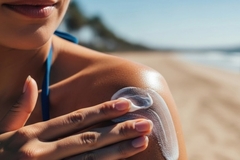
Spate’s US sun care report has shown that brands that treat SPF like sunscreen are losing competitiveness against brands that treat it like skin care. Instead, the data-driven beauty platform reports marketing SPF as a daily cosmetic, rather than a seasonal one, is where the indsutry should be headed.
The research, with commentary from Sula Labs, reveals what the US sun care and tanning landscape for 2026 will be.
“Consumers are no longer willing to tolerate a product that feels like sunscreen. The new benchmark is a formula that disappears into the skin, plays well with makeup, and delivers some kind of cosmetic payoff, whether that’s a glow, a blurring effect, or a natural finish. The fastest-growing benefit searches in the category are almost entirely sensorial or cosmetic. Protection is assumed. Everything else is the differentiator,” Jenny Zeng, beauty insights analyst at Spate, tells Personal Care Insights.
Spate’s US Sun Care and Tanning Landscape 2026 report marks the first time it has incorporated Reddit qualitative data alongside its cross-platform trend index, applying data from the social forum platform to sun care solutions insights. The data shows over 225 consumer mentions of skin reactions, over 140 around texture issues, and growing conversations about “self-tanner fatigue” driven by DHA (docosahexaenoic acid) odor and maintenance burden.
Despite the reported self-tanner fatigue, Spate reveals that self-tanner is moderate in search momentum but continues to grow year over year, signaling a stable, sustained category rather than a short-term spike. High-volume queries like “best,” “tips,” and “how to” indicate consumers are seeking technique and guidance, reinforcing that application confidence — not awareness — is the primary barrier to expansion.
Repositioning sun care rituals
Spate’s report also reveals that US consumers want Asian and European formulas that don’t yet exist in domestic aisles.
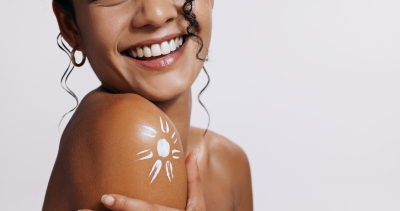 Self-tanning is entering a “color category” modernization moment, by diversifying shade offerings to address the unmet demands of consumers with darker skin.Across Google, TikTok, and Instagram, “no white cast sunscreen” grew 83.7% year-over-year, and sunscreen cushion formats are up over 2,600%, suggesting that consumers are no longer choosing between protection and finish. Spate’s report flags that consumers want both, and they’re actively seeking out workarounds when brands don’t deliver.
“The frustration is well-documented and consistent across Reddit conversations. A greasy feel, piling, and stinging are the reasons people abandon products they actually want to love,” explains Zeng.
“Consumers are aware of what good sunscreen can look and feel like, largely because Asian and European formulas have set a higher bar, and they’re increasingly vocal when US products don’t meet that standard. Cushion formats are gaining traction as a workaround for reapplication over makeup, but even those come with caveats in community conversations.”
Meanwhile, self-tanning is entering a “color category” modernization moment, by diversifying shade offerings to address the unmet demands of consumers with darker skin, similar to what happened with foundation shades.
Improving tolerability
Alongside rising consumer complaints around irritation and texture, there is a rise in formulation innovations that improve tolerability and user experience.
Zeng says: “Reddit conversations make clear that tolerability is not a niche concern — it’s a mainstream barrier. Sensitive skin, breakouts, and eye stinging dominate the friction conversation, and they cut across price points and brand reputations.”
“The opportunity is in formulas that stop asking consumers to choose between protection that works and protection that feels good on their skin.”
Spate suggests that brands should leverage cross-platform trend data and qualitative insights to inform more consumer-centric product development.
“Search and social data can tell you a trend is growing,” notes Zeng. “Reddit tells you whether that growth has a ceiling. Self-tanner looks healthy by headline metrics, but Reddit reveals that orange tones, streaking, and maintenance fatigue are quietly pushing repeat buyers away.”
Rise of tinted SPFs
Tinted sunscreen shows strong momentum, but shade mismatch and greasy finish are the friction points preventing it from fully converting as a foundation replacement. “The combination of both is where the product development story lives,” says Zeng.
Spate’s report shows that for tinted sunscreen, demand centers on glow and anti-aging benefits, but concern-led searches around acne, oil control, and hyperpigmentation signal that consumers are evaluating tinted SPF as both makeup and treatment.
Brands that balance cosmetic finish with skin compatibility are best positioned to capture growth, according to the report.
The increase in search volume online aligns with the influx of consumer education online from medical professionals surrounding the benefits of tinted sunscreen.
For example, consumers are learning that iron oxides — the pigments in tinted sunscreens and makeup — can improve the appearance of uneven skin tone. Users can also see improvements against sun-induced tanning. This is due to the fact that iron oxides can absorb visible light, in addition to the UV filters that absorb and reflect UV light.
In addition, Spate reports that consumers are using tinted sunscreens as foundation replacements, given that tinted sunscreens and foundations are quite similar from a formulation perspective, despite serving categorically different purposes. However,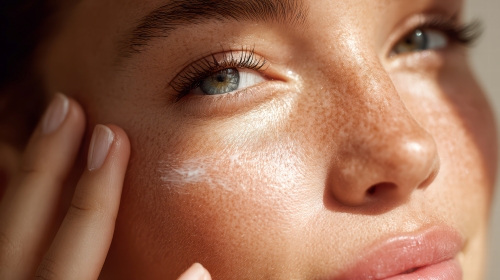 The pigments in tinted sunscreens and makeup can improve the appearance of uneven skin tone, which is piquing interest for beauty consumers. shade mismatches can remain as a point of friction, given that sun care is so highly regulated, allowing for less flexibility around faster formula improvements.
Future of sun care
For Zeng, products must earn a permanent place in daily rituals rather than a seasonal slot in the medicine cabinet. “That means developing formulas that multitask — protecting while finishing, tinting, or treating — and formats that make reapplication feel effortless rather than disruptive,” she says.
“The consumer who is shopping for sunscreen today is also cross-referencing Reddit, watching dermatologist content on TikTok, and benchmarking against Korean formulas. They are informed, opinionated, and quick to abandon anything that asks them to compromise.”