




Unilever invests €35M to turn India R&D hubs into AI-led innovation ecosystem

Key takeaways
- Unilever invests €35 million to upgrade its Mumbai and Bengaluru R&D hubs in India.
- Mumbai becomes a Product Innovation Center, while Bengaluru grows as a global science hub.
- A €5 million Bio-Futures partnership links Unilever with India’s bioscience ecosystem.
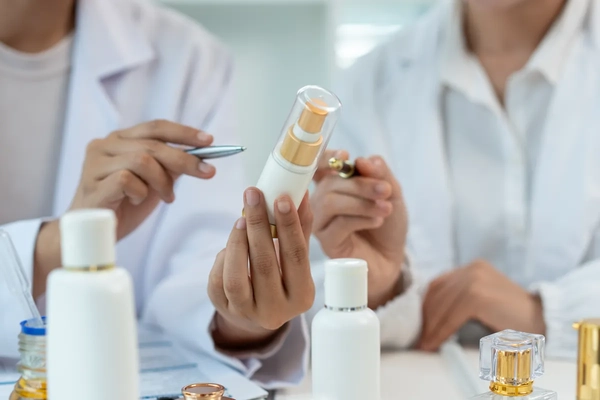
Unilever has committed to investing €35 million (US$39.43 million) more in its R&D capabilities in India. The company plans to turn its R&D hubs in Mumbai and Bengaluru into a “next-generation research and innovation ecosystem, and establish a strategic ‘Bio-Futures’ partnership” in the country.
Across both sites, Unilever says AI, automated and co-bot-powered experimentation, predictive modeling, and digital twins will enable scientists and product developers to explore more possibilities and learn faster. The technology will translate promising ideas into scalable innovations with greater speed and precision.
“With India so deeply connected to our global R&D network, the capabilities and work across our India R&D hubs will help shape innovation for Unilever globally, across Beauty, Wellbeing, Personal Care, Home Care and beyond,” says Richard Slater, chief R&D officer at Unilever.
Unilever will also invest €5 million (US$5.63 million) over five years in a strategic Bio-Futures partnership in India. The companies will create a platform that connects Unilever’s global R&D capabilities with India’s rapidly growing Bioscience ecosystem. The partnership touts bringing together leading scientific institutions, start-ups, advanced infrastructure and talent to accelerate innovation across human biology, microbiome science, biotechnology, biomanufacturing, and digital and AI-enabled biology.
The further investment comes after Personal Care Insights highlighted companies seeing India as a region to build in, not just sell in.
“India is also one of our most important growth markets. It’s changing fast. Consumer expectations are rising, needs are evolving, and the pace of innovation keeps on accelerating. That makes it an incredibly important place for us to learn, create, and scale new ideas,” adds Slater.
The pure-play home and personal care goods manufacturer has invested over €20 million (US$22.53 million) in the past five years in capabilities. These include the Liquids Lab of the Future, the Unilever Fragrance House, the Advanced Manufacturing Center for Bars, the Packaging and Flexibles Design Lab, and AI & Digital modeling platforms.
India’s role in Unilever global R&D
India is one of Unilever’s largest global R&D hubs, bringing together over 800 scientists, researchers, digital specialists, and designers.
Priya Nair, managing director and CEO, Hindustan Unilever (HUL), says: “India’s emergence as a global innovation powerhouse presents an extraordinary opportunity. As one of the world’s fastest-growing large economies, we see significant potential to bring world-class, science-led innovation to Indian consumers.” Richard Slater calls India a critical R&D center for Unilever.
The Mumbai and Bengaluru sites receiving financing are said to operate as an integral part of Unilever’s global R&D network. “This investment reinforces Unilever R&D’s long-standing commitment to India and its confidence in the country’s scientific talent, capabilities, innovation ecosystem and India’s emerging position in biosciences and biomanufacturing,” adds Nair.
The hubs encompass a range of new science and technology research, innovation, product development, and market-facing activities. This includes consumer understanding, product adaptation, testing, validation, scale-up, and deployment, with different activities undertaken across the India R&D ecosystem.
The proposed transformation envisions the Mumbai hub as a new Product Innovation Center. It will bring together AI- and digital-powered foresight and insights, new measurement approaches, and product and format science in a single integrated environment. Product and packaging design, rapid prototyping, scale-up capabilities, and market-facing deployment will also sit under the same roof. Additionally, the innovation center will house collaborative spaces catalyzing partnerships with academia, experts, suppliers, start-ups, and larger design ecosystems.
The Bengaluru Center will continue to evolve as a Global Science, Technology and Partnership Hub. It hosts foundational and application science platforms, digital and AI capabilities, and collaborations with academia, start-ups, and Unilever’s global innovation network.
“By connecting Unilever with India’s world-class bioscience ecosystem, we can harness complementary science, capabilities and partnerships to accelerate the next generation of Bio-Futures innovation for India and the world,” states Slater.
He says that the facilities combine capabilities that take years to build with advanced technologies that allow the company to move faster. “Ultimately, this is about helping us solve consumer needs more effectively, creating superior products faster and unlocking new opportunities for growth.”  Priya Nair sees India as a global innovation powerhouse.
India momentum
Earlier this year, HUL said it is focusing on the “New India opportunity” and centering its next phase of growth around young consumers, social media, and AI-enabled content. The Dove and Lakmé maker announced plans to raise productive capital expenditure to 3% of turnover from around 2%.
HUL’s EBITDA margin was 23.6% in FY26, around 70 basis points lower than a year earlier. This declining momentum led the company to focus on enabling “growth and productivity.” HUL’s CEO, Nair, said the company had a lull in growth in the past two years due to a challenging operating environment, but that it has taken “decisive actions” over the last year to reset the business for stronger growth.
At the investor event Capital Markets Day 2026, HUL released plans to target volume-led profit growth and restructure its portfolio toward higher-margin categories. The endeavor is reflective of parent company Unilever’s Desire at Scale strategy, which has honed in on its beauty offerings, so much so that it led to it becoming a pure-play personal care company.