




October in review: Boots sold for US$8.9B, Omnibus VI approved, luxury beauty branches out

Key takeaways
- Wittington Investments agreed to acquire Boots for US$8.9 billion.
- The European Parliament approved Omnibus VI, extending CMR withdrawal deadlines.
- Luxury beauty players and global brands expanded into new categories and India.
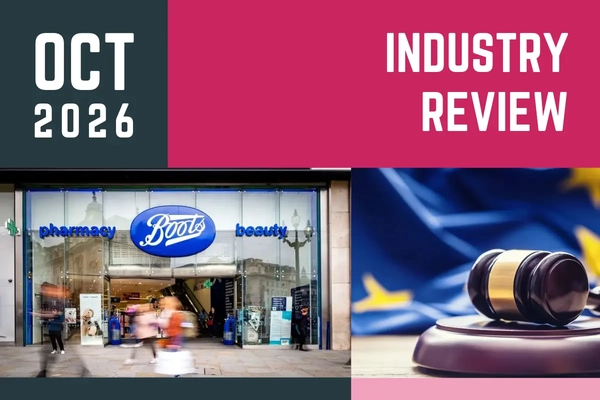
In October, Wittington Investments agreed to acquire Boots for US$8.9 billion. The European Parliament approved Omnibus VI, giving cosmetics makers more time to withdraw products containing carcinogenic, mutagenic, or reprotoxic (CMR) substances.
Luxury beauty players pushed beyond their core categories as Puig posted record third-quarter revenue and Chanel sold its majority stake in Capsum. Global beauty companies also shifted from selling into India to building there, with investments spanning the value chain.
On the sustainability front, we spoke to TRAFFIC and Biodiversify, which launched a framework to improve the sourcing of wild-harvested beauty ingredients.
We break down the biggest industry stories from this month.
Tresalis acquires well-being fragrance brand Vyrao in debut beauty acquisition
Tresalis acquired well-being fragrance house Vyrao. Vyrao was Tresalis’s debut acquisition as it aims to buy and develop differentiated brands, “combining long-term capital with hands-on operating capabilities across brand growth, commercialization, international expansion and shared infrastructure.” The platform is anchored by German family office Athos and beauty entrepreneur Dr. Fernando Tamez. Tamez says that it is “focused on identifying exceptional brands with strong authenticity, differentiated intellectual property, and significant international potential.”
TRAFFIC tackles beauty’s wild-harvest sourcing risks with framework
TRAFFIC (Trade Record Analysis of Flora and Fauna in Commerce) and Biodiversify launched the Wild Harvest Improvement Project (WHIP) Framework to improve the sustainability of wild-harvested feedstocks used in personal care formulations. WHIP aims to empower communities and businesses to pursue regenerative alternatives in their supply chains by offering them a pragmatic route toward sustainability certification. We spoke to TRAFFIC about protecting biodiversity, rural livelihoods, and beauty supply chains.
Pinterest tracks beauty shift from trend-following to trend-editing
Pinterest’s first Beauty Trend Report found consumers are personalizing beauty trends with hyper-specific edits instead of copying viral looks. The report indicated that personal care players offering tools and products that support personalization, customization, and self-expression may have a strategic edge in the era of specificity. The online platform also launched Beauty Guides, an AI-powered feature that turns saved pins into action plans. (30).webp) EvanHealy builds its botanical skin care on farmer relationships.
Breaking news: Boots sold to Weston family’s Wittington Investments for US$8.9B
Wittington Investments, partnering with Fairfax Financial, agreed to acquire Boots for US$8.9 billion, including assumed debt. The deal covered Boots’ UK and Ireland retail operations, Boots Opticians, No7 Beauty Company, and its Thailand and franchised businesses. The transaction is expected to close in the first quarter of 2027. Wittington plans to upgrade Boots stores, optimize the retailer’s online experience, and support the expansion of health care services available to customers.
AI toothbrushes, free-from formulas and sweet flavors reshape oral care
The once-stagnant oral care industry saw a surge of interest as brands bet on tooth tech, sensitivity-friendly formulas, and Gen Z appeal. Dyson and Usmile unveiled AI-assisted toothbrushes with embedded cameras for real-time feedback. Listerine released an alcohol- and peroxide-free whitening mouthwash and Tom’s of Maine a fluoride-free toothpaste, both targeting sensitivity. Meanwhile, Stay Cool brought its microplastic- and alcohol-free breath sprays to the US, and Opalescence added Pumpkin Spice and Birthday Cake flavors to woo younger consumers.
Global beauty shifts from selling to building in India
Global beauty companies shifted from selling into India to building there, with investments spanning the value chain. Symrise expanded fragrance ingredient production in the country, and Kiko Milano announced plans to double its retail footprint. Nykaa and L’Oréal launched a new Kiehl’s product, while Estée Lauder named the latest winners of its Indian founder program. Meanwhile, newer entrants were still testing the market, as Birkenstock brought its Care Essentials range to India and H&M Beauty named actor Sharvari its first India ambassador.
Luxury beauty in business: Puig, Dolce & Gabbana and Capsum push beyond core categories
Luxury beauty players looked beyond their established strongholds for growth, pushing into new categories and markets. Puig posted record third-quarter net revenue, with makeup, niche fragrances, and dermocosmetics delivering double-digit growth. Dolce & Gabbana Beauty, which began as a fragrance licensee, prepared a full skin care launch and planned up to 70 standalone boutiques over three years. Meanwhile, Chanel sold its majority stake in Capsum to Motion Equity Partners.
Cosmax and Harvard Med eye weight-loss market as beauty and pharma blur
Cosmax teamed up with Harvard-affiliated Mass General Brigham to develop GLP-1-like probiotics and anti-aging ingredients. As weight-loss drugs open new opportunities in skin care and nutricosmetics, Korean pharma players are moving the other way into dermacosmetics. Find out more about how beauty and medicine are converging. The duo’s first research priority is to find probiotics and functional ingredients that work like GLP-1, the hormone that diabetic drugs such as Wegovy and Ozempic target.  (31) 1.webp) Azitra develops functional human filaggrin for skin barrier support.
Omnibus VI vote grants cosmetic companies grace periods for CMR withdrawals
The European Parliament approved Omnibus VI, giving EU cosmetics makers more time to withdraw products containing CMR substances. The text kept the CMR ban in place but replaced immediate withdrawal with risk-based grace periods, with default deadlines half as long as the commission first proposed. Industry groups welcomed the extra room to reformulate and run down inventory, while consumer groups warned that harmful products could stay on shelves longer.
How small beauty brands can navigate tariff turbulence and refunds
Indie beauty brands that absorbed tariff costs could be owed refunds, but many are not sure how to claim them. We spoke to Zineb Zayer, founder of Moroccan-rooted brand Your Saha, who explained how tariffs pushed the brand to become more strategic and resilient, stressing that understanding supply chains, import costs, and margins was key to scaling. The brand keeps sourcing traditional products from Morocco but is shifting newer formulations to US production to tap advanced manufacturing.