




Carrageenans re-emerge as multifunctional cosmetic formulation tools


Key takeaways
- Carrageenans are gaining renewed attention as natural, multifunctional structuring agents for personal care formulations.
- The ingredient supports texture, stability, and sensory performance across skin care, hair care, and cleansing products.
- Its seaweed-derived, renewable profile aligns with growing demand for sustainable and bio-based beauty ingredients.

The personal care industry is seeing a surge in interest for naturally-sourced, biorenewable ingredients that support multifunctional applications while not compromising efficacy. This shift is creating space for carrageenans — natural polysaccharides extracted from seaweeds — to experience a renaissance for beauty formulators due to their versatility and eco-friendly characteristics.
The renewable ingredient, tapped as a thickener, emulsifier, and stabilizer in cosmetics formulations, is readily biodegradable and boasts a versatile application profile, making it an attractive ingredient in the sustainability space.
Personal Care Insights sits down with Univar Solutions and Tate & Lyle to discuss carrageenans’ textural benefits, their built-in compatibility with growing sustainability demands, and the ingredients’ untapped potential, especially in hair and skin care.
“Carrageenans are gaining relevance as the personal care industry shifts toward more sustainable, nature-based solutions that do not compromise performance,” says Jacqueline Scarborough, director of Consumer Care at Tate & Lyle.
“Consumers increasingly expect environmentally friendly products, but still demand the texture, stability, and overall experience they are used to. Carrageenan allows formulators to meet both needs, making it a key tool for innovation and helping brands differentiate in a competitive market.”
“As a seaweed-derived ingredient, it aligns with demand for materials from renewable sources while delivering strong functionality, particularly in enabling textures that support reformulation away from synthetics.”
Versatile in viscosity
The seaweed-derived ingredient supports texture and stability in skin and hair care formulations.
Carrageenans, depending on the type — kappa, iota, or lambda — can create firm gels, elastic textures, or viscous systems, enabling a broad range of rheological profiles.
These three types of carrageenan possess differentiated characteristics and address a variety of formulation needs. Kappa carrageenans form stiff, strong, and somewhat brittle gels. Iota carrageenans form soft, malleable, and creamy gels. Meanwhile, lambda carrageenans do not form gels, but instead behave as a cold-soluble thickener and stabilizer.
Versatility across kappa, iota, and lambda carrageenans allows precise tuning of viscosity and structure.
“Beyond texture control, carrageenans contribute to product stability through effective emulsion stabilization, while also delivering smooth and luxurious sensorial attributes,” says Scarborough.
She explains that carrageenans’ water-binding capacity helps structure water within the formulation. Furthermore, they are compatible with other ingredients, supporting formulation robustness and versatility. “Together, these properties allow formulators to optimize texture, stability, and sensory performance while maintaining flexibility across different product formats.”
Adding to the benefits outlined by Scarborough, Rolanda Young, senior innovation chemist, Beauty and Personal Care, North America at Ingredients + Specialties from Univar Solutions, says t carrageenans have high performance in skin and hair applications.
“Carrageenans can form a soft film on the skin or hair surface that may contribute to desirable sensory and conditioning characteristics,” Young says. “In hair care applications, carrageenans can be incorporated into formulations designed to support manageability, curl definition, and frizz-control benefits. Overall, they enable a balance of performance and sensorial elegance, which is increasingly important in premium formulations.”
Carrageenans’ categories of potential
The ingredient is compatible with serums, moisturizers, and masks, with an emphasis on those targeting hydration with cooling sensory profiles.
Both Young and Scarborough underline carrageenans’ delivery potential in skin care applications. Young tells us that the ingredient is ideal for serums, moisturizers, and masks, with an emphasis on those targeting hydration with cooling sensory profiles.
Scarborough echoes this emphasis on sensoriality: “We see a growing potential for carrageenan-based ingredients in skin care categories, where texture and sensorial experience are key to product differentiation.”
She tells us that the lotion and cream segments represent a “major application area,” while face masks and eye patches stand as a separate and growing segment. Scarborough also details that carrageenans play a central role in creating synthetic-free alternatives.
Young emphasizes the ingredient’s applications across hair care, predominantly in aqueous systems. She says the ingredient demonstrates efficacious application in water-based gels, curl definers, edge controls, and lightweight styling creams, where flexible hold and clarity are key.
As the “skinification” trend in hair care continues to borrow from skin care, carrageenans support lightweight, treatment-first formats that prioritize feel and efficacy.
Furthermore, Young explains that the ingredient can be used in shampoos, body washes, and facial cleansers to enhance viscosity and suspension while maintaining a clean label profile. “These categories benefit most from carrageenan’s ability to deliver high-performance textures in predominantly aqueous systems.”
Marine resource sustainability
Carrageenans are derived from red seaweed. This renewable marine origin natural resource aligns strongly with sustainability goals, Young says, adding that the ingredient may also support sourcing strategies focused on renewable raw materials.
“[Carrageenans] support supply chains that can be aligned with responsible aquaculture practices. From a formulation standpoint, carrageenans also enable simplification of ingredient decks by delivering multiple functionalities in a single material,” explains Young.
She adds that this supports the cosmetic trend toward minimalist formulations with high performance. “Importantly, they help bridge the gap between natural positioning and sensorial expectations, which is often a challenge with bio-based ingredients.”
Scarborough echoes Young’s sentiments, stating that carrageenans are inherently aligned with the industry’s sustainability agenda.
“Its value is further strengthened by transparent supply chains and responsible sourcing practices.”
She explains that Tate & Lyle sources its seaweed from Zanzibar, an island off the coast of Tanzania, through a dedicated supply chain that has been in place for decades, and reliable sustainability metrics are bolstered by an overview.
“We have programs in place to support supply chain transparency, including annual supplier risk assessments and inspections. We also promote sustainable seaweed aquaculture, which supports biodiversity, improves water quality, captures carbon dioxide to mitigate climate change, and helps to protect the shoreline from erosion,” Scarborough says.
In addition to its sustainable seaweed aquaculture program, Tate & Lyle maintains a reforestation program in partnership with Zanea Seaweed Company. The initiative helps to support mangrove forest preservation, improve biodiversity, and mitigate coastal erosion while enabling economic development in the local community.
Scarborough says this approach delivers “clear social impact.”
“The program engages an estimated 25,000 people locally, 85% of whom are women, and through supplier training and tools, is creating economic opportunities to improve their livelihoods. The program also supports education and local infrastructure to enable the local community to thrive.”
“Altogether, our carrageenans combine sustainable aquaculture and sourcing with verified social impact, which can translate into a differentiated proposition for personal care brands,” she adds.
Personalization & precision push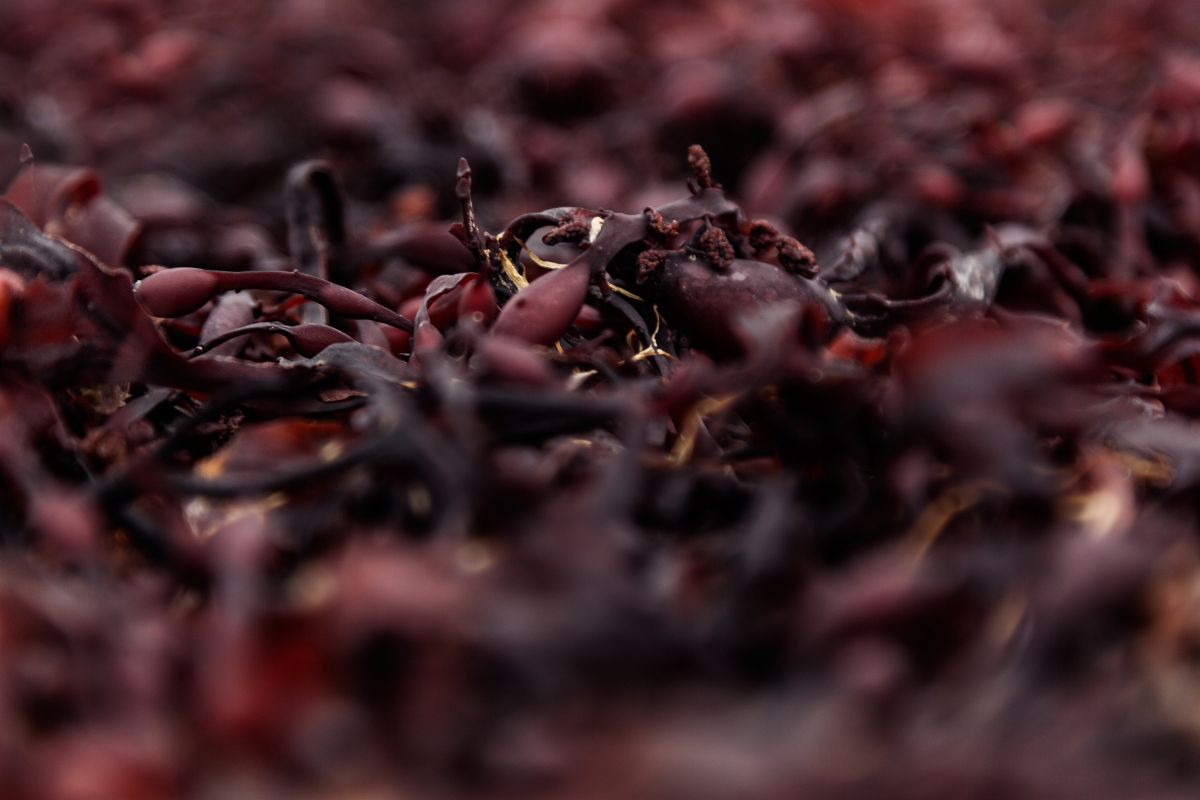
The future of carrageenans will be driven by the replacement of synthetic ingredients with nature-based alternatives.
Both Young and Scarborough believe that carrageenans boast an ingredient profile that will see more demand due to the industry’s move away from synthetics to naturals. They also underline that the ingredient maintains whitespace for diversifying its possible applications.
“The biggest opportunity for formulators lies in reimagining carrageenan beyond a traditional thickener, positioning it instead as a multi-functional design tool for creating differentiated textures, elevated sensories, and more sustainable formulations,” says Young.
She believes that innovation for the ingredient will likely center around precision, functionality, and system compatibility.
Young explains that Univar’s carrageenan design will likely be finetuned for specific rheological profiles or formulation environments such as electrolyte tolerance, clarity, or cold-process compatibility. Carrageenans might also be combined with other natural or bio-based polymers to create synergistic effects in texture and performance, particularly in styling and skin treatment systems.
Additionally, she outlines that attention for the ingredient may be directed to advanced delivery formats through opportunities in encapsulation, film-forming technologies, and long-lasting hydration systems, leveraging carrageenan’s natural film-forming capability.
Scarborough says that the future of carrageenans in personal care will be driven by a strong potential for replacing synthetic ingredients with nature-based alternatives that can deliver similar performance and sensorial experience.
“Key opportunities lie in sensorial-driven skin care applications, particularly in lotions and creams, where consumers increasingly expect a more premium and differentiated feel.”
Furthermore, Scarborough states that the K-beauty-inspired face mask segment growth offers a “strong opportunity by combining functionality with ritualized, sensorial experiences.”
“Overall, the main opportunity for carrageenan is to enable innovation in both formulation and format, supporting the development of products that combine sustainability, performance, and enhanced user experience,” Scarborough concludes.