



Conagen: Deep dive into synthetic biology processes and innovation for beauty with Casey Lippmeier
27 Jun 2024 | Conagen
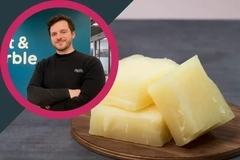
The senior VP of Innovation at Conagen, Casey Lippmeier, dives deep into biotechnology or synthetic biology and describes how this route advances sustainable initiatives. Lippmeier also explains how synthetic biology unlocks access to molecules that might otherwise not be accessible with any other method.

Hi, everyone.
I'm Anita Sharma, editor with Personal Care Insights, your number one source for all things beauty and personal care related.
Very pleased to be joined today by Casey Lipmeyer.
He's the senior vice president of innovation for Kann.
Casey, great to finally connect with you.
You're a tough guy to get a hold of.
Yeah, thanks, Anita, and I'm happy to be here.
Thank you.
We're going to be diving deep, I understand, into biotechnology, especially as it pertains to personal care and beauty products.
Where would you like to begin?
Do you, do you want to start on a macro level and talk about just how important biotech is for this industry?
Sure, happy to.
I think before I even get into that though, it might be helpful to just contextualize how ingredients for the beauty industry are made in general.
So, there's basically 3 main ways.
You can start with botanical extracts or some other kind of natural product extract.
So this includes things like essential oils, , natural soaps, all kinds of other things that, you know, you can usually get from a plant or some kind of animal material.
So that, that represents the very first kind that's the oldest technology.
The next one, of course, is chemistry, right?
Chemistry has been with us for, I don't know, 150 years now or something like that.
The most popular chemical products that are made are generally derived from.
Fossil fuels, and you know those have been great for the last 150 years.
They've really advanced humanity, but as everyone knows now, there are sustainability questions around using petrochemical derived ingredients for lots of things.
But again, they're very high quality products in most cases.
The newest technology to make ingredients is biotechnology, or synthetic biology as we often call it.
And this gets back more to the natural way of doing things, but instead of extracting, you know, biological materials from a plant or an animal, you're extracting them from microbes that are grown in a fermenter.
That's generally the gist of it.
And as I said, it's pretty similar to the way fermentation has been done for a long time now.
It's, I don't know, I guess the closest analogy is making beer, you know, you would distill alcohol out from, from, a fermentation where yeast are growing.
But in this case, the yeast aren't making any ethanol.
Instead, they're making flavors or fragrances or emollients or surfactants or other things that are useful in beauty products.
And that's critical, right?
Because I, I want to carry on with the, the sustainability, theme that you mentioned.
I've been to a couple of trade shows already now so far this year, and sustainability really is critical.
And I don't know if it, it's a chicken or egg.
I don't know what came first, the chicken or the egg.
The consumers are demanding it, and the clients are responding, or vice versa.
But whatever's happening, there's just, just massive push towards sustainability and biotechnology.
Yeah, that's right.
And biotechnology is a big enabler of sustainability.
There's always still things to consider about just transportation, you know, most ships that are, you know, around the world that are responsible for delivering goods are still powered by diesel or, or some other kind of fossil fuel.
So, you know, it's not perfectly sustainable, but that's true for, you know, botanical derived products as as anything else, petrochemical, what have you.
But when it comes to the actual sustainability, the, the, you know, the, the life cycle analysis and the carbon footprint of the actual ingredient itself, the material itself, synthetic biology is, is pretty good.
Everything that's made by synthetic biology usually is starting from sugar.
And sugar, as you know, cause recent carbon, it comes from plants that are grown in fields.
OK, so, so that's how the ingredients for, for beauty products are made when when using biotech.
Yeah, again, it's, it's fermentation, right?
So when you do, when you brew beer, you're feeding sugar to yeast and they make something like ethanol.
In our case, we're doing the exact same thing.
We're feeding sugar to some microbe, might be yeast, might be something else.
But again, in this case, they're not making ethanol, they're making some other molecule.
Yeah, I heard of a key buzzword or a term, reimagined molecules, reimagined, ingredients.
Tell me a little bit more about biotech insofar as new ingredient creation is concerned.
Yeah, happy to.
So one of the really nice things about synthetic biology, biotechnology, is that it unlocks access to molecules that you might not be able to get to in any other way.
Again, there's these two other technologies to do that.
Botanical extracts are pretty good for a lot of things, but Sometimes you'll find that plants, and particularly plants, make these really interesting, very valuable molecules that only exist maybe in very trace quantities in the plant, or maybe the plant itself, the original source plant is not very domestic domesticated and isn't very cultivatable.
Those kind of examples are where biotechnology shines because instead of relying on the original source plant to produce something that maybe might not be economical in the long run, You can engineer a microbe to now make it very economically and very pure and high quality, etc.
I'll further add that, that sweet spot for biotechnology exists around molecules where maybe a chemical route also would have some trouble.
Again, these are molecules where, you know, they're, we're aware of some value that they might have.
Maybe a fragrance molecule that really has a great property.
Maybe you can smell the flower in the air.
But again, You can't maybe access it by conventional chemistry, and it's just too trace, too rare to find in the actual flour or original source plant.
Casey, let's talk about once the ingredient is made using biotechnology, I would think there's still a long process to getting that ingredient, officially into the beauty product.
Yes, there absolutely is, and I'm glad you asked, cause that's a part of it that's often overlooked in our industry.
First of all, again, you have to make the actual ingredient, the bulk ingredient, but there's all the science that has to happen after that.
We generally refer to that as formulations, applications, development.
And, but just to elaborate and explain what that really means, every beauty product, we call it a different matrix.
So that might be a lotion, maybe a shampoo, a skincare product, a face mask, whatever.
They all have their own very specific performance properties that you need to pay attention to, and the ingredient has to be able to work seamlessly in that whole formulation.
So, that requires, again, a lot of experimentation, a lot of science, a lot of, a lot of testing to be able to make sure that it blends , maybe it needs to evaporate at the right temperature, skin temperature versus room temperature.
All these things need to be considered.
You need to have a big sensory panel of scientists that are directing regular consumers and getting their feedback.
You want to make sure that a product is, of course, desirable, but also matches the expectations of a consumer for the given beauty product that you're talking about.
And so, then there's, of course, regulatory concerns.
If it's a really new ingredient, you have to make sure that it's safe and that it's effective and that there's a regulatory structure around it.
And then, of course, you know, consumer education, the sales and marketing, all of this has to happen before it actually becomes a part of a consumer product.
Yeah, you talk about effectiveness.
Let's talk about cost effectiveness.
You mentioned botanicals, and just how hard and difficult it could be to get what you need, say, from, from a plant.
From the biotech perspective, I would think, especially if there's a big consumer demand for, for a product, biotech can deliver right on a level that can hopefully, I would think, keep costs under control too, or.
That, that's right.
And, and in many cases, that's where biotech shines.
It's really helpful to be able to make something at large scale that helps with your economics, you know, the bigger you make your, your product, or say the larger scales at which you make your product, the more cost effective it will be.
But there are also, you know, things where the production technology itself, maybe isn't actually as economical, right?
You know, the whole, as I said before, the whole, technology is based on sugar, right?
So if you're trying to make products that normally are derived from botanicals and are commodities, And botanicals like sugar itself, you're not gonna be able to compete.
But when you're talking about some of these more specialty things where, again, it's maybe rare in nature or and difficult to synthesize by chemistry, yeah, biotechnology definitely has an answer for the cost effectiveness.
Helps democratize a lot of these really interesting rare ingredients that maybe just weren't available before.
I like that democratization with biotech, and beauty.
Sounds like a movie series.
Tell me if you can, how does Carnogen shine here?
Right.
So Carnogen in general is a synthetic biology and precision fermentation company.
We develop strains and processes for making ingredients that go into a whole host of different kinds of markets.
So not only are we involved in, beauty and personal care products, but, food ingredients, nutritional products, flavors and fragrances, , sweeteners, you name it.
The list goes on and on.
And a lot of these, of course, have overlaps.
A lot of the same ingredients that you use in some of these markets, functional ingredients in particular, have, you know, different markets they go into.
Vitamin K2, for instance, is another one of our, important products and , you know, in addition to beauty and personal care, it's also a food ingredient, as fortification.
It's a supplement.
It goes into pharmaceutical products.
It's even an animal, animal feed ingredient.
So, so Contigen's position on these things is just to be a manufacturer of ingredients, while also being able to pay attention through our partners and affiliates to the specific qualities that, that an ingredient needs to have for beauty and personal care market.
OK, fascinating stuff all the way around.
I promised our, viewers a deep dive into biotech, and, there's a lot, a lot of need to know information here.
Casey Lipmeyer with Kin, thank you so much for your time, sir.
I really appreciate this.
Yeah, my pleasure, Anita.
It's been a pleasure talking to you.