



US FDA peptide decision could create marketing challenges for beauty industry

Key takeaways
- The US FDA is weighing whether seven injectable peptides can be used in compounded medicines.
- ASOP and the AAD warn that a narrow approval could be misread as a green light for cosmetic marketing.
- Cafeteria finds most young consumers reject injectable peptides and want FDA approval first.
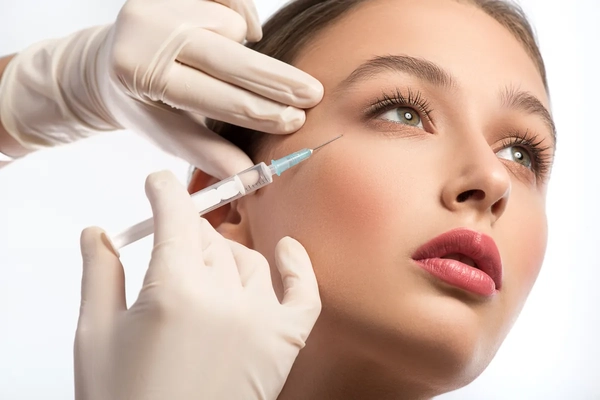
Yesterday and today, the US FDA Pharmacy Compounding Advisory Committee (PCAC) is discussing adding injectable peptides to the agency’s list of bulk drug substances permitted for use in compounded medicines. While the meetings will not end in a binding legal outcome, the recommendation is expected to inform the FDA’s final decision.
Personal Care Insights discusses what the impact on the personal care industry would be if the injectable peptides are allowed, with the Alliance for Safe Online Pharmacies (ASOP), American Academy of Dermatology (AAD), and the intelligence platform Cafeteria.
“For the personal care industry, the key question will be whether companies communicate responsibly,” Leigh Verbois, Alliance for Safe Online Pharmacies (ASOP) global board chair and former director of the Office of Drug Security, Integrity, and Response at the US FDA, tells us.
Peptides in personal care
Peptides have been a staple of the beauty industry, used in topical skin care solutions for decades, but injectables have now garnered public attention due to social media’s boasting about their “beneficial” effects. “Wellness” influencers claim they have longevity properties, such as anti-aging and skin rejuvenation.
However, the FDA’s own scientists recently discouraged the approval of the currently reviewed seven injectable solutions. It did so on the basis of insufficient safety and efficacy and limited human studies.
Critics argue that admitting the peptides into circulation would normalize their use even more than is currently being done on the “gray market.” Verbois expects an increased interest from wellness, aesthetics, and personal care businesses if certain peptides are allowed for compounding.
Board-certified dermatologist and AAD member, Marisa Garshick, MD, FAAD, echoes Verbois’ stance. She believes that if injectable peptides become more widely available through regulated pathways, there will be continued growth in peptide-focused care for overall wellness and aesthetic benefits.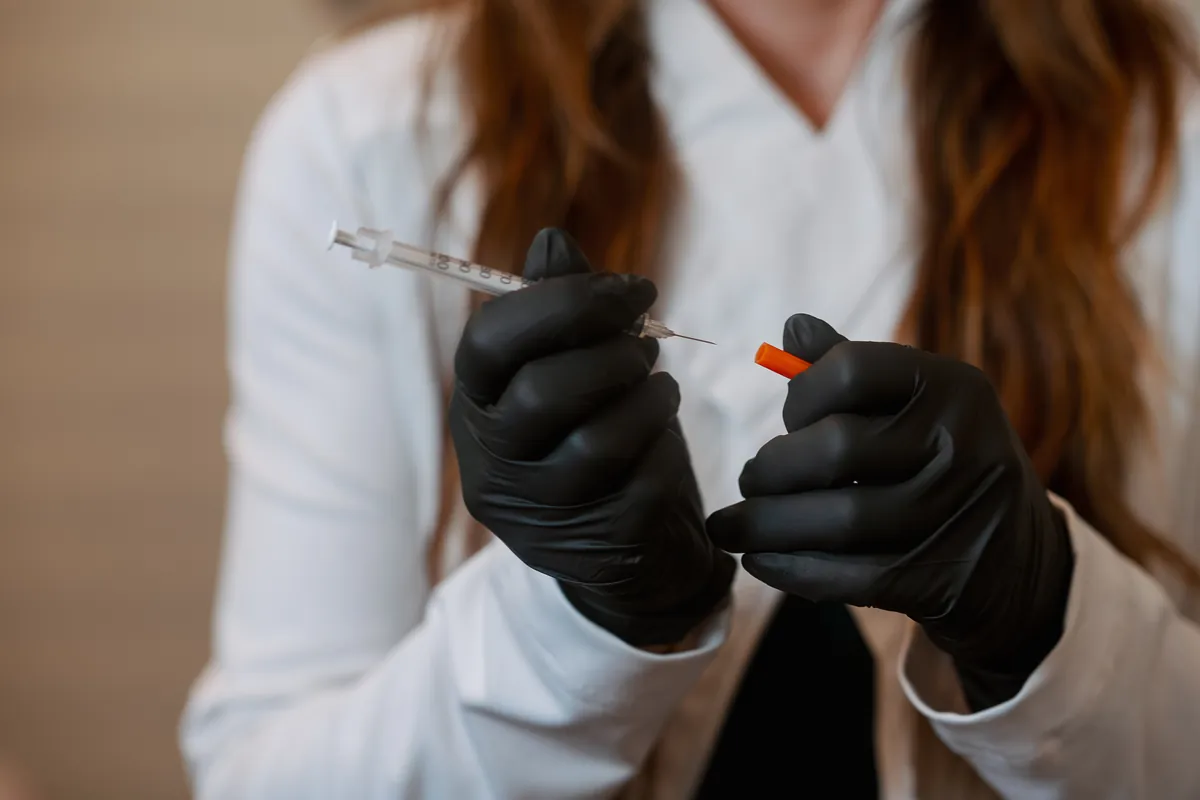 Peptides have anchored topical skin care for decades, long before injectables drew attention.
This predicted growth leads Verbois to push for barriers to potential admittance. “These guardrails should be established in a transparent collaborative manner across the industry to minimize consumer harm.”
She finds that there is a “significant risk” that a narrow regulatory pathway could be misinterpreted as a green light for broad consumer marketing, when it should not be. “Allowing a substance to be compounded under specific conditions does not mean it is appropriate for mass promotion, cosmetic use, or casual online sale.”
Conflating FDA approval for mass consumption
The industry members’ concerns are that a PCAC recommendation would be read far beyond the compounding pharmacy. A gray market for injectable peptides is already running, and it has not waited for the FDA’s permission.
Now up for reconsideration, the 2023 Biden-era restrictions left those seeking injectable peptides to take to the internet and find websites that offer “research-grade” solutions, not intended for human use. The social media “wellness” figures and everyday consumers are obtaining injectable peptides through these channels in pursuit of beautification.
For example, a prominent figure in the online space is “looksmaxxer” Clavicular. “Looksmaxxing” refers to optimizing one’s physical appearance, but sometimes by going to extremes. Clavicular has suggested the use of peptides as part of a “looksmaxxing” regimen, implying that these compounds can contribute to aesthetic improvements, including skin health and overall appearance.
ASOP Global says it is “particularly concerned” that internet-based sellers will capitalize on consumer confusion between FDA-permitted compounded peptides and unapproved versions sold online and in cosmetics.
“Online sellers can use misleading claims, anonymity, foreign or unknown sourcing, and direct-to-consumer marketing to reach large numbers of consumers before regulators, platforms, or law enforcement can respond,” explains Verbois.
“Any discussion of injectable peptides should be accurate, avoid unsupported claims, and make clear that these products carry risks and should only be used under appropriate medical supervision.”
AAD Member, Garshick says that the admittance of injectable peptides to the FDA’s list of permitted bulk drug substances for compounding could generate increased consumer interest. She predicts that this would result in more marketing claims regarding how the compounds can improve skin health.
“Making it even more important for patients to distinguish between products backed by strong clinical evidence and those driven primarily by hype.”
FDA approval: a prerequisite
If the FDA approved injectable peptides for compounded medicines, it could carry significant ramifications for personal care, according to Cafeteria, an intelligence platform for understanding young consumers. It advises brands to prepare by leading with legitimacy, as many Gen Z consumers are still stiff to market uptake. 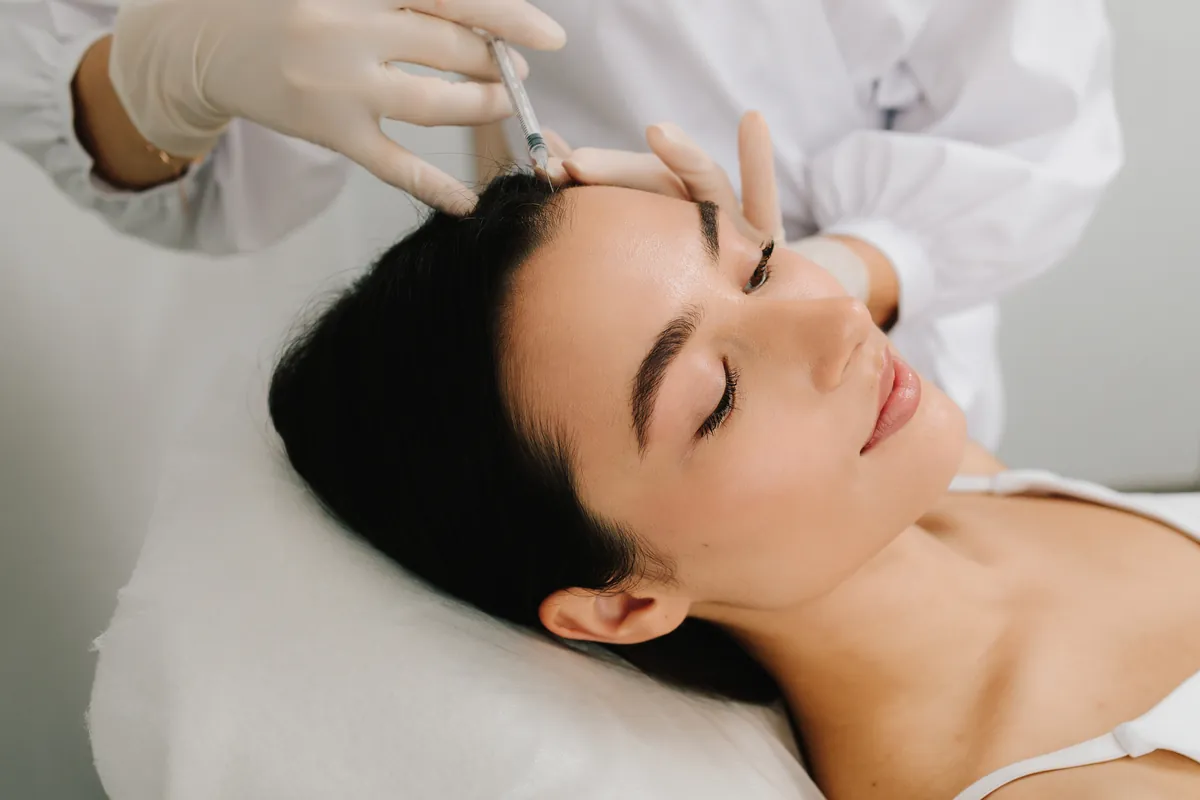 Young consumers rank doctors, not influencers, as their most-trusted health information source.
“For more widespread adoption, brands would need to lead with education and proof on their biggest concerns: side effects and long-term unknowns,” Marisol Estrella, cultural insights lead at Cafeteria, tells Personal Care Insights.
Estrella explains that young consumers, who are seemingly drawn to these injectable solutions on the “gray market,” are equally seeking natural products that are promoted by medically credentialed influencers.
She says that peptides carrying a strong TikTok-and-influencer association create a disadvantage for the beauty industry. Those domains are the “least trusted” by Gen Z and Alpha for credible skin health information.
According to Cafeteria, young males distrust TikTok most (65% vs. 47% of females). Across genders, young consumers trust the white coat over the algorithm, with 85% ranking doctors as their most-trusted health information source.
“For this generation, the underground, self-directed nature is a blocker [of injectable peptide use]. In fact, FDA approval is a precondition they’re openly asking for,” says Estrella.
She cites one female respondent, age 26: “I think that that stuff is so creepy. Until it is FDA regulated, until it is easily accessible, recommended to me by a doctor, I will absolutely not be injecting myself with peptides. I have done research on this. I found that a lot of people are buying them unregulated off of Reddit. Not until there’s concrete evidence that it’s beneficial and that it can be done in a safe way.”
Gen Z trust needs a messenger
Cafeteria says that FDA approval of injectable peptides would unlock permission for Gen Z to see the solution as more credible, a warning ASOP’s Verbois previously pointed to.
However, Estrella explains that earning this generation’s trust takes proof-of-safety, repositioning, and a credible messenger. The intelligence platform reports that most young consumers reject peptides outright (85% of females, 66% of males) — unwilling to self-inject a grey-market substance with no clinician in the loop.
A male consumer, aged 25, calls injectable peptides “scammy.” He cites that “many influencers use them and try to promote their own brands, and their own non-FDA-approved nonsense, and it’s just, maybe if you get it from the right people, it’s good, but I don’t think it’s good.”
Cafeteria suggests a better delivery format for personal care innovation is topical, oral, or patch. Estrella says those options would increase appeal for the hesitant consumers. 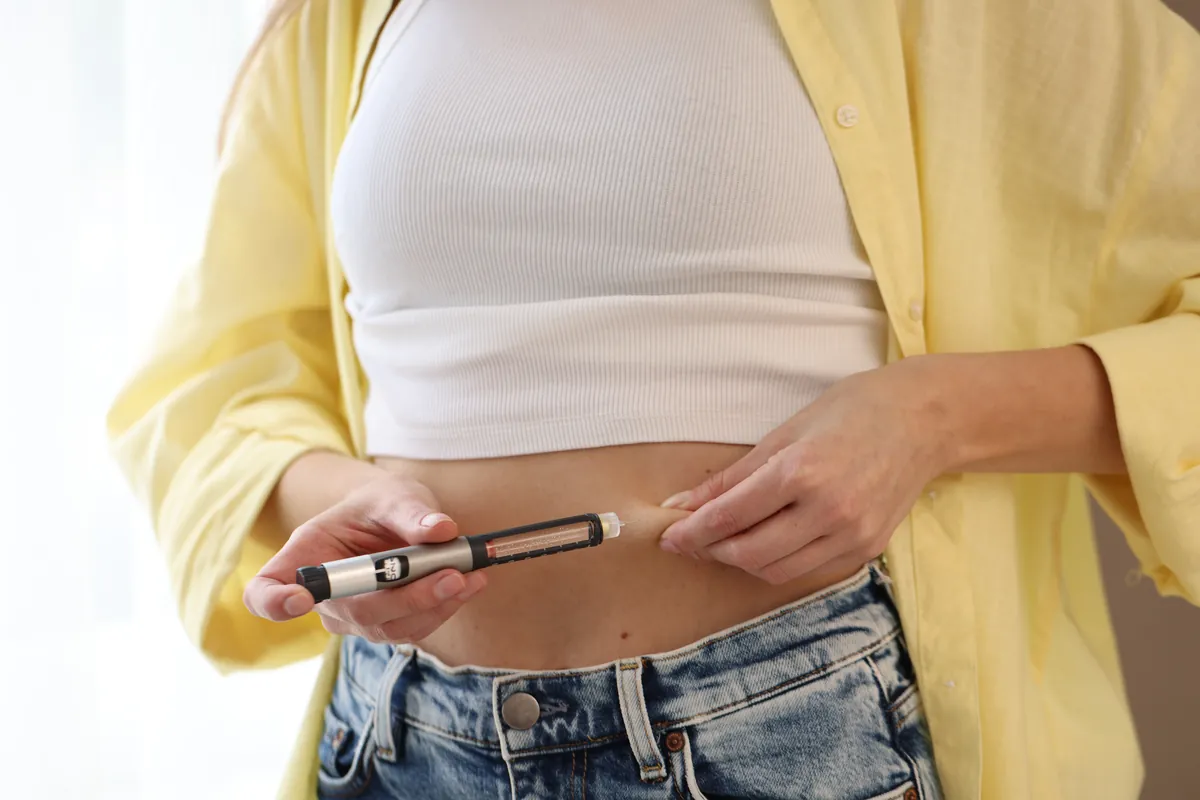 Gray-market sellers already supply injectable peptides outside any regulated channel.
For a female audience, she says peptides need to be re-positioned “away from negative frat-boy and ‘looksmaxxer’ associations.”
Whatever the PCAC recommends, the greater risk for personal care lies not in the FDA’s decision but in how brands market peptides once it lands. ASOP, the AAD, and Cafeteria arrive at the same place from different directions: a compounding pathway is not a marketing license.
Verbois wants guardrails so that a technical approval is not read as a general market green light. Garshick expects a wave of marketing claims that patients will struggle to sort from evidence. Lastly, Estrella’s respondents are already refusing the category until a doctor, not an influencer, puts it in front of them.
For an industry that has sold peptides topically for decades, the risk is not that injectables fail to take off — it is that they take off on social media’s terms rather than the industry’s.