




US FDA panel weighs injectable peptides as experts demand gray market guardrails

Key takeaways
- An FDA advisory panel is reviewing seven injectable peptides for compounding, against the advice of the agency’s own scientists.
- Industry and safety groups argue that a regulated pathway would pull consumers away from the gray market, but disagree on how far access should extend.
- Dermatologists warn that the evidence for cosmetic use remains thin and advise the public against self-injecting peptides.

The US FDA Pharmacy Compounding Advisory Committee (PCAC) is currently convening over whether to add injectable peptides to the agency’s list of bulk drug substances permitted for use in compounded medicines.
Today and tomorrow, the FDA is hosting a panel meeting to review seven peptides: BPC-157, emideltide (DSIP), epitalon, KPV, MOTS-c, semax, and TB-500. BPC-157 and TB-500 are popular “biohacking” solutions in the online wellness community. Currently, all of the listed substances are prohibited from being made by compounding pharmacies in the US.
However, concerns over gray markets — due to the rise of online popularity — and the Department of Health and Human Services’ Secretary Robert F. Kennedy Jr.’s personal crusade are pushing the compounds into potential approval. RFK Jr. has publicly endorsed the injectables and called himself a “big fan.”
On the other hand, the FDA’s own scientists recently released their verdict on the seven solutions in the discourse, discouraging admission. The staff reviewers said there is insufficient evidence of the safety and efficacy to support allowing compounding pharmacies to manufacture the peptides, citing limited human studies.
The decision reveals a clash between the agency’s career staff and the political leadership pushing for easier access.
Personal Care Insights speaks to compounding, online-safety, and dermatology experts, who disagree on whether the peptides belong on the list but converge on one point: if the FDA permits them, it must pair that decision with strict guardrails.
“I think we are in an extraordinary moment that calls for an extraordinary response,” says Scott Brunner, CEO of the Alliance for Pharmacy Compounding (APC).
Following the current meetings, the committee’s recommendations are non-binding but are expected to inform the FDA’s final decision on whether to allow the peptides to the agency’s list of permitted bulk drug substances for compounding.
Tackling the gray market boom
Peptides are short chains of amino acids that act as building blocks of proteins and perform essential biological functions in the body. They have been a staple of the beauty industry, used in topical skin care solutions since the 1990s, but injectables have now garnered public buzz.
Injectable peptides, once for strictly medical applications, are now champions in the often unregulated “wellness” space. They have gained considerable popularity for beautification purposes. Social media influencers claim they have longevity properties, detailing anti-aging, skin rejuvenation, tissue repair, and body optimization. Unlike topicals, they are said to offer direct, systemic cellular support.
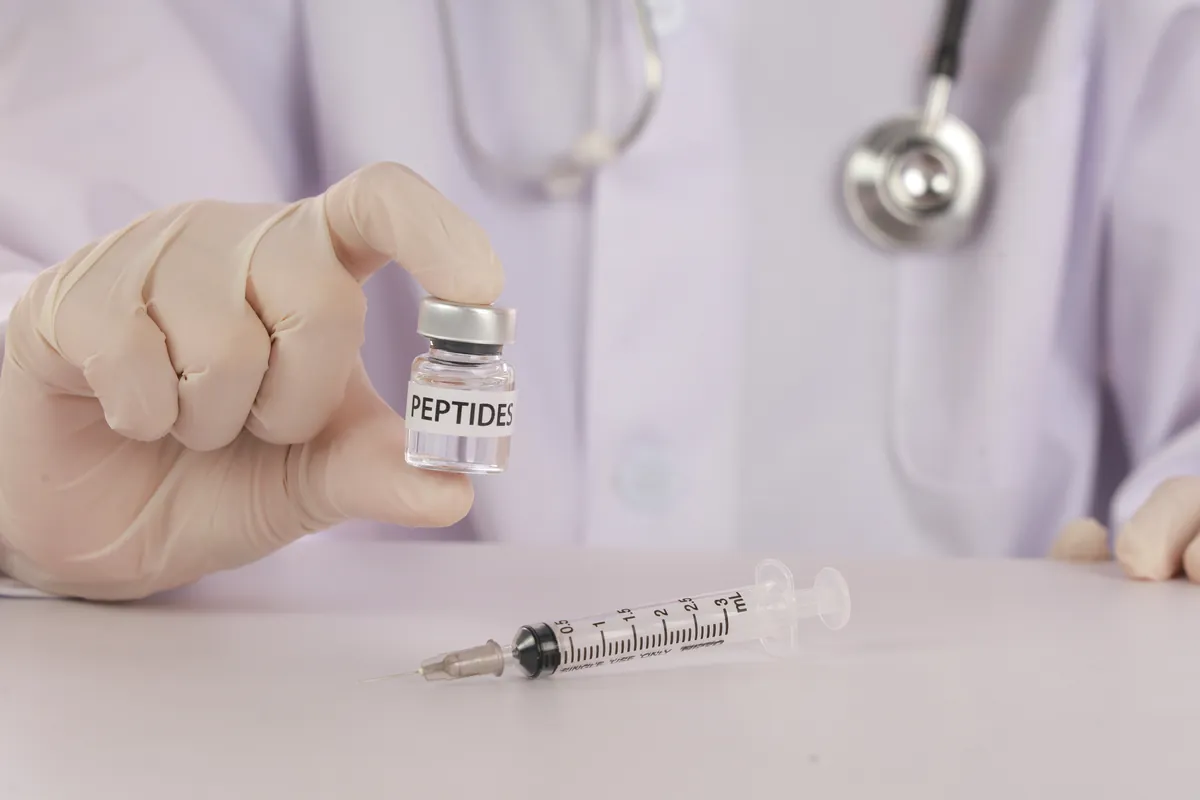 Brunner argues that a regulated compounding pathway would undercut the thriving illicit peptide market. These public figures and everyday consumers are now obtaining injectable peptides through “gray market” channels.
Brunner says that the gray market is currently the primary dispensing mechanism of peptide injectables, using research-grade active pharmaceutical ingredients. Feeding into itself, he explains that the reason the gray market exists is that the only active pharmaceutical ingredient (API) available for these peptides is research grade.
“There is no current good manufacturing practice (CGMP) to our knowledge. There’s no CGMP-compliant active ingredient.”
Leigh Verbois, Alliance for Safe Online Pharmacies (ASOP) Global board chair and former director of the Office of Drug Security, Integrity, and Response at the US FDA, tells Personal Care Insights: Peptides are a clear example of why online drug safety must be part of this discussion.
“The safety concerns around purity, potency, sterility, and product quality apply wherever peptides are sold, but the internet adds scope, speed, and scale that can make consumers more vulnerable,” she says.
The ASOP Global Foundation’s 2025 Consumer Behavior Survey found that 65% of consumers falsely believe all websites offering online prescription services are reviewed or approved by the FDA or state regulators. Verbois says that misconception is especially concerning in the peptide space, where sellers may use scientific-sounding language, “research use only” disclaimers, and cosmetic and wellness marketing to create a false sense of credibility.
“Consumers should be very wary of websites or social media sellers offering injectable peptides without a prescription, using vague wellness claims, promising rapid results, or relying on disclaimers like ‘not for human use’ while clearly targeting consumers,” explains Verbois.
“The internet makes this risk more dangerous because unsafe products can be marketed quickly, anonymously, and at scale. Consumers may want to know where it was sourced, whether it was properly tested, or whether there is any meaningful recourse when they are harmed.”
Brunner predicts that if the FDA sends an affirmative signal to manufacturers, it will stimulate them to make the investment in CGMP compliance. He expects this to create versions of the peptides that are adherent to current manufacturing practices and are appropriate for use in human drugs, in turn deterring the gray market from flourishing.
“That alone we believe will greatly undermine, if not entirely eliminate [the gray market].”
“I believe this is an imperfect situation. You have thriving illicit markets. You have patients who are seeking substances from those markets. That poses a public health threat. It calls for a different response from the FDA.”
Regulation recommendations
The APC is pushing for adding the seven injectable peptides to the FDA’s 503A Bulk Drug Substances List, but calls for supply chain fixes first. It emphasizes the need for a pharmaceutical-grade, good manufacturing practice-compliant API infrastructure first.
“Our recommendations, I would be the first to admit, are not ideal. But to ignore this existing health threat posed by illicit markets is equally concerning,” Brunner tells us. Verbois warns that online sellers use research-use-only disclaimers to appear credible to consumers.
He says that pushing for enforcement of the injectable peptides rather than adding guardrails to allowance is “not a serious response in the political environment we’re in.”
“Simply voting these up without guardrails, I think that’s problematic for the industry. Simply voting them down so that they are prohibited altogether is not going to address what is an existing public health threat posed by the illicit markets.”
Some critics argue that admitting the peptides into circulation would normalize their use even more so than currently being done on the gray market. But Brunner argues that designing for the problem is the better path. “We need to build the airplane that we are flying in.”
From ASOP Global’s perspective, the central issue is patient safety. The nonprofit organization recommends that the FDA and state regulators consider how to prevent a limited compounding pathway from being used to fuel broader internet sales. “Without clear oversight and enforcement, bad actors can use regulatory ambiguity to make unsafe or unverified products appear legitimate to consumers,” says Verbois.
“Patients should not be exposed to injectable products… through wellness channels, or in the personal care space. Demand is not a surrogate for safety.”
Verbois suggests that the PCAC’s evaluation and the FDA’s ultimate decision on the seven peptides must account for how these products are being marketed and sold in the real world.
“Any FDA decision should be paired with clear guardrails so providers and consumers understand what is permitted, what is not, and how to identify safe, regulated sources of FDA-approved medicines.”
Search for skin health bypassing safety?
Topical peptides have been well-studied and have an established safety profile because they act primarily at the skin’s surface and have minimal systemic exposure. However, injectable peptides bypass the skin barrier, and according to the American Academy of Dermatology (AAD), they may be associated with risks such as infection, allergic reactions, dosing variability, and potential systemic effects.
Board-certified dermatologist and AAD member, Marisa Garshick, MD, FAAD, tells Personal Care Insights that the injectable pathway distinguishes the safety considerations from topicals, particularly when peptides are used for cosmetic indications.
“While there is a lot of excitement around injectable peptides for skin health and anti-aging, the evidence supporting many of these products remains limited, and the marketing is outpacing the science. For this reason, there are no real standards to follow, which makes sourcing very variable,” explains Garshick.
The AAD member witnesses many patients asking about them, but not necessarily under proper medical supervision. “While there may be some benefits, we don’t have enough studies at this time to fully support the use.”
“As a board-certified dermatologist, my goal is to recommend treatments that have demonstrated both safety and efficacy, and patients should be cautious of products making anti-aging claims without robust clinical data or appropriate regulatory oversight.”
Verbois adds that when a product is injected, there is very little margin for error. “Purity, potency, and consistency are real safety issues, particularly for injectable products.”  Garshick notes marketing for injectable peptides currently outpaces the supporting clinical science.
She says that at a minimum, safeguards should include ingredient sourcing, supplier qualification, identity testing, purity, potency, sterility, endotoxin testing, stability, labeling, and adverse event reporting.
“These products should also be prepared under appropriate clinical oversight and pursuant to valid prescriptions. They should not be marketed like consumer wellness products or sold casually online with unsupported claims.”
Safety for cosmetic use
The AAD tells us it strongly advises the public not to use self-injectable peptides while trying to improve the appearance of their skin, hair, and nails.
It reiterates the lack of human trials and long-term data. “Not only are these products not tested for their effectiveness, but they also may not be tested for possible contamination, concentration of ingredients, and manufacturing cleanliness — safety measures put in place to protect you — as suppliers bypass current restrictions,” Murad Alam, MD, MSCI, MBA, FAAD, president at AAD, tells Personal Care Insights.
Alam says the promises of dramatic benefits for skin and hair are not worth the risk.
“Some of those who have used injectable peptides unapproved for US sale from unregulated suppliers on the ‘gray market’ have reported concerns, including unwanted changes to skin pigmentation, infection, swelling, pain, redness, and new or changing moles.”
Addressing safety concerns, the APC CEO reports that there has not been an uptick in adverse events reported through the FDA’s adverse events reporting database related to injectable peptides. “I don’t mean to be cavalier in what I’m about to say, but we’re not talking about heroin here. We have not seen any uptick with state poison control boards associated with these substances,” says Brunner.
However, he hedges the statement by saying that it doesn’t mean that injectable peptides, improperly prepared or improperly sourced, cannot be contaminated and lead to a serious patient safety event. “That’s what we’re concerned about.”
The APC argues that a sterile injectable drug prepared by a legitimate state-licensed pharmacy in a US Pharmacopeia-compliant clean room, pursuant to a prescription from a licensed provider, is a better path for a consumer sourcing these substances than illicit options.
Brunner highlights that this is the recommendation under the assumption that the consumer is already pursuing the injectables from the gray market. “Let’s give them a [legitimate] pathway for acquiring them.”