



How Unilever harnesses AI for beauty and well-being innovation

Key takeaways
- AI accelerates insight-to-product cycles, with Unilever now turning trends into science-backed innovations in days, not months.
- AI mines massive datasets, enabling breakthrough formulations like the company’s Pond’s Hydra Miracle and Dove Damage Therapy.
- Over 1,000 external sources feed AI tools to track sentiment, engagement, and emerging beauty desires.
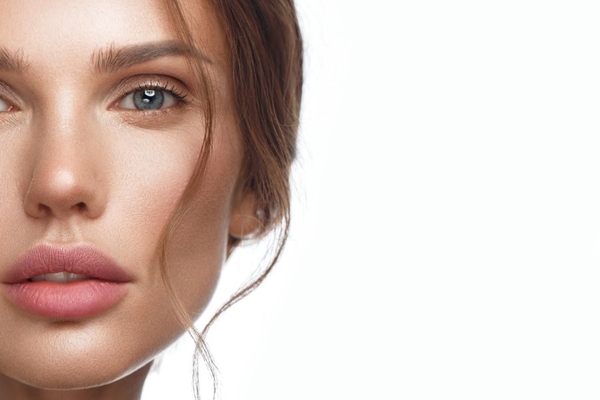
Unilever’s Beauty & Wellbeing scientists are using AI in a bid to decode consumer trends and mine decades of research data. The division’s R&D teams are using AI to explore insights, collect Unilever’s scientific data, and design products that meet the needs of today’s modern beauty consumers.
When it comes to beauty and well-being products, shoppers want to be informed about ingredients, science, and formats. They check reviews, search for proof on social media, and delight in trying new trends.
According to Unilever, its power brands, such as Pond’s Hydra Miracle and Dove’s Damage Therapy range, illustrate this shift through innovations that have benefited from AI-enabled discovery, modeling, and data-driven formulation to accelerate development while maintaining performance.
Turning AI-powered insights into innovation
Unilever says its innovation process has always started with the consumer — looking at their needs, wants, and desires. Now, the beauty and personal care powerhouse can assess consumer insights 60% faster, using tech to analyze brand sentiment, buzz, engagement, and search terms, and surfacing what’s driving real conversations in culture.
Personal Care Insights speaks with Jason Harcup, chief R&D officer for Beauty and Wellbeing, about the company’s moves in AI.
How does Unilever use social media, AI tools, and retail data to inform product innovation?
Harcup: Beauty trends emerge and evolve in real time on social platforms and in creator communities. We use AI to not only help us spot trends but also understand why consumers are engaging with them and what lies behind them.
 AI-empowered product development is helping teams analyze insights 60% faster and make discoveries in days that would previously have taken months.We leverage AI to continuously analyze signals from social media, search engines, retail platforms, and competitor activity, processing over 1,000 external data sources every month.
These tools track sentiment, engagement, and emerging conversations in real time, helping teams not only understand what the trends are, but also why consumers are engaging with them. Combined with internal R&D and consumer data, these insights feed directly into product design and guide ingredients, claims, and formats.
How do virtual cohorts and AI-generated sample groups contribute to Unilever’s product testing process?
Harcup: Our innovation process starts with the consumer, and we know that consumers increasingly expect products that feel personalized, effective, and scientifically credible. AI-enabled virtual testing allows Unilever scientists to explore how different consumer groups may respond to products at an earlier stage in development, before physical testing begins. By simulating outcomes at scale, teams can refine formulations more efficiently and focus real-world testing where it matters most.
How does Unilever integrate consumer insights into its product development process?
Harcup: Consumer insights are at the heart of our work and are embedded end-to-end in the product development process. AI combines external signals — social, retail, search — with proprietary data from hundreds of thousands of consumer interactions to identify unmet needs and predict winning product features. This integration allows Unilever to move from insight to formulation faster, while also improving precision.
What are some of the challenges Unilever faced in incorporating AI into its R&D processes, and how were they overcome?
Harcup: From the outset, our focus has been on how AI can best augment scientific expertise at scale, starting with data democratization. We’re connecting decades of proprietary scientific data across our R&D systems into a single ecosystem in order to enable our teams to explore and link datasets at a depth and speed that simply wasn’t possible before.
This means AI can help our scientists sift through vast volumes of experimental, ingredient, and consumer data, revealing patterns and connections that accelerate discovery, while keeping human judgment firmly at the center.
How has AI reduced the product development cycle for Unilever’s Beauty & Wellbeing portfolio?
Harcup: Today’s beauty and well-being consumers are more informed than ever. They’re researching ingredients, looking for scientific proof points, checking reviews, and following trends that move incredibly quickly across social media. That’s why we see AI as a way to deepen and broaden consumer understanding and accelerate science-led innovation, not just move faster for the sake of it.
AI is helping our teams identify emerging needs earlier, unlock insights faster, and bring more relevant innovations to market with greater speed and precision. Teams can now move from identifying a consumer trend to developing a science-backed product in days instead of months, with insight analysis running around 60% faster.
In practice, this means that across our innovations, formulation cycles can shrink from five or six iterations to just one or two, and concept-to-brief timelines drop from months to days.
Our power brands illustrate this shift through innovations such as Pond’s Hydra Miracle and Dove’s Damage Therapy range, which have benefited from AI-enabled discovery, modeling, and data-driven formulation to accelerate development while maintaining performance.
How did AI help develop the Cera-Hyamino technology for Pond’s Skin Institute’s Hydra Miracle range?
Harcup: AI is already helping us deliver blockbuster technologies powering our products. AI helps our scientists analyze massive-scale skin microbiome datasets — we have 30TB of data — to uncover patterns that would otherwise require millennia to detect, even using conventional digital tools.
This allowed our team to quickly identify a powerful combination of pro-ceramides, hyaluronic boosters, and GAP amino components behind the Cera-Hyamino technology that powers Ponds Skin Institute’s Hydra Miracle range and is designed to strengthen the skin barrier and boost hydration. The performance unlocked is significant: 67 times barrier resilience power, a 100% hydration boost, and clinical results showing 78% more hydrated skin from day one.
This wouldn’t have been possible without AI. Our scientists were able to develop Cera-Hyamino technology at speed because AI and digital tools were able to analyze our microbiome data and find connections that humans alone simply couldn’t have spotted.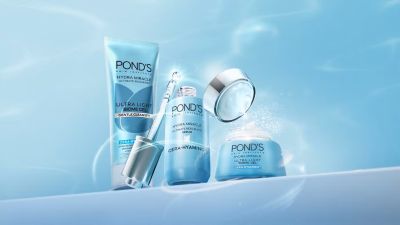 Over 1,000 external data sources are automatically analyzed each month to give Unilever teams a real-time, global pulse on emerging trends.
In what ways has AI been used in Dove’s Damage Therapy range to improve hair care formulas?
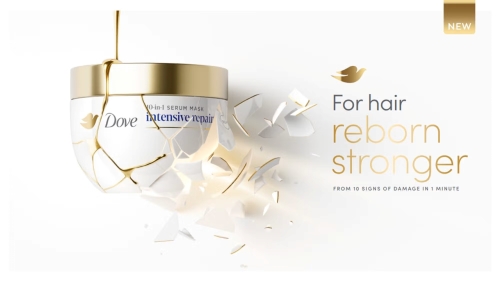
Harcup: For Dove’s Damage Therapy range, AI and advanced digital tools helped Unilever understand hair damage at a much deeper, molecular level. By combining large datasets with automation at the Materials Innovation Lab, our scientists could map exactly which proteins and amino acids are lost from hair under different sources and types of damage, which wasn’t previously possible at this scale.
AI-supported modeling and testing then allowed teams to identify and optimize the right combination of ingredients to target that damage. This led to the development of Dove’s Bio-Protein Care technology, which is designed to replenish lost proteins and strengthen hair from within, improving both performance and target precision of the formula.
How will Unilever further integrate AI into future innovations across its Beauty & Wellbeing brands?
Harcup: As beauty and well-being trends continue to evolve faster, AI will take on a more fundamental role in helping our business stay connected to consumer needs and accelerate science-led innovation.
Unilever is embedding AI across the entire innovation value chain — from early trend detection to formulation and testing.
The focus is on scientific discovery. That means enhancing our scientists’ creativity and effectively combining predictive science, digital twins, and real-time consumer insight to create more desirable products for consumers, faster, and at scale.
AI art theft accusation
While Unilever is leveraging the efficiency AI offers, it has also recently come into hot water for alleged AI-sourced creative property theft. The Unilever-owned beauty brand Vaseline has been accused of copying poster artwork from an online artist and modifying it using AI.
The artist, who goes by Name Junior (@namejr_) on Instagram, created a post on the social media platform with an image titled, “Vaseline stole my work,” on May 12.
“Vaseline stole a poster I created for the movie Michael, modified it with AI, and used it to create an advertisement,” Junior wrote in a social media post. “My work was used without my permission.”
Vaseline has now removed the advertisement and is working to understand what happened and why, as well as the accusation.