


Testing finds rampant adulteration in Amazon-sold lavender oils, posing potential risks

Key takeaways
- Most lavender oils on Amazon, tested by Now Essential Oils, have failed ISO authenticity testing.
- Low-quality or adulterated oils can pose health risks to the skin and respiratory systems.
- Higher-priced, tested brands are more likely to be genuine, as pure oil is not cheaply obtainable.

Testing by Now Essential Oils reveals that a vast majority of the tested lavender essential oils available on e-commerce platform Amazon fail to meet International Organization for Standardization (ISO) criteria. Only three brands out of 28 tested (11%) proved to be authentic Lavandula angustifolia essential oil with no evidence of adulteration.
The company expresses that these results are “concerning,” as synthetic fragrance compounds can irritate the skin and airways or can lead to further health complications.
Personal Care Insights sits down with Dan Richard, VP of global sales and marketing at Now, to discuss the findings, their potential consequences to well-being, and Amazon’s role in such widespread adulteration.
Richard attributes the results to insufficient US regulation and market saturation seen in the last decade. “Quality standards in the US for essential oils are deficient,” he says.
“There are no official essential oil ‘standards,’ which allows brands to engage in what is essentially economic adulteration. Ten years ago, just a handful of quality brands sold essential oils in the US, and the market was healthy. Today, the US market is scattered because the barrier to entry is low for new brands.”
Findings and pricings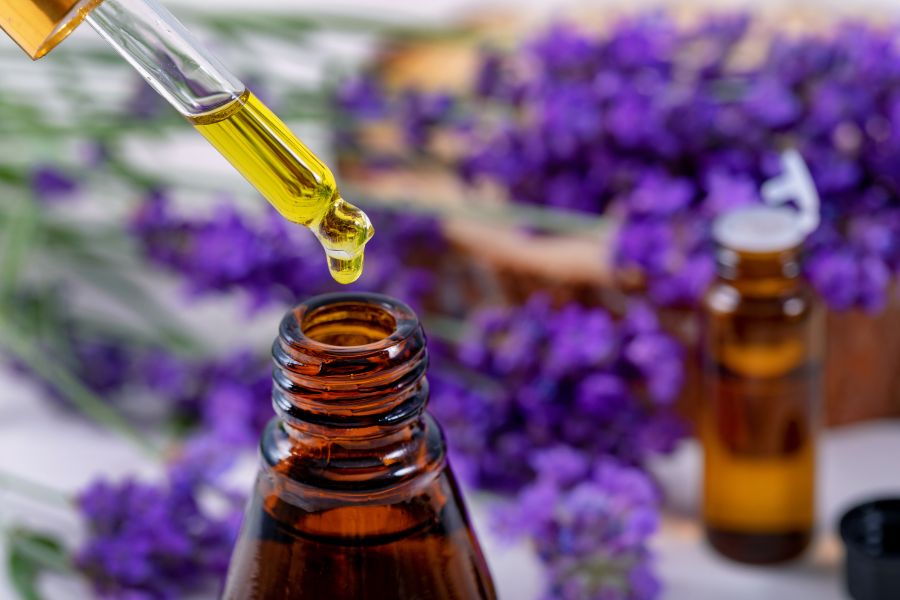
Quality testing reveals widespread issues with lavender oils sold on Amazon.
Using GC-MS/FID analytical testing, which separates, identifies, and measures volatile and semi-volatile compounds, the solutions and supplements company found that 25 out of 28 tested brands selling L. angustifolia products on the platform did not meet ISO criteria.
Of these, 55% of products tested showed profiles inconsistent with authentic chemical compositions of L. angustifolia, 60% showed evidence of dilution, and 65% contained synthetic fragrance-related compounds or compositional patterns not consistent with genuine lavender essential oil.
Richard explains that Amazon is complicit, if not a driver, in the unreliable product quality. “Amazon makes these factors much worse since low-quality products are now widely sold,” he says.
“Additionally, many Chinese and Indian brands have learned how to market on Amazon and use too-low pricing to steal market share from quality brands, and cheat consumers.”
The report states that of the tested brands, eight come from China and four from India. Four of the brands, imported to the US, were in the top five cheapest products, and none passed testing. Conversely, the three products that passed testing were among the four highest priced on Amazon.
Richard underlines that the report shows “you get what you pay for” in essential oils: “This report showed some imported brands selling lavender oil at 75% lower prices than Now, which is already a value brand. This is impossible to do using the same quality raw materials. It is only possible with lower-quality or diluted oils.”
“Consumers need to beware of products that are priced ‘too good to be true.’”
Risks and actions
GC-MS analysis highlights the presence of synthetic fragrance compounds in essential oils.
Several samples were found to contain synthetic fragrance compounds, mineral oil-type substances, or carrier dilutions. Richard tells us these adulterants carry potential risks for consumers using the products in aromatherapy or personal care applications.
“Synthetic fragrance compounds can irritate the skin and airways, especially in sensitive individuals,” he explains.
According to Richard, the biggest practical concerns are that fragranced products containing undisclosed fragrance mixtures may trigger eczema, asthma, or migraines in sensitive individuals.
“It’s important to note that with these false products, consumers will not experience the benefits they would get from actual essential oils,” he says.
The company will share the report with both the US FDA and Amazon, hoping to see Amazon “establish quality standards for all products and develop a process to enforce those rules.”
Richard underlines that Amazon has carried out quality enforcement for other industries in the past, setting a precedent for effective guideline implementation in the personal care industry.
Richard also tells us more about GC-MS/FID analytical testing and the feasibility of advanced verification methods across the essential oil industry. He states that Now’s advanced testing capabilities are not commonplace in the sector and that outsourcing tests such as GC-MS/FID is expensive and is not normally done by lower-quality brands selling cheaply.
“While we don’t think this type of testing should be mandatory, we do feel that when brands claim their product is 100% pure lavender oil, it should not be diluted or spiked with synthetic ingredients,” he says.
“The problem is that brands intentionally cheat with low-quality essential oils and then mislabel them. Amazon can be a bigger part of solving this problem if it chooses,” Richard concludes.