




Australian mass retail moves in on beauty as David Jones falls

Key takeaways
- Kmart is adding over 2,700 beauty products from over 117 brands, with a strong K-beauty focus. Over 60% of the range is exclusive to Kmart and Target.
- Coles will become the first Australian supermarket to adopt GenM’s MTick menopause-friendly certification.
- David Jones, Australia’s oldest department store, goes into voluntary administration, as costs and competition rise.
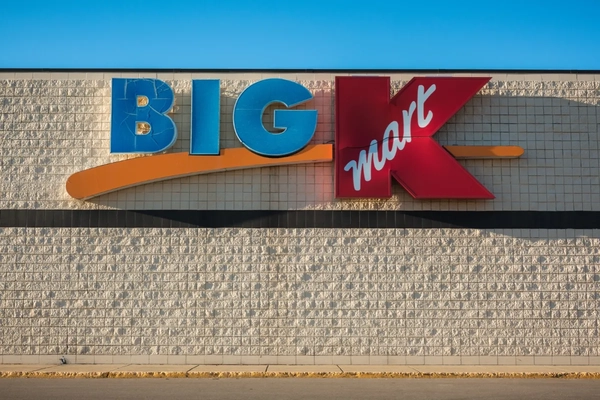
Australian cosmetics retail is moving toward mass market, with everyday retailers focusing on beauty and wellness spending while traditional department stores struggle. Kmart is widening its beauty lineup with global and Korean brands while Coles is bringing menopause support to the supermarket aisle. David Jones, meanwhile, the country’s oldest department store, has gone into voluntary administration.
Kmart has added over 2,700 beauty products from over 117 brands to its offerings, including K-beauty names like Medicube, Biodance, and SKIN1004. The retailer says over 60% of the range is exclusive to Kmart and Target in Australia.
“We are seeing huge demand for the beauty category from our shoppers,” says Nicola Farrell, business manager of beauty at Kmart.
Coles has also announced it is expanding access to menopause support, with an online support hub due in early 2027 and in-store initiatives. The retailer will also add over 200 MTick-certified products across skin care, personal care, vitamins, and oral health. The stamp verifies the products have been checked and approved by GenM as menopause-friendly.
The move aligns with a wider push in the personal care industry to treat women’s health as part of the growing wellness category.
“Finding products that can help support women through menopause shouldn’t be complicated,” says Anna Croft, chief commercial and sustainability officer at Coles.
Meanwhile, David Jones, which employs about 6,000 staff across 38 stores, has appointed administrators after years of financial struggle. Jana Bowden, a marketing faculty member at Macquarie University’s Business School, Sydney, Australia, told the BBC the collapse signals the “death knell” for the department store format.
.webp) Australian shoppers are increasingly turning to everyday retailers for their beauty buys.Together, the moves point to a shift in how Australians shop for beauty and wellness products. Regular retailers are attracting audiences by flaunting exclusive and trending labels, while department stores battle rising costs and online competition.
Beauty goes to value aisle
Kmart’s beauty push expands its offerings to include makeup brands Sheglam and Daise, and international brands including Troublemaker, BringGreen, Tree Hut, Tony Moly, and Essence.
The expansion also brings UK-based Glow Hub and K-beauty brand Colorgram into the Australian market for the first time, using Kmart and Target’s store network.
Kmart is doubling down on its K-beauty lineup as well, with Arencia, The Face Shop, and Beauty of Joseon bolstering its portfolio. According to ABC News, Australia ranks second in the world for per-capita spending on K-beauty, behind only the origin country.
At the same time, Kmart is expanding its private label OXX Cosmetics across makeup, skin care, and fragrance. The new additions include a three-piece lip kit, cream eyeshadow sticks, lip stains, and notably, Korean-made sheet masks.
By pairing global brands, trending Korean skin care, and private labels, Kmart appears to be competing for beauty spend across several customer groups at once.
.webp) Retailers are adding menopause and women’s health products to their beauty and wellness ranges.“We’re invested in giving shoppers choice and value when it comes to beauty, and are delighted to be bringing some amazing international brands like Glow Hub and Colorgram to Aussie shores as a nationwide stockist across Kmart and Target stores, with 60% of beauty products available exclusively to our customers,” says Farrell.
Women’s wellness push
Coles’ move shows wellness becoming a bigger part of personal care retail in Australia. The supermarket joins over 180 other brands and retailers in the global GenM Collective, and is the first in Australia to offer menopause-friendly shopping options.
The MTick certification helps shoppers find products that support the signs of menopause, functioning similarly to a halal or vegan symbol. The certification tackles “menowashing,” a term referring to products with menopause claims, but no evidence behind them.
According to GenM, 4,000 products carry the seal globally, including at UK retailers Boots and Tesco. In Australia, Murad, Swisse, and TerryWhite Chemmart have also signed on.
.webp) David Jones, Australia’s oldest department store, has gone into voluntary administration after 188 years.“Their commitment shows what’s possible when a leading retailer recognizes its role to play in better serving the menopausal woman,” says Heather Jackson, CEO and co-founder at GenM.
Price trumps experience?
As Kmart and Coles enjoy strengthening beauty momentum, David Jones is fighting to survive. The 188-year-old retailer went into voluntary administration after years of financial struggle, putting thousands of jobs at risk. The BBC cites customers moving from traditional stores to online shopping as contributors to the financial crash.
Of its 38 stores, 17 sit in Westfield shopping centers. However, hours before the David Jones board voted on the administration, Westfield ownership said the retailer had not paid its October rent.
The stores and online shop continue to trade while administrators and consultants review the business.
“We understand the current retail trading environment, rising costs, a significant and outdated retail footprint, and supply chain challenges have led to this point,” says Christopher Hill of FTI Consulting. He adds that the process gives David Jones “breathing space” and a chance to restructure.
For many Australians, David Jones was a symbol of luxury. Bowden tells the BBC it was “the Aussie version of Harrods,” a place where shoppers went for the “glitz and glamour.” However, she explains that the city stores kept their charm while suburban branches became “mundane” and lacked excitement.
David Jones CEO Erica Berthold says the brand has a “well-developed plan” to “reset the business for the future.”