


In-cosmetics Asia 2026: Suppliers advance skin barrier health and regeneration

Key takeaways
- Skin barrier health, regeneration, and holistic skin wellness trends are emerging at In-cosmetics Asia 2026.
- BASF and Clariant have introduced ingredients for post-treatment skin recovery and multifunctional sun protection, respectively.
- Vytrus Biotech and Mibelle Biochemistry are targeting skin hydration and stress-related aging with biotechnology-driven actives.

At In-cosmetics Asia 2026 in Bangkok, Thailand (Nov 3–5), skin barrier support, sun care, and regeneration ingredients are taking center stage as industry players innovate in the skin health space. Solutions at the show are targeting changing environmental factors, heightened day-to-day stress levels, and the increasing popularity of aesthetic procedures.
Dr. Ariati Aris, scientific affairs specialist at PhytoGaia, tells Personal Care Insights that the beauty and personal care industry is evolving beyond conventional aesthetics toward a more holistic, science-driven approach to beauty and wellness.
“Skin barrier health and hydration remain dominant priorities, with growing demand for ingredients that help maintain skin integrity, moisture balance, and resilience,” she says.
Consumers are tuning into the long-term effects of external and internal factors on the skin, such as UV exposure, aesthetic intervention, or prolonged psychological stress. As a result, they are demanding solutions that can mitigate the growing impact of the changing climate and fast-paced personal lives.
Actives with ethical sourcing claims are also maintaining their popularity as suppliers move to meet sustainability demands.
At In-cosmetics Asia 2026, beauty players showcase their ingredients moving to meet healthy aging and holistic skin care demands. Suppliers are launching various ingredients targeting nature-inspired barrier integrity, simplified sunscreen, and the skin impact of modern stressors.
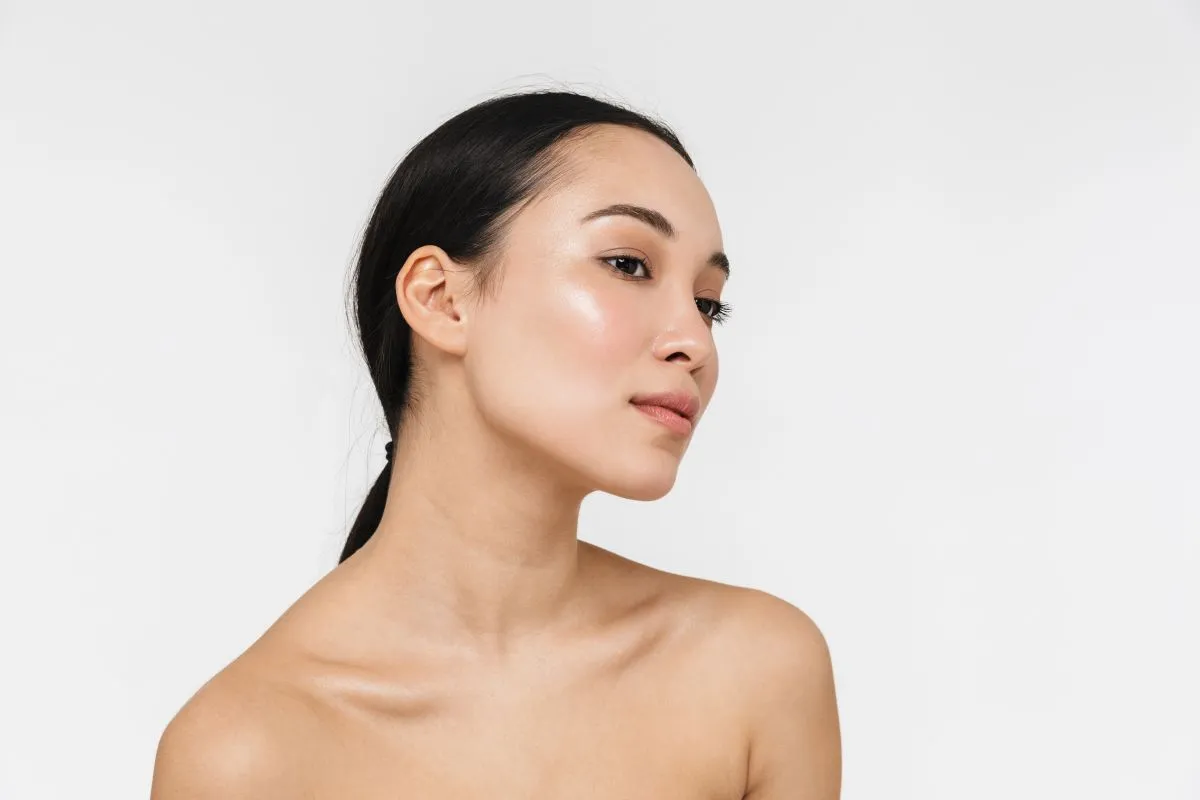
BASF is introducing Lincare to support skin recovery following aesthetic treatments.
Post-treatment glow
Aesthetic interventions can take a toll on the skin’s well-being. At the show, BASF has debuted Lincare, designed to support skin care routines after laser therapy. The ingredient is said to help promote a rejuvenated, healthy-looking appearance after treatment.
“As aesthetic treatments become increasingly mainstream, consumers are looking for skin care solutions that not only support recovery but also help promote further rejuvenation after treatment. This convergence of aesthetics and skin care is creating new opportunities for innovation,” Lucilene Veira Nunes, global business management, Beauty Care Solutions at BASF, tells us.
Lincare is naturally derived from flaxseed hull oligosaccharides and supports key skin-recovery mechanisms, helping soothe post-treatment skin, support epidermal recovery, promote extracellular matrix remodeling, and strengthen the skin barrier.
Nunes says that the growing convergence between aesthetics and skin care opens new possibilities to apply advances in skin science to future post-procedure beauty solutions.
The company states that clinical testing showed a formulation containing 1% Lincare helped the skin barrier recover 21% quicker, boosting recovery approximately 1.2 days faster than placebo after non-ablative fractional laser treatment.
“We are looking at future beauty needs across several interconnected areas, from skin regeneration and sun protection to active delivery, cleansing and sensorial formulations. Across these areas, the focus is on innovations that can contribute to performance, sensory appeal and product differentiation,” Nunes says.

Clariant is advancing multifunctional sun care with new UV protection ingredients.
Multifunctional UV protection
In its strategy for skin protection, Clariant is highlighting multifunctional sun care at the show with three ingredient launches. Two of the releases target hybrid sunscreen formulations and the third targets cleansing foam applications. The company aims to address regional demand for high-performance sun protection, lightweight textures, and gentle cleansing formulations.
According to Clariant, sun care launches in the Asia-Pacific region boomed by 85% between 2021 and 2025. Consumers are increasingly demanding sunscreens that offer highly efficacious broad-spectrum shielding without leaving a visible white cast or greasy finish.
The company has launched Eclipsogen CAP Duo Z to meet this demand. The ingredient is a ready-to-use hybrid UV filter system that is said to simplify the formulation of high-protection sunscreens. The ingredient combines three organic UV filters — including the recently US FDA-approved bemotrizinol — with zinc oxide in a single dispersion containing 38.5% total UV filter actives.
The cold-processable system is said to eliminate the necessity to disperse UV filters separately, and may reduce manufacturing complexity and energy consumption.
Clariant’s in vitro testing showed that a cream formulation containing 9% total UV filter actives achieved an SPF of 82.5, compared with 67.8 for an equivalent formulation using free UV filters. The company also reports improved film uniformity and photostability.
Complementing the launch is Sensotain ILS, a multifunctional emollient designed to improve UV filter solubilization, pigment dispersion, and the photostability of light-sensitive ingredients such as avobenzone and retinol. The emollient acts as a protectant for light-sensitive actives such as avobenzone and retinol.
Sensotain ILS focuses on making sun care formulations more efficient through multifunctionality and simplicity while supporting UV protection.
Clariant’s multifunctionality and scientifically-based positioning are indicative of a broader industry pattern emerging at the show.
“An important shift is the growing expectation for measurable results, scientific credibility, and premium quality formulations,” PhytoGaia’s Aris tells us.
“Consumers and brands are becoming more discerning, seeking ingredients supported by scientific research and demonstrable benefits. This is encouraging ingredient manufacturers to move beyond conventional single-function ingredients toward multifunctional solutions with stronger scientific substantiation.”
Clariant’s third ingredient, GlucoTain Pro P, is positioned as an ultra-mild, sugar-based foam booster that produces foam even in the presence of oils.

Vytrus Biotech is targeting long-lasting skin hydration with microbiome-inspired technology.
Holistic hydration from within
Vytrus Biotech is putting hydration at the forefront of its In-cosmetics Asia presence. The Spanish biotechnology company has launched an active to encourage the movement of water between skin layers by improving the skin’s natural ability to transport, retain, and store water.
Hydranode targets skin hydration through the “Skin Hydric Interactome,” a biological network connecting environmental exposures, the skin microbiota, epidermis, and deeper skin layers.
The ingredient aims to activate the skin’s water-management mechanisms to support sustained hydration, rather than traditional humectants and barrier agents that attract moisture or limit water loss.
Vytrus says that the drought resilience of Mediterranean forests inspired the ingredient. The company identified a bacterium capable of adapting to water stress and replicated its metabolism through its proprietary Microbial Biofactories platform.
The ferment derived from the bacterium contains Microbial Hormetins, a combination of exopolysaccharides and proteins. According to Vytrus, these compounds stimulate the skin microbiota through hormesis, a mild adaptive response, to boost transmission among microorganisms and skin cells through short-chain fatty acids and extracellular vesicles.
The company says the ingredient is compatible with use in formulations such as microbiome-friendly moisturizers, skin-plumping products, and skin-conditioning solutions.
By shifting skin hydration from externally sourcing moisture to supporting the skin’s ability to regulate its own water balance, Hydranode aligns with holistic skin well-being and resilience applications.

Mibelle Biochemistry is addressing the effects of psychological stress on skin health.
Mitigating stress on skin
Also approaching skin care from a holistic perspective, Mibelle Biochemistry is focusing on the impact of mental health on long-term skin wellness. The company has launched PhytoCellTec Aloha at the show, a plant stem cell innovation designed to address the impact of psychological stress on the skin.
Similarly to Vytrus, Mibelle was also inspired by the natural world. The company cites the resilience of Waltheria indica, a tropical plant traditionally found in Polynesian cultures, as the muse and the source of the ingredient.
The company highlights that stress is increasingly acknowledged as a significant aggravator of premature skin aging and skin imbalance.
“Elevated levels of cortisol and adrenaline can impair skin regeneration, weaken the skin barrier, increase redness and blemishes, and accelerate the formation of wrinkles. At the center of these effects are epidermal stem cells, which are essential for healthy skin renewal and long-term skin vitality,” says Mibelle.
The ingredient is derived using Mibelle’s PhytoCellTec technology and is said to defend epidermal stem cells from cortisol- and adrenaline-related stress.
According to Mibelle, PhytoCellTec Aloha helps maintain barrier integrity, reduce visible signs of stress, and encourage a calmer, healthier-looking complexion by supporting the skin’s capacity to regenerate. The company says studies show that the ingredient protects skin stem cells from stress, reduces redness, minimizes blemishes associated with stress, and bolsters the skin barrier.
The ingredient is said to address rising consumer demands for wellness-inspired skin care solutions “that help the skin cope with the pressures of modern life.”