



US–Canada tariff war escalates with reciprocal 50% cosmetics duties

Key takeaways
- Canada matches the US 50% tariffs on cosmetics dollar-for-dollar, effective September 8.
- USMCA compliance no longer shields cosmetics from duties at the North American border.
- Beauty brands face stacked duties on repeat crossings and must price landed cost upfront.
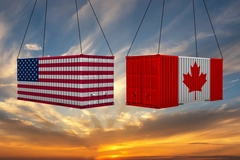
Canada has hit back at the US’s imposition of 50% tariffs by implementing its own “dollar-for-dollar” duties. Both countries have now included cosmetics in the trade war.
The Canadian countermove responds to US tariffs that took effect Saturday, August 22. The US levies were set to take place on August 19, but were delayed for negotiations that have since collapsed.
The personal care industry is now calling for talks to resume as both Canada’s and the US’s tariffs threaten cost increases across the North American beauty industry — a previously highly integrated cross-border market.
“The Personal Care Products Council (PCPC) urges officials in the US and Canada to return to the negotiating table and work toward a resolution of the growing trade dispute between the two countries… and pursue a durable solution that restores certainty and keeps goods moving across our shared border,” Heather Helm, executive VP for Global Strategies at the PCPC, tells Personal Care Insights.
However, since trade negotiations under US President Donald Trump are often subject to sudden change, Rathna Sharad, CEO and co-founder of FlavorCloud, a cross-border e-commerce logistics firm, outlines how beauty companies can navigate the tit-for-tat tariffs.
“The companies that navigate this period successfully will be the ones that turn trade compliance into a real-time commercial capability — using accurate data to make rapid decisions while keeping the delivery experience predictable for the shopper,” she tells us.
Counter-tariffs on cosmetics
On July 20, Trump signed three proclamations under Section 338 of the Tariff Act of 1930 that imposed an additional 50% ad valorem tariff on Canadian cosmetics. This was the first time any US president invoked this authority.
What had protected the North American beauty sector from Trump’s slew of tariffs was the United States-Mexico-Canada Agreement (USMCA), known as CUSMA in Canada. However, the US’s recent decision ignores it, impacting cross-border personal care product pricing and supply chains.
In response, this Tuesday, Canada announced counter-tariffs to C$27.6 billion (US$19.9 billion) of US imports — matching the value of Canadian goods hit by Washington’s tariffs.
The counter-tariffs are 50% for cosmetics, which include items like perfumes and makeup. Rathna Sharad says beauty brands cannot plan around the hope that negotiations restart.
“Recent US and Canadian tariff actions impact cosmetics and personal care products used by consumers every day,” Helm tells us.
“Canada is the largest export market for the US cosmetics and personal care products industry, accounting for US$4.2 billion in annual exports and more than one-quarter of all US industry exports.”
The country was also the second-largest source of US beauty and skin care imports in 2025, after South Korea, supplying over US$1 billion of products, according to the ITC Trade Map.
Canada plans to instate its new duties on the US on September 8.
François-Philippe Champagne, Canada’s Minister of Finance and National Revenue, says: “When the US asked too much and offered too little, we chose to stand up for Canadians. Our dollar-for-dollar, rate-for-rate counter-tariffs, as well as a multi-billion dollar support package, will protect workers, farmers, families, and businesses as we build a stronger, more resilient, and more diversified Canadian economy.”
Canada also announced more than C$7 billion (US$5.04 billion) in support for businesses affected by the latest tariffs. This adds to over C$20 billion (US$14.27 billion) in support announced over the past 18 months.
Beauty brands must stay agile
While the PCPC urges US and Canadian officials to resume dialogue and work toward a trade resolution, FlavorCloud CEO Sharad says that brands cannot build their operating plan around the hope that negotiations restart.
She suggests cosmetic companies make a scenario-based plan that assumes the tariff could remain in place while preserving the ability to respond quickly if it changes.
“That begins at the SKU level: accurate classification, country of origin, customs value, margin, and landed cost. Brands then need predetermined thresholds for when to absorb part of the cost, raise prices, bundle products, change sourcing, shift inventory, prioritize another market, or temporarily pause a SKU.”
Sharad also recommends that brands separate reversible decisions, such as routing and pricing changes, from expensive long-term decisions such as relocating manufacturing.
“The goal is optionality. Brands that know their exposure in real time, maintain more than one viable trade lane, and show customers a guaranteed landed cost at checkout will be in a much stronger position than those attempting to rebuild their strategy after every tariff announcement.”
Friction over borders, loss of protections
The historic escalation marks the first time cosmetics have been tariffed despite complying with the USMCA. The agreement had protected a cross-border system built over almost four decades, in which brands source ingredients in one country, manufacture in another, and distribute across the region.
“By including cosmetic products in this latest round of the trade war, and by specifically excluding CUSMA-compliant goods, the US administration is inviting the return of counter-tariffs on these same products should the Canadian Government be forced to respond.” Darren Praznik, president and CEO at Cosmetics Alliance Canada, previously told Personal Care Insights about the US’ tariff deployment.
Now that Canada has reciprocated, the once free-flowing system runs through 50% duties in both directions. 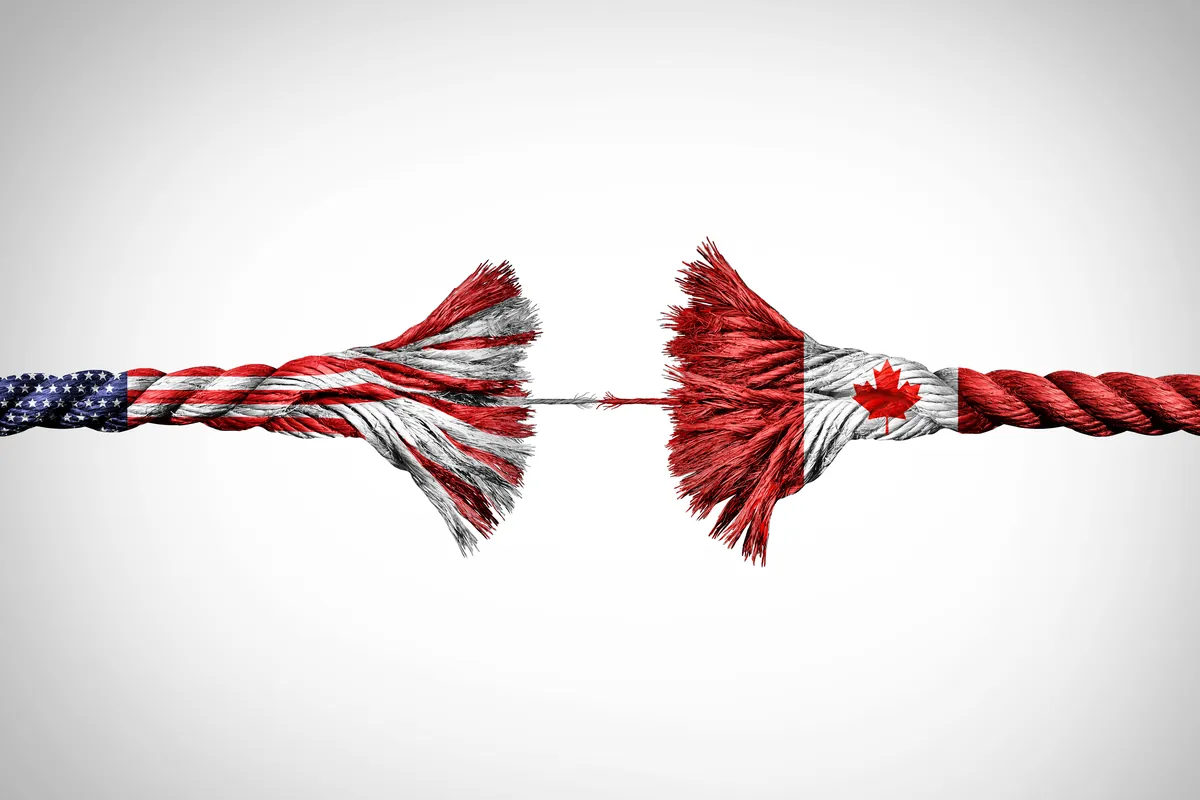 The PCPC calls for US and Canadian officials to return to the negotiating table.
“For decades, consumers and businesses in Canada and the US have benefited from a strong and reliable bilateral trading relationship,” says Helm at the PCPC. “Trade barriers risk disrupting the efficient and predictable movement of products across the border, creating uncertainty for integrated North American supply chains and potentially limiting consumer choice and access to everyday products.”
Sharad at FlavorCloud explains that since USMCA compliance has broken down, every border crossing, supplier relationship, and manufacturing decision has to be re-evaluated.
“Beauty companies have spent decades locating formulation, filling, packaging, and distribution wherever each step worked best across Canada, the US, and Mexico because the border was largely frictionless.”
For covered cosmetics and inputs, Sharad says the 50% tariffs turn a supply chain designed for efficiency into a series of potential tax events.
“The immediate impact is higher landed cost, but the deeper damage is the loss of predictability. Companies can adjust to a known cost; it is much harder to invest in facilities, inventory, or long-term supplier contracts when the rules themselves can change without an expiry date.”
Where the cost lands
The 50% duty is calculated on the customs value of the covered merchandise each time it enters the US, so repeated crossings can create a much larger cumulative burden unless the company qualifies for drawback or another customs-relief mechanism.
Sharad details that if a covered Canadian-origin ingredient valued at US$100 enters the US, the additional duty is US$50. If it returns to Canada for further production and the finished Canadian-origin product, now valued at US$200, subsequently enters the US, that entry could generate another US$100 in duty. Without relief, the two entries have produced US$150 in additional duty against a final customs value of US$200. And now, with Canada’s retaliations, this is all vice versa.
“The importer of record pays the duty at the border, but that does not tell you who ultimately bears the cost,” says Sharad.  Sharad argues real-time trade compliance is now a commercial capability.
She predicts that initially, manufacturers may absorb costs to protect contracts, brands may sacrifice margin, retailers may demand concessions, but that eventually, shoppers may see higher prices.
“In direct-to-consumer shipments, the shopper can even become the importer under a delivered-duty-unpaid model. That is particularly damaging because an unexpected charge at delivery destroys trust.”
Sharad believes that prestige, highly differentiated, and science-backed products have the best chance of absorbing or passing along that cost. She says this is because they tend to have stronger margins, higher average order values, and greater customer loyalty.
“The most exposed categories are low-priced single-item orders, mass-market products, private-label goods with readily available substitutes, and bulky or heavy products, such as shampoos, lotions, and body washes.”
Sharad recommends brands calculate and communicate the full landed cost at checkout rather than allowing the tariff to arrive as a surprise.
“This is not only a tariff story; it is a data and consumer-trust story. A brand cannot manage volatility if it does not know the correct classification, origin, value, and importer of record for every SKU and shipment. And it cannot preserve customer loyalty if duties appear unexpectedly after checkout.”