



Navigating a Volatile World: CTPA handbook combats challenges affecting cosmetics
The handbook is a practical guide to help businesses respond to escalating environmental and social challenges

Key takeaways
- CTPA’s handbook guides cosmetics companies in addressing climate, water, and social pressures.
- It is designed to help brands identify new markets, drive responsible growth, and mitigate risks from ingredient scarcity and volatility.
- Cross-industry collaboration and integrating consumer perspectives allow companies of all sizes to implement scalable sustainability strategies.
The Cosmetic, Toiletry and Perfumery Association (CTPA) has identified the environmental, social, and supply chain challenges beauty companies are facing today and has given them a playbook on how to tackle these challenges.
Speaking to Personal Care Insights, Nico Shaw Núñez, director of regulation and sustainability, and Christine Lawson, senior affairs manager for sustainability, both at CTPA, highlight water scarcity, social inequality, and climate change as critical business issues shaping the personal care industry.
“While global, these trends have very tangible impacts on supply chains,” they say.
“Our new handbook analyzes these trends through the lens of the cosmetics industry to provide an example of the changing business context and inspire entrepreneurship, innovation, and adaptation.”
The association has launched Navigating a Volatile World — A Handbook for the UK Cosmetics Industry to help companies understand wider sustainability challenges and their impacts, identify practical responses to the cosmetics and personal care industries, and uncover new business opportunities.
The publication, developed with leading sustainability non-profit organization Forum for the Future, highlights how interconnected challenges are reshaping supply chains, product design, and consumer expectations, requiring organizations to act with greater agility.
Planning for a changing environment
Núñez believes that businesses can already make links between nature disruption and the sourcing of some raw materials.
“It is increasingly likely that some natural ingredients may not be as available or should be prioritized for food use rather than for the cosmetics industry. While consumers may feel the loss of a beloved natural extract, businesses might have to face the loss of investment in product development or discontinue a product line as the supply chain collapses,” he says.
Of course, all types of volatility — including regulatory, environmental, supply chain, or consumer-driven factors — will result in uncertainty. Still, Lawson says that by recognizing that consumption patterns will change across the world and by incorporating appropriate strategies that build resilience, products and practices will be best placed to absorb the impact of any volatility.
“W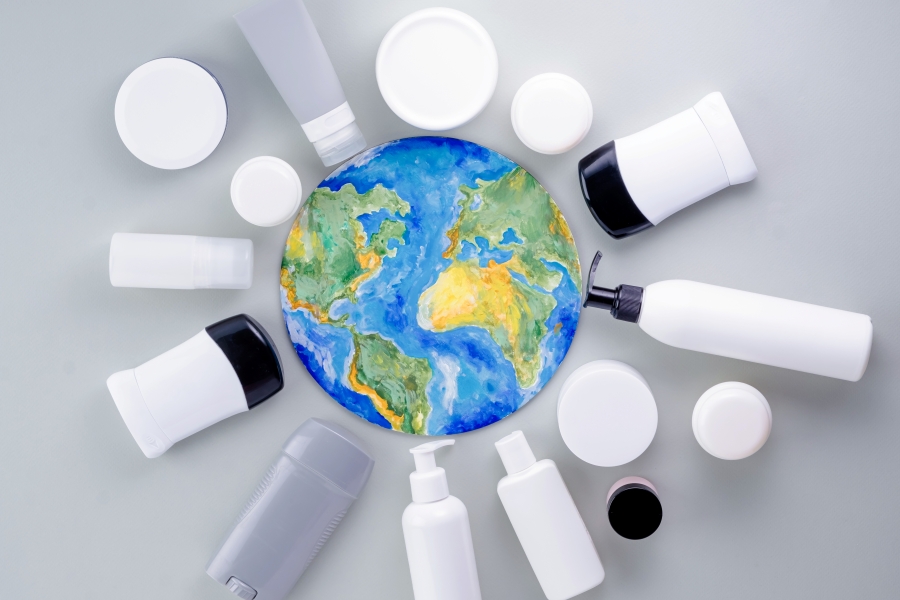 CTPA’s handbook highlights the most relevant trends and their implications for the cosmetics industry, such as climate change, water scarcity, nature collapse, and inequality.ithin beauty companies, it might depend on which department you are talking to. Compliance departments might be facing greater uncertainty around climate and environmental law, marketing departments might be trying to understand how to make their products relevant to highly conscious consumers, and finance managers might be looking at how to decrease some of the financial risk likely to be present in the future,” Lawson explains.
“It is not a one-size-fits-all approach,” she says, “and these may vary depending on the business practices, company size, ethos, and their own sustainability journey.”
Tomorrow’s products
Rather than consumers driving the products of tomorrow, brand-led innovations should support more efficient resource use and fairer access to drive a cultural shift toward a circular economy.
Núñez believes that taking a “consumer perspective” to consider how lives will be affected by the changes happening in the environment and society will inform future design choices.
Commenting on how cosmetics companies can balance sustainability goals with growing pressures around affordability, performance, and speed-to-market, he says that “the ethos ‘business as usual’ is not realistic anymore, as it relies on stability.”
Therefore, steps must be taken to mitigate the risks posed by sustainability challenges.
“By taking a creative approach to embrace the opportunities offered, new products, markets, and new ways of working will emerge. Immediate cost considerations should be balanced with the risks and potential costs of not doing anything,” says Núñez.
Does (company) size matter?
For smaller and mid-sized beauty companies, emerging sustainability trends may influence their challenges more significantly than for larger brands.
For Lawson, it is “not always about the size of the company, but where they might be in their own sustainability journey, and the need to look ahead at what challenges are coming up.”
She says that it is too easy to look down at the pressing matters that small businesses might have to deal with day-to-day, when there are significant economic and social pressures already.
“Still, small companies should not lose sight of the opportunities that lie for them in the future,” she warns.
Thinking specifically in the UK, Lawson adds that water scarcity might be an issue SMEs have to consider sooner rather than later, both from a manufacturing and a user experience approach.
Cross-industry collaboration
Lawson believes that many sustainability approaches have previously failed because companies have been acting in isolation.
“Collaboration, particularly involving membership organizations, provides additional support for companies and creates the environment for greater systemic change,” she explains.
Examples of cross-industry collaboration include the engagement throughout the packaging supply chain to ensure that any cosmetic waste is minimized and recycled responsibly. Lawson details a need to create the right environment for wide-scale use of refill and reuse models.
“CTPA’s role as a nexus for companies to come together in a non-competitive way to discuss sustainability challenges has been instrumental in developing some of the work that is now available to all, including the CTPA Sustainability Hub and the Sustainability Handbook,” says Lawson.
Businesses are now experiencing firsthand the practical effects of sustainability trends on their operations. Supply chain challenges and the cost of energy, for example, have become more pressing owing to current difficulties.
For Núñez, this is why the conversation about moving from a more reactive to a transformational approach is timely. The handbook provides a practical set of tools designed to help businesses get under the skin of sustainability issues.
“Companies will need to meet people where they are, and prepare for how consumer needs may evolve over time. For example, there are already different cultural and regional hygiene patterns that emerge in cold and hot countries. Temperature fluctuations due to climate change are likely to have an impact on people’s self-care and well-being,” says Núñez.
Looking ahead, brands that understand the root causes to navigate social and environmental impacts will build resilience, which will define the most future-ready beauty brands over the next five years, he explains. “Taking a consumer perspective to consider how lives will be affected by the changes happening in the environment and society will inform future design choices.”
CTPA sees that the industry is already taking important steps to address sustainability challenges. But Núñez warns that the pace of change means businesses must also look ahead.
“The Sustainability Handbook is about giving companies the tools they need to succeed in a changing world and prepare for a complex and fast-evolving operating environment.”
CTPA’s long-term sustainability vision
CTPA first collaborated with Forum for the Future in 2018 to develop its Sustainability Strategy, “Driving Towards a Net Positive Cosmetics Industry.”
The strategy was born from a passion to make the cosmetics and personal care industry a force for good by putting more back into society and the environment than is taken out.
Today, CTPA offers a breadth of resources to support cosmetics and personal care companies on sustainability, covering an ever-expanding range of topics with definitions, legal requirements, and related guidance. These include guidance around cosmetic ingredients, or considerations for allergy-safe hair dyes, and children’s skin care.