



“Women’s gold”: Beiersdorf and AAK strengthen collaboration to support shea producers


Key takeaways
- Beiersdorf and AAK are enhancing support for women in Ghana’s shea industry through training and sustainability projects.
- Almost 4,000 women will receive training in parkland management, and shell machines will help create income-generating opportunities.
- The partnership promotes environmental sustainability, including tree planting and access to clean water.
Beiersdorf and the Swedish ingredients company AAK have expanded their collaboration to support women in Ghana’s shea industry. The partnership will introduce training in sustainable parkland management, a borehole regeneration project, and the supply of shellers to generate additional income for communities.
The companies aim to further empower women in the shea supply chain in West Africa.
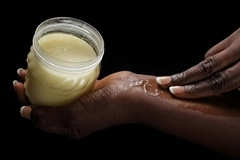
Shea butter, often referred to as “women’s gold” in Africa, has a strong foothold in the personal care industry. Shea butter is an essential raw ingredient for skin and hair care products such as shampoos, conditioners, and moisturizers. It is a moisturizing all-rounder and an important raw material for Beiersdorf products, primarily in body and lip care.
However, the ingredient is laborious to extract. It is gathered by hand in several steps from the fruit of the karite tree, which grows in tropical Africa from Senegal to Uganda — an area known as the “shea belt.”
Women make up approximately 96.2% of shea processors, according to ResearchGate.
The new phase of the Beiersdorf and AAK’s collaboration will include parkland management training for 3,750 women. Each of them will be entrusted with at least two seedlings to nurture and protect.
Additionally, the companies will provide 75 time-saving shelling machines to create income opportunities for young women. They will also renovate 20 boreholes, guaranteeing access to clean water for communities.Women in Ghana are receiving training in sustainable parkland management to support the shea industry.
The expansion is part of AAK’s direct sourcing program “Kolo Nafaso” in Ghana and Burkina Faso. Phase two promises to deliver lasting impact for the Kolo Nafaso women and their communities, as well as for the entire shea value chain.
“It’s incredibly valuable to join forces with strong partners like Beiersdorf to truly live up to our motto: Making Better Happen. We believe sustainable impact and long-term development result from strong commitments and robust partnerships. We’re excited to build on the success of our collaboration with Beiersdorf with this next-level second phase,” says Lisette Townsend, global business development and marketing director of AAK Personal Care.
Sustainable support
Beiersdorf and AAK launched their partnership in January 2020. The companies have already supported over 10,500 shea collectors.
The first phase of the partnership provided economic opportunities for participating women by establishing Village Savings and Loan Associations (VSLAs). The companies planted trees and installed energy-efficient, closed cookstoves that are environmentally friendly and provide health and safety benefits.
Following the changes, 7,320 women gained financial education through VSLA training. Almost 8,000 women planted 20,425 shea trees to sustain the shea belt ecosystem, combat desertification, capture GHG emissions, and secure future income. Additionally, over 12,000 improved cookstoves are now in use, making shea processing safer and more sustainable by reducing Scope 3 emissions in the supply chain and reducing the number of trees felled.
Nima Alhassan from the Dijo community in Ghana says about the program: “We didn’t save much money before, but now we meet every week. For loans, we can borrow money from the box, and then we pay it back.”
“When we hold our annual share out, some use their savings to farm, some use it for business. Through these things, we generate a profit and can save more. All are benefits we didn’t have before the project started.”
AAK and Beiersdorf claim to be steadfast in their commitment to the shea supply chain, including sustainable development, empowering women, protecting ecosystems, and supporting climate action.
“Seeing the success of this holistic project makes me incredibly proud,” says Dorle Bahr, Beiersdorf’s head of sustainability strategy and reporting. The partnership between Beiersdorf and AAK is creating new economic opportunities for women in West Africa.
“It supports several focus areas of our Care Beyond Skin Sustainability Agenda and shows what’s possible when strong collaboration meets a clear purpose — creating sustainable change not only in our industry, but also in the lives of thousands of women across the shea regions. Hearing the voices and stories from shea collecting women show how small, focused initiatives can create a big change.”
Help that hurt
In August last year, Nigeria’s government banned the export of raw shea nuts in an effort to help the country become a global supplier of refined shea butter and other skin care ingredients. The ban took effect immediately and will remain in place for six months, after which it will be reviewed.
“The ban will transform Nigeria from an exporter of raw shea nut to a global supplier of refined shea butter, oil, and other derivatives,” said the VP of Nigeria, Kashim Shettima.
Shettima explained that the decision was not an anti-trade policy but a “pro-value addition policy designed to secure raw materials for our processing factories.” The move aims to boost income and jobs for rural workers.
However, the plan backfired. Nigeria’s ban on the export of raw shea nuts depleted the incomes of women who collect and sell raw kernels by collapsing nut prices and reducing market access.
Personal Care Insights spoke to Aaron Adu, managing director of the Global Shea Alliance (GSA), about how the ban afflicted women in the industry and how new frameworks and policies can support economic and human prosperity.
Continual aid efforts
The personal care industry has been working for years to strengthen the global supply chain for shea and improve the livelihoods of the women who supply it.
In October 2023, the Nigerian government, Shea Women’s Association of Nigeria, and CBI (Center for the Promotion of Imports, the Netherlands) launched a project to help female shea nut collectors in Nigeria. The Train the Trainer project aimed to foster greater gender equality and create safer, more sustainable, and economically rewarding work.  Women are leading the charge in sustainable shea harvesting, benefiting both the environment and their families.
Later that year, the multi-billion-dollar shea industry came under threat after it was reported that roughly eight million shea trees were uprooted annually, according to GSA.
The destruction of shea trees damages employment for rural women throughout major production regions despite continued growth in product launches. This led to increased calls for greater supply chain transparency to protect workers’ rights and promote environmental sustainability.
Last year, Personal Care Insights spoke to the GSA after its partnership with EOS (Evolution of Smooth) Products, and non-profit Water for West Africa partnered to empower women shea processors in Northern Ghana and Côte d’Ivoire. The initiative works to improve access to clean water, quality infrastructure, sustainable livelihoods, and equitable value chains.