




How personal care leaders are navigating Iran war supply chain pressures

Key takeaways
- The Iran war is driving cost inflation across the personal care supply chain, with suppliers raising prices to protect margins.
- Companies are responding with mitigation strategies such as supplier support, sourcing diversification, and tighter supply chain control.
- Despite pressure upstream, some players remain resilient for now, though uncertainty is increasing for the second half of the year.

The Iran war is impacting the personal care sector, causing many companies in the industry to increase their pricing — however, some businesses are skirting the impact. The conflict has led to a strain on the availability of raw materials for chemical suppliers and disrupted global supply chains, leading to a rise in costs.
Suppliers, including Wacker Chemie, Dow, Lanxess, Nouryon, BASF, and Ashland, have implemented price increases across silicones, preservatives, and peroxide-based products. The companies cite sustained increases in energy, raw material, and freight costs linked to geopolitical disruption. These adjustments reflect a broader recalibration across the chemical sector, where pricing actions are being enacted to protect margins.
Other home and personal care players are adopting more targeted mitigation strategies. LG Household & Health Care has increased financial support to suppliers to maintain supply continuity. Meanwhile, Nikko Chemicals is diversifying solvent sourcing and tightening inventory allocation through enhanced supply chain governance.
Despite the economic pressure, performance across the value chain is uneven. Givaudan and LVMH have reported resilient first-quarter results, supported by pricing mechanisms, contractual coverage, and supply chain agility. However, continued volatility in energy and feedstock markets is expected to introduce uncertainty into the second half of the year — particularly if the war persists.
Silicone price soars
One major ingredient for the cosmetics sector is silicone. Since the war erupted with US strikes on Iran, the price of silicone has emerged as a key pressure point. Production costs are rising in line with oil- and gas-linked feedstocks, alongside elevated energy and logistics expenses.
Chemical and biotechnology company, Wacker Chemie, began price increases for its silicone products this month. The German-based company cited higher costs for oil, natural gas, raw materials, transportation, and disruptions to global trade routes as reasons for the increase.
Wacker is one of the world’s leading silicone manufacturers and supplies over 2,800 kinds of silicone products. It did not disclose specific details of the price increases.
These price increases are not implemented in isolation. Across the silicone market, there have been recent and repeated adjustments in response to sustained cost pressures. For example, Dow raised prices multiple times between late 2025 and early 2026.
The elevated pricing reflects the underlying cost structure of silicone production, which remains highly exposed to energy-intensive processes and oil- and gas-linked feedstocks. When input costs continue to fluctuate — rather than rise in a single cycle — producers such as Wacker Chemie and Dow implement successive pricing rounds to protect margins.
.webp) The Iran war is adding pressure to personal care supply chains.For cosmetics, silicone represents a relatively small share of total product costs, so price increases may not directly translate to significant retail price changes.
The Iran war is adding pressure to personal care supply chains.For cosmetics, silicone represents a relatively small share of total product costs, so price increases may not directly translate to significant retail price changes.
However, cleaning products and detergents rely much more heavily on petroleum-based inputs and thus are more sensitive to cost increases.
Chemical supplier pricing and strategy
Specialty chemicals company Lanxess has announced price increases of “up to 30%, or higher,” for selected products across its Microbial Control portfolio. This includes active ingredients, preservatives, and disinfectants used to protect materials from microbial spoilage.
The company detailed “ongoing, cumulative cost increases,” including significantly higher energy, raw material, and logistics costs amid “persistent geopolitical tensions.”
“Despite comprehensive efforts to offset these increases and maintain stable prices, this adjustment is necessary to ensure the long-term reliability, quality, and sustainability of supply for customers worldwide,” says Lanxess.
Similarly, Nouryon introduced a global price increase of up to 30% across its ketone peroxide range this month. The adjustment applies to products sold under the Cadox, Butanox, and Trigonox brands.
Nouryon attributed the move to sustained cost escalation resulting from the Iran war. It emphasized its particularly high impact on global oil markets and petrochemical feedstocks. The company also reaffirmed its commitment to maintaining supply continuity.
Meanwhile, BASF has raised product costs by up to 30% on all products across its Home Care, Industrial and Institutional Cleaning, and Industrial Formulators portfolio in Europe. The German chemical producer says that its decision to increase product prices was caused by rising costs in raw materials, transcontinental logistics, packaging, and energy, caused by ongoing political instability.
Simultaneously, Ashland has implemented various pricing strategies across products and regions.
The company is adapting to the market pressures of the Iran war by adopting pricing actions in various pain points throughout its Life Sciences, Intermediates, Personal Care, and Specialty Additives product portfolios globally.
Additionally, to combat the economic effects of the war, ingredient supplier Nikko Chemicals is focusing on operational resilience through enhanced supply chain governance and procurement diversification.
The company has established a multi-layered internal monitoring system to enhance visibility across its supply chain. It is supported by weekly cross-functional meetings covering production, purchasing, and inventory planning, enabling real-time procurement and production adjustments.
A priority for Nikko Chemicals is securing the supply of petroleum-derived solvents. Headquartered in Japan, Nikko is expanding global sourcing beyond traditional domestic suppliers, while evaluating alternative inputs, including bio-based and CO2-derived solvents, to reduce dependency on constrained supply channels..webp) Raw material shortages are tightening supply conditions.
Raw material shortages are tightening supply conditions.
The company has introduced tighter inventory management and allocation controls to maintain supply stability. It is prioritizing orders based on demand and maintaining close coordination with customers on shipment timelines.
Nikko is also addressing risks beyond raw materials, including potential shortages in packaging components and logistics disruption. Measures include exploring alternative packaging formats and increasing safety stock of critical materials, while closely monitoring transportation delays and cost fluctuations.
Resilience now, but uncertainty looms
While much of the chemical supply base is focused on margin protection through pricing, other industry players are, so far, proving more resilient, supported by contractual coverage and operational flexibility.
Givaudan has stated it can manage the short-term financial impact of the Iran war.
The company’s new CEO, Christian Stammkoetter, who took the position last month, said that the Middle East accounts for a high single-digit percentage of Givaudan’s total sales. There is higher exposure in its fragrance and beauty business than in food flavors, where it represents a mid-single-digit share.
Givaudan has set up crisis teams to ensure the safety of its staff and continuity of supply, as it
employs over 1,390 people across 13 countries in South Asia, the Middle East, and Africa.
Finance chief Stewart Harris said the war had little impact on Givaudan’s first-quarter sales, crediting local and central teams who managed freight disruptions, though road shipments.
The company expects to maintain its current supply chain measures into the second quarter, unless the geopolitical conditions deteriorate further. It says it is relatively well covered through existing contracts in the first half of the year, though visibility for the second half remains more uncertain.
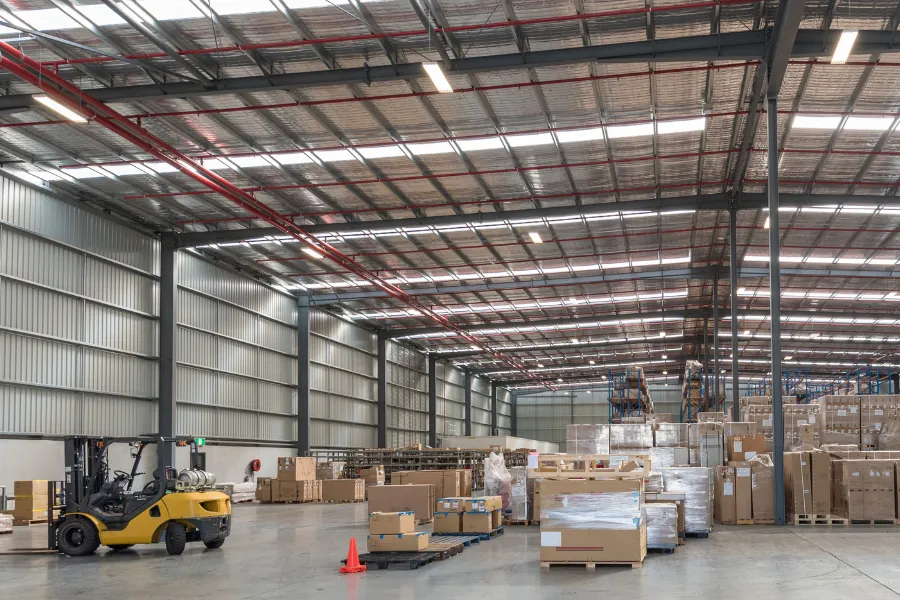 Energy and logistics costs are driving industrywide inflation.While the conflict has not materially disrupted operations to date, Givaudan continues to face inflationary pressure on inputs, such as freight and logistics. The beauty ingredients supplier is working to offset these costs through price increases and ongoing supply chain adjustments, supported by crisis management teams to ensure continuity of supply.
Givaudan noted no significant changes in customer ordering patterns, indicating stable demand and limited evidence of stockpiling. However, Stammkoetter warned that a prolonged conflict could begin to impact upstream agricultural inputs, particularly through disruption to fertilizer supply in emerging markets.
“If the conflict would drag on for months and months, that will become more relevant.”
Similarly, LVMH reported resilient first-quarter performance, with revenue reaching €19.1 billion (US$22.47 billion) and organic growth of 1%, despite a challenging geopolitical backdrop. The group indicated that the Iran war had a modest impact on growth, reducing it by around one percentage point.
Performance remained stable in its Perfumes & Cosmetics division, supported by momentum at Sephora and growth across key brands including Dior and Guerlain. LVMH highlighted strong innovation and retail expansion as key drivers, underscoring the sector’s relative resilience despite ongoing macroeconomic and geopolitical disruption.
Collaborative approach
LG Household & Health Care is taking a more direct approach to supply chain stabilization, increasing financial support to partner companies affected by the war.
The South Korean company has raised payments by approximately ₩2.6 billion (US$1.77 million) across 59 contracts with 15 suppliers impacted by disruption. From April, it expands the support to as many as 16,000 contracts with 47 partners, with total additional payments potentially reaching ₩20 billion (US$13.58 million) by year-end.
The initiative extends to contracts not covered by formal price linkage mechanisms, aiming to ease the burden of rising raw material costs. The program was recognized by South Korea’s Ministry of SMEs and Startups as a model for supplier collaboration during periods of geopolitical and economic stress.